“I wanted answers. We all had this need to understand who was pulling the strings. What he was doing and how he was in the footage that I saw, how you guys were interacting—it felt yucky to me,” Seyfried tells Fielder and Oppenheim. “I just wanted any information I could get on Billy. I became this weird Billy detective because I had gotten such strong negative feelings from him in the footage. I felt like I needed to meet this guy. It was exciting to me, and it was scary, and it was questionable.” She’s not shy about saying in the interview that she’s not a fan (“[L]ook, I do not like him, she says at one point), but she still tried to give him the benefit of the doubt as she was going into his home and meeting his children.
And at first, it was more or less fine, if slightly awkward, especially as Seyfried ended up talking to Holmes on the phone. But all three acknowledge that things got far more tense later. “There was no reason for him to get that aggressive,” says Seyfried. “That’s the word I’m going to use, as it’s more diplomatic.” As viewers of the film will no doubt recall, the conversation shifted when Evans brought up comments made criticizing Charlie Kirk after his death last year, then praised Kirk. Seyfried continues:
“If my jaw wasn’t obviously on the floor, you could tell, like, it had come unhinged. I don’t want to provoke him, but at this point, it’s kind of like, the gloves are off. Because this guy has disrespected me in such a way that I was like, ‘Oh, I don’t think so, buddy.’ I was in the frame of mind where I’m like, ‘OK, this guy is disrespectful, and I’m here in his home, I’m gonna argue this because I actually have a pretty solid stance on things.’ I don’t like the way he’s using this human being, his wife — the person he says he’s ‘building monuments of love’ to — as a tool. Maybe he does respect her, but he’s behaving like he does not respect her. And not only am I protective of myself, I’m just trying to set the record straight in a way where I’m trying to defend myself, too, while maintaining some kind of rapport with him, so I can stay and he doesn’t kick us out, you know?”
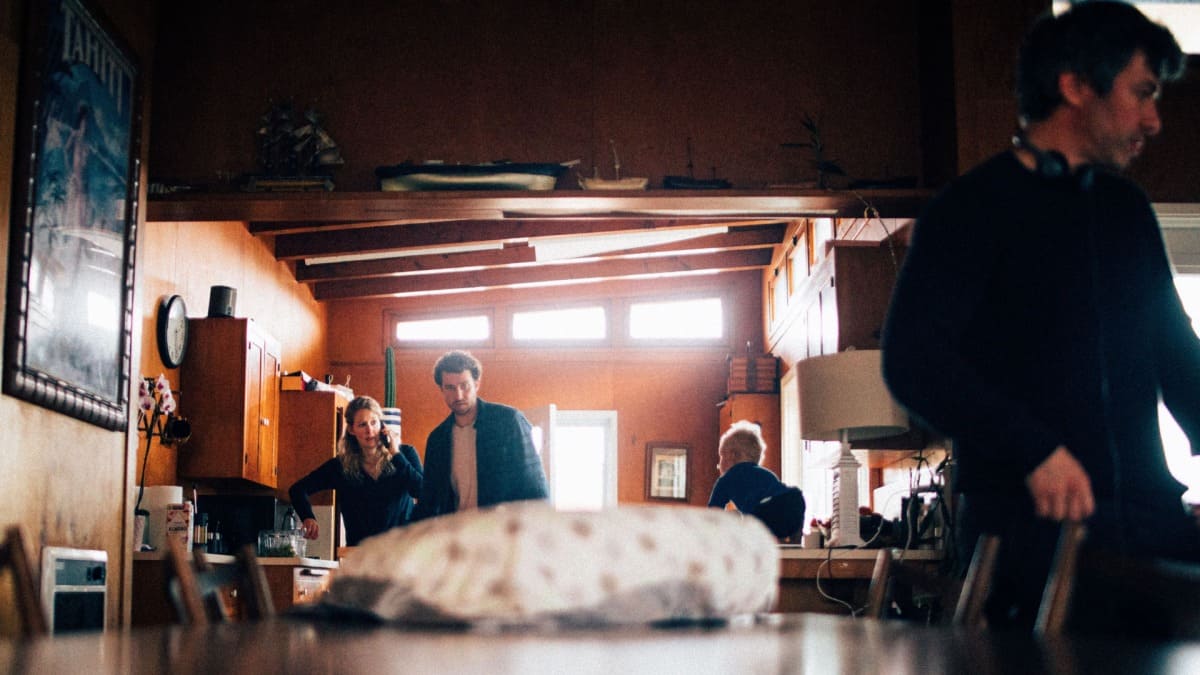
Both Oppenheim and Fielder praise how game Seyfried was for everything, who acknowledges that they made “something so wild.” From a filmmaking standpoint, they were also blessed with some prime, unplanned moments—like Holmes calling her husband and children while Seyfried happened to be there. “Someone asked me if that was real, if that was really her on the phone,” says Seyfried. “And I’m like, ‘It’s a documentary. Who else would it be?'” You can read the whole, long interview here.


 Keep scrolling for more great stories.