2025 was a roller coaster year for comic books, beginning with Diamond Comic Distributors—the primary distributor for the North American direct market—filing for Chapter 11 bankruptcy in January. This sent shockwaves across the industry as publishers dealt with the loss of consignment inventory that Diamond planned to liquidate to pay back its creditors, but this disruption didn’t stop the release of noteworthy new works. The popularity of the Absolute and Ultimate lines at DC and Marvel, respectively, resulted in one of the most fruitful years for superhero comics in recent memory, capping off with the two publishers joining forces for their first crossover in over 20 years. In other corners of the industry, creators brought their distinct voices to new creation myths, historical deep dives, and insightful personal dramas. Here are the top comics of 2025 you don’t want to miss.
Absolute Batman by Scott Snyder, Nick Dragotta, Frank Martin, Clayton Cowles, and various (DC Comics)
Absolute Batman (Image: DC Comics)
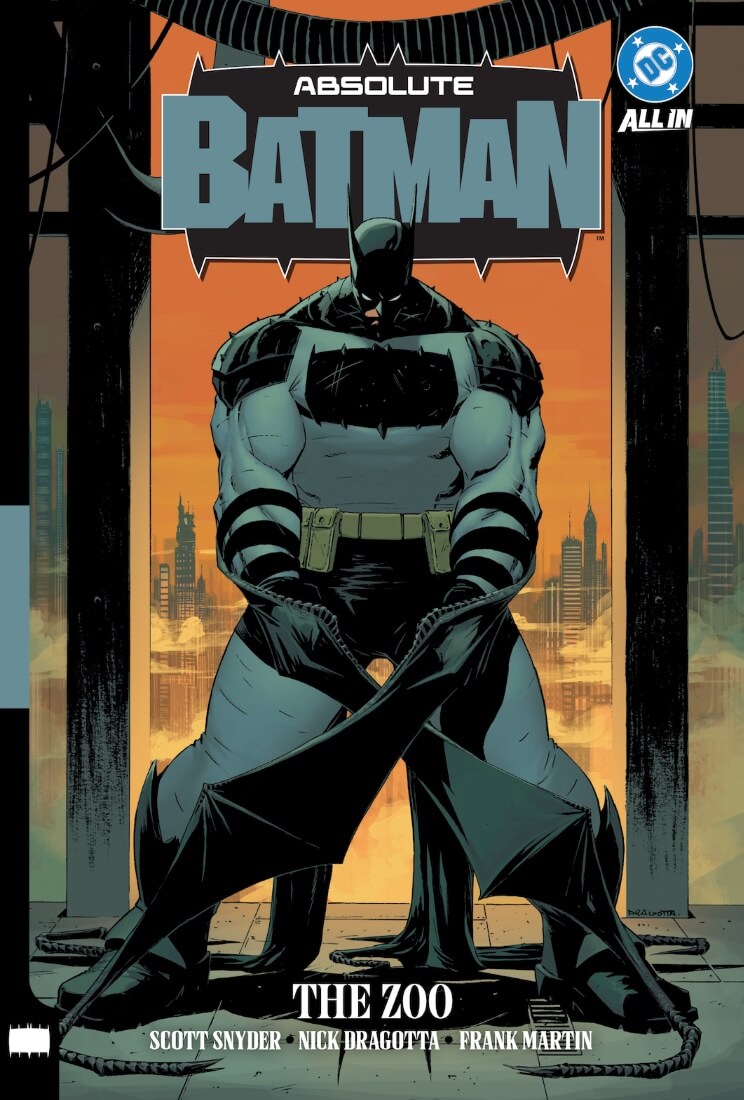
DC’s Absolute line was the biggest success story in superhero comics this year, and at the heart of it all was Scott Snyder and Nick Dragotta’s hulking Dark Knight. An over-the-top action extravaganza that doesn’t take itself too seriously while also indulging in extremely dark subject matter, Absolute Batman is the title that best embodies the line’s central concept of a universe crafted in the image of Darkseid, DC’s biggest bad. Snyder makes major changes to the Batman, his allies, and his enemies that add compelling layers to these relationships, but the book’s greatest strength is the way it encourages artists to go buck wild. Dragotta sets a high bar with striking character designs, dense yet dynamic page layouts, and action sequences that only get bigger and crazier with each issue. Guest artists Gabriel Hernandez Walta, Marcos Martín, Clay Mann, and Jock—along with Daniel Warren Johnson, James Harren, and Meredith McLaren writing and drawing stories for Absolute Batman Annual—showcase DC’s investment in putting top talent on this series, and you can feel the creators’ excitement to work on this interpretation of Batman where anything goes.
Assorted Crisis Events by Deniz Camp, Eric Zawadski, Jordie Bellaire, and Hassan Otsmane-Elhaou (Image Comics)
Assorted Crisis Events (Image: Image Comics)
Writer Deniz Camp rose to superstar status in 2025, pushing the boundaries of the superhero genre in DC’s Absolute Martian Manhunter and taking charge of Marvel’s Ultimate Universe in The Ultimates, Ultimate Spider-Man: Incursion, and Ultimate Endgame. But his greatest accomplishment is Assorted Crisis Events, a wildly ambitious creator-owned series set in a world where time and space have completely broken down. Each issue is its own formal experiment spotlighting new characters with their own specific time-related challenges, and artist Eric Zawadski, colorist Jordie Bellaire, and letterer Hassan Otsmane-Elhaou all dive headfirst into making daring creative choices with Camp. Camp uses spectacular circumstances to tackle varied topics like labor exploitation, immigration, and caring for a disabled loved one, encouraging the art team to think outside the box with the presentation and find surprising ways to visually reinforce the themes. The collaborative energy is off the charts and everyone on the team is completely in sync, resulting in stories that pack a huge emotional punch while showcasing the medium’s unique time and space-manipulating properties.
Clementine: Book Three by Tillie Walden and Cliff Rathburn (Skybound Entertainment)
Clementine: Book Three (Image: Skybound Entertainment)
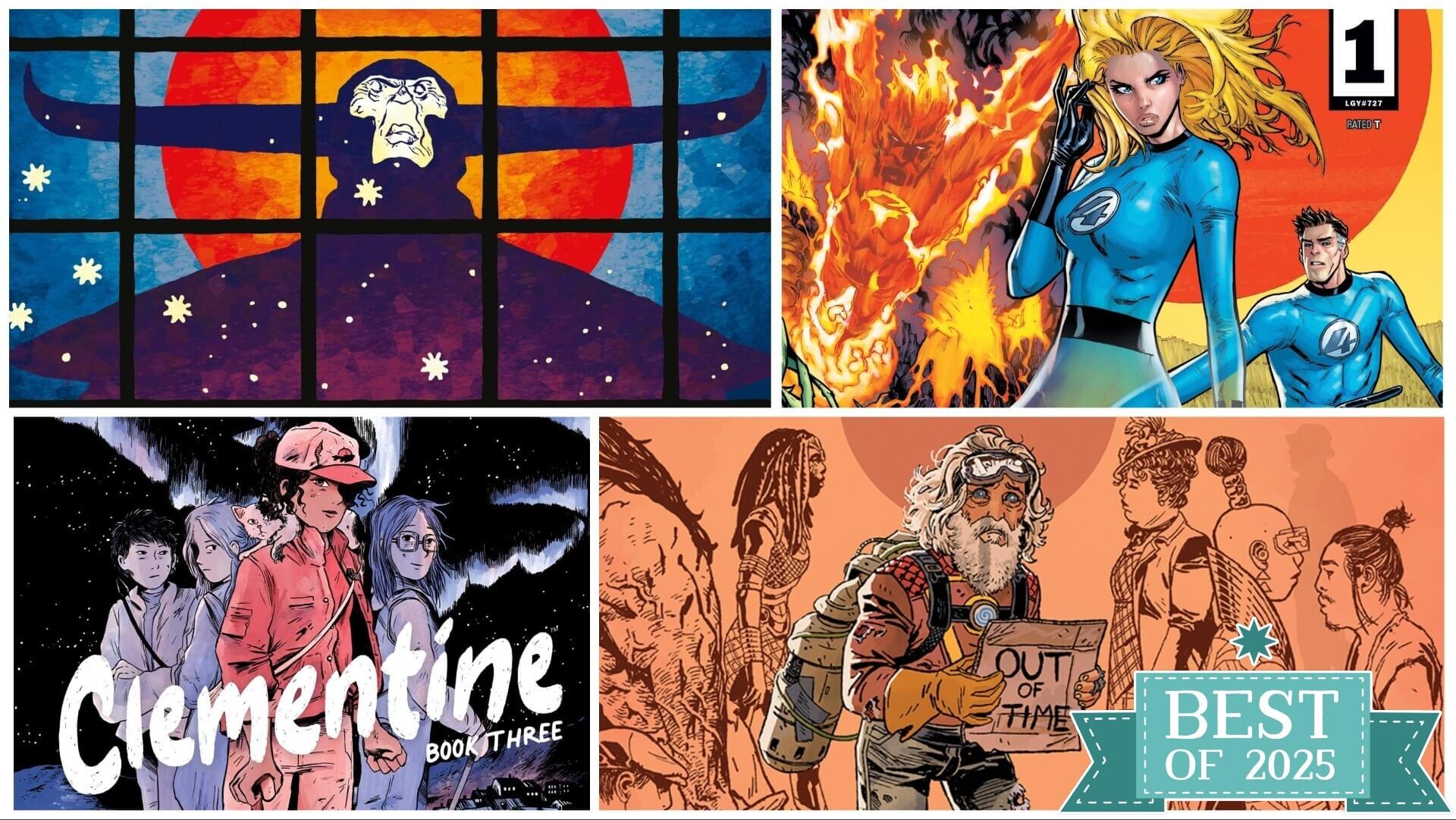
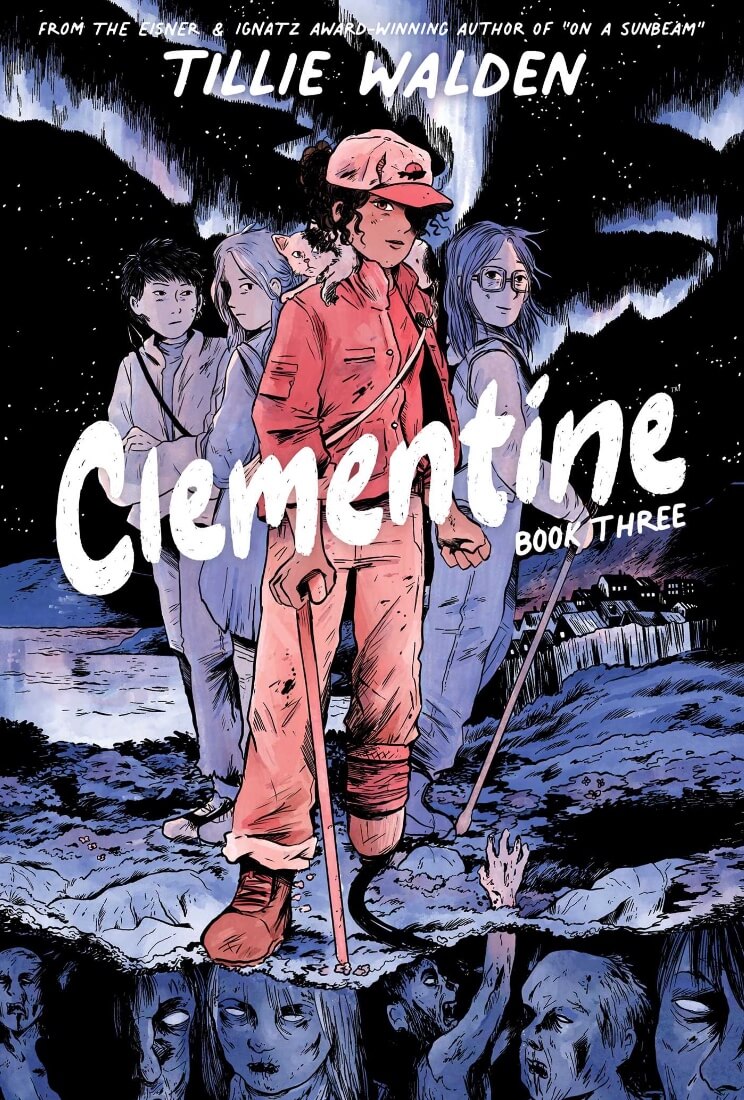
Skybound hiring indie-comic superstar Tillie Walden for a trilogy of graphic novels highlighting a character from a TheWalking Dead video game was a major statement of intent for the future of the franchise. The Clementine books have proven that there’s plenty of life in this zombie-infested world with the right creator at the helm, and shifting the focus to younger characters allows Walden to delve into the obstacles faced by the generation that comes of age during the zombie apocalypse. This final installment begins with Clementine in a pretty good place with a new community, but that just gives her more to lose when a random, non-zombie-related tragedy upends her life. The series has honed Walden’s horror storytelling, and she steadily builds suspense as Clementine finds herself falling in with a militant group that threatens the stability of their settlement. In typical Walking Dead fashion, it’s bleak, grisly, and rooted in the depravity that emerges from desperation, but Walden’s sensitivity gives it a depth of heart that enriches the relationships and gives the horror higher stakes.
Drome by Jesse Lonergan (23rd St.)
Drome (Image: 23rd St.)
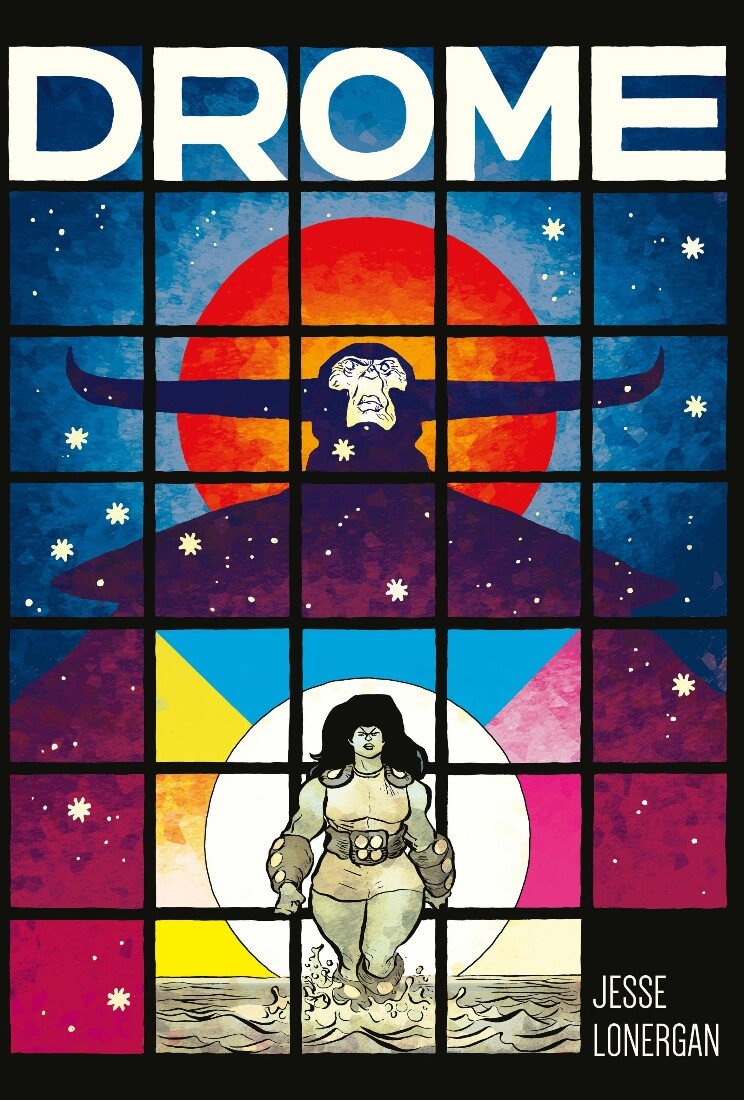
Drome is about creation. It tells the story of celestial beings creating life and superpowered champions to fight their battles, but it’s also about the magic of comics and how a single person can create an entire world on paper. It begins with a stone dropped from the heavens, which spreads a network of embryos under a planet’s surface that birth mankind and beasts. As time passes, these wild factions go to war, requiring the emergence of an authority figure to cultivate a peaceful civilization. The scale is gigantic, made even more so by Jesse Lonergan’s innovative visual execution. He combines mathematical precision with an invigorating sense of play in his use of a 5×7 grid of square panels, which he boldly transforms to create specific moods, add tension, and drive movement. Lonergan is a master of guiding the eye through complicated layouts, ingeniously using color, geometric shapes, and panel gutters to maintain clarity as he explores different ways to convey information on the page.
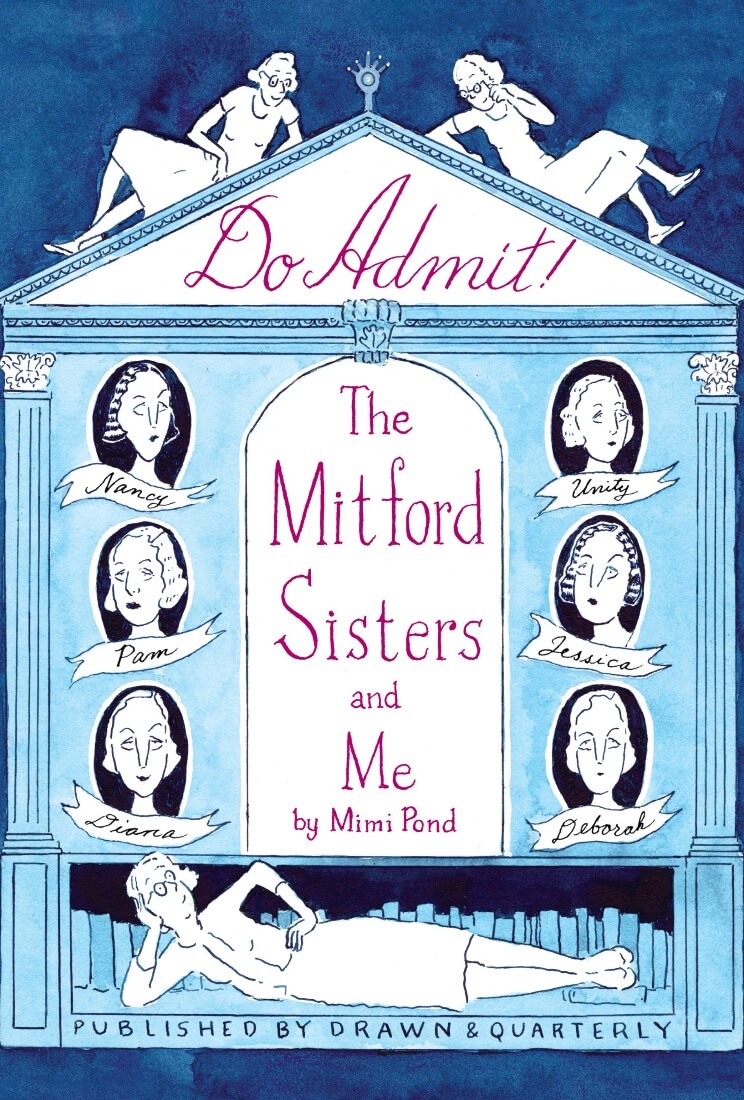
Do Admit: The Mitford Sisters And Me by Mimi Pond (Drawn & Quarterly)
Do Admit: The Mitford Sisters And Me (Image: Drawn & Quarterly)
After two engaging graphic memoirs about her experience working as a diner waitress, cartoonist Mimi Pond significantly expands the scope for her latest nonfiction work tracing the history of the six Mitford sisters, an eclectic group that included a popular writer, a socialist revolutionary, and two proud fascist supporters. The lives of these women intersected with some of the biggest figures of the 20th century, and Pond presents their stories with exquisitely designed pages that draw inspiration from the aesthetics of the time periods and places they depict. It’s a spirited example of how comic-book storytelling can infuse biographical material with style and spectacle, and much of the book’s appeal comes from the parade of clever ways Pond chronicles key moments. There is still an autobiographical element as Pond looks back to examine why she was so captivated by the Mitford family in her youth, and even with their faults, the sisters showed Pond a range of feminine experiences that encouraged her to pave her own path.
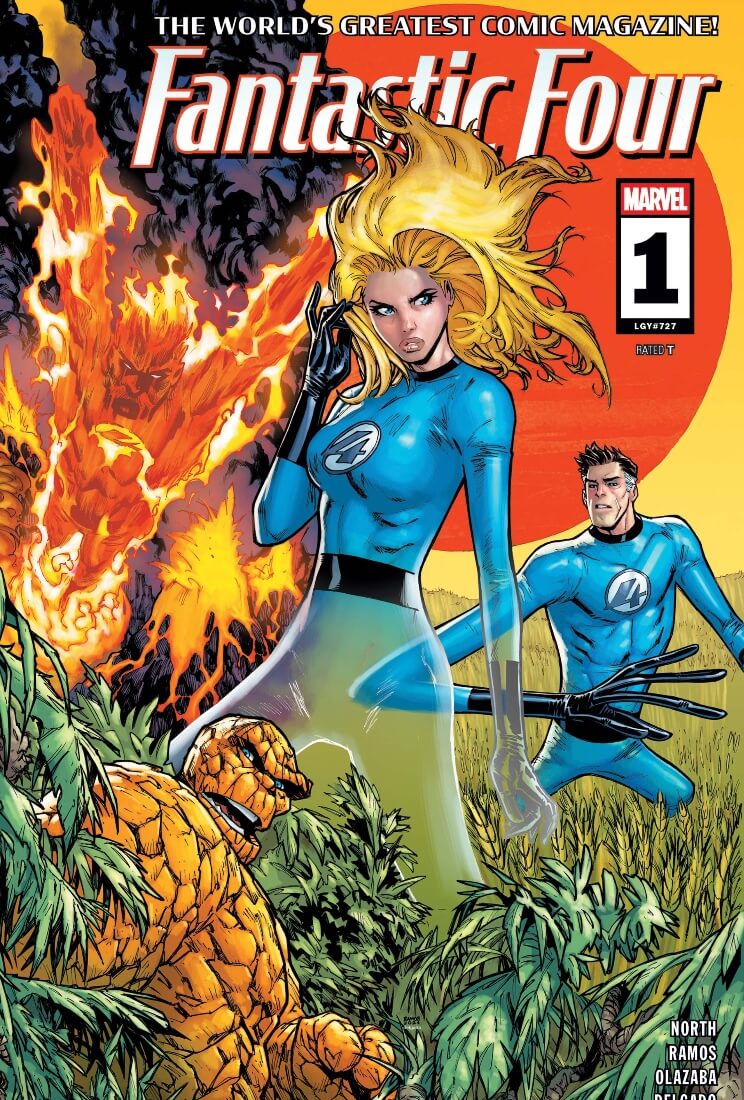
Fantastic Four by Ryan North, Humberto Ramos, Victor Olazaba Edgar Delgado, Joe Caramagna, and various (Marvel Comics)
Fantastic Four (Image: Marvel Comics)
Ryan North’s run on Fantastic Four has been Marvel’s most consistently strong title for the past three years, telling self-contained stories that put a superhero spin on real scientific concepts. 2025 saw the end of North’s first volume of Fantastic Four with an assortment of tie-ins to One World Under Doom that illuminated that event without sacrificing the book’s fundamental charm, but the series reached new heights with its relaunch in July, bringing on the exceptional new art team of penciller Humberto Ramos, inker Victor Olazaba, and colorist Edgar Delgado. Ramos’ exaggerated style is a perfect fit for the team’s extraordinary abilities, whether it’s Mr. Fantastic’s increasingly gnarly body contortions or the raw power of The Thing during clobberin’ time. One of the best aspects of North’s run is the elevation of Alicia Masters-Grimm as a main character, and Fantastic Four #4 is one of the year’s top single issues, a horror story where Alicia’s blindness saves the world from an alien invasion. You don’t need to read any other issues to enjoy that story, and this creative team excels at giving readers a full meal with only 20 pages.
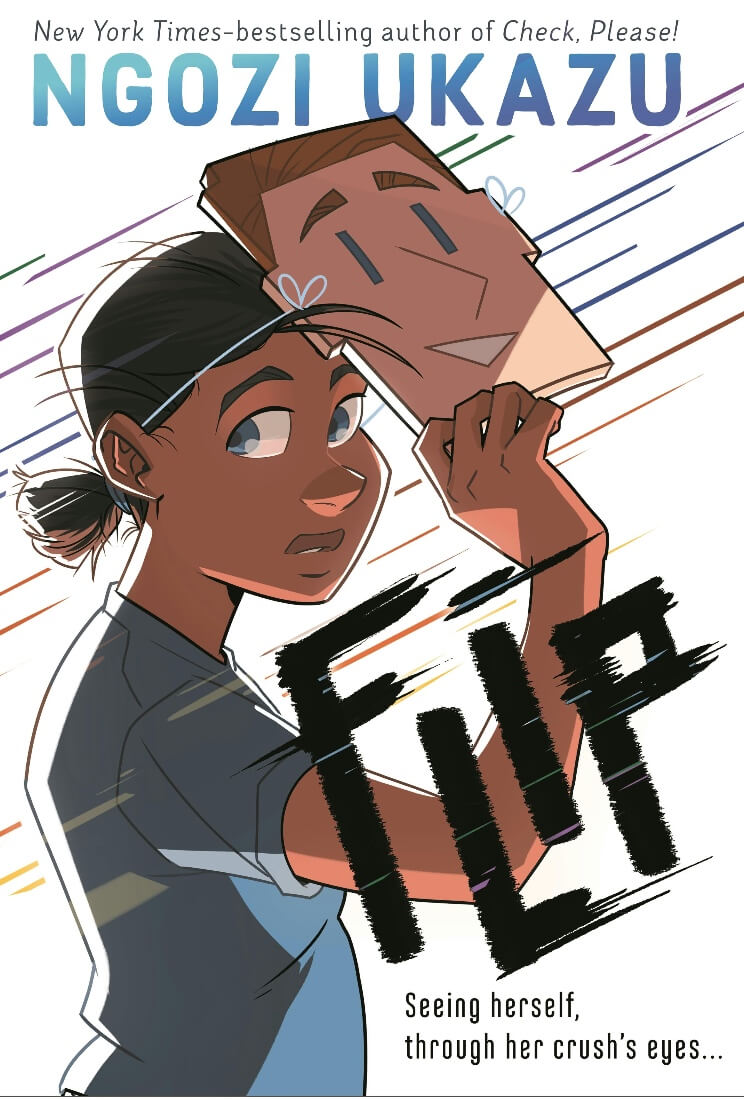
Flip by Ngozi Ukazu (First Second)
Flip (Image: First Second)
Hilarious, heartbreaking, and at times horrifying, Ngozi Ukazu’s fusion of Freaky Friday and The BluestEye exploresa black teenage girl’s struggle with self-loathing by swapping her body with her white boy crush. In a chilling twist, the swaps are not permanent, but instead happen in time intervals that grow exponentially, introducing the possibility of them spending years if not decades in the other’s body. Race, class, gender, and sexual dynamics all come into play as the two learn more about their counterpart’s personal life, topics that Ukazu addresses with honesty and humor. Her comedic timing is impeccable, and the character acting does impressive work capturing the awkwardness and fear of being forced into another person’s shoes. Ukazu doesn’t shy away from her main character’s flaws, who at times takes advantage of her unique situation to selfishly act on her resentments, bringing messiness to the narrative that feels genuine to the adolescent experience.
More Weight: A Salem Story by Ben Wickey (Top Shelf)
More Weight: A Salem Story (Image: Top Shelf)
The Salem witch trials stand as a prime example of the dangers that arise when religious fanaticism intersects with socioeconomic disparity and personal grievances, resulting in the hangings of 19 people and one death by pressing. Ben Wickey’s meticulously researched graphic novel takes its title from the brutal death of Giles Corey, who refused to plead during his trial and reportedly called for “more weight” as rocks were piled on top of his body. Corey is the tragic figure at the center of Wickey’s chronicle of the trials, depicted in stark black-and-white with richly animated characters that heighten the devastation experienced by the wrongly accused. The trials are accompanied by scenes of author Nathaniel Hawthorne visiting Salem with his friend, poet Henry Wadsworth Longfellow, in the 1860s, where Hawthorne reckons with his great-great-grandfather’s role as a judge during the witchhunt. The book’s outro provides a comprehensive timeline of Salem’s history after the witch trials, detailing the long path to exoneration for the wrongfully accused and how the city commodified the tragedy in the 20th century. It’s a sprawling story about religion, politics, family, and art, full of sympathy for the accused and anger at a community that took far too long to acknowledge the injustice it committed.
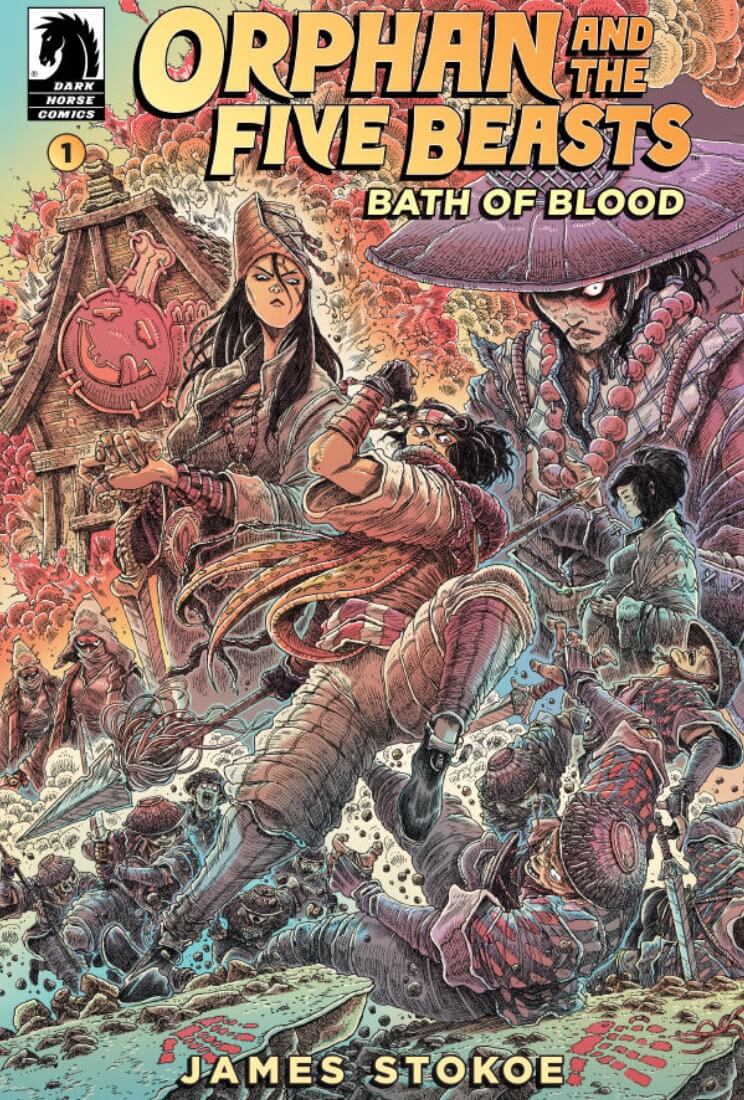
Orphan And The Five Beasts: Bath Of Blood by James Stokoe (Dark Horse Comics)
Orphan And The Five Beasts: Bath Of Blood (Image: Dark Horse Comics)
It took three years to get the second part of James Stokoe’s love letter to the kung fu films of the Shaw Brothers, and it was worth the wait. Orphan Mo is still on the hunt for her master’s former disciples, a violent quest that delivers some of the year’s coolest fight sequences. Stokoe has an incredible ability to depict pulse-pounding action while maintaining the intricate detail of his linework, and it’s worth taking your time to fully absorb each individual moment and admire just how much is happening on an artistic level. The limits of the human body and cinematic technology don’t apply on the page, and the tactile quality of Stokoe’s artwork gives weight and momentum to these bodies in motion. Written, drawn, colored, and lettered by Stokoe, Orphan And The Five Beasts: Bath Of Blood is a passion project that shows off the range of his talent, picking up the Shaw Brothers’ torch and turning it into an atomic bomb of comic-book excellence.
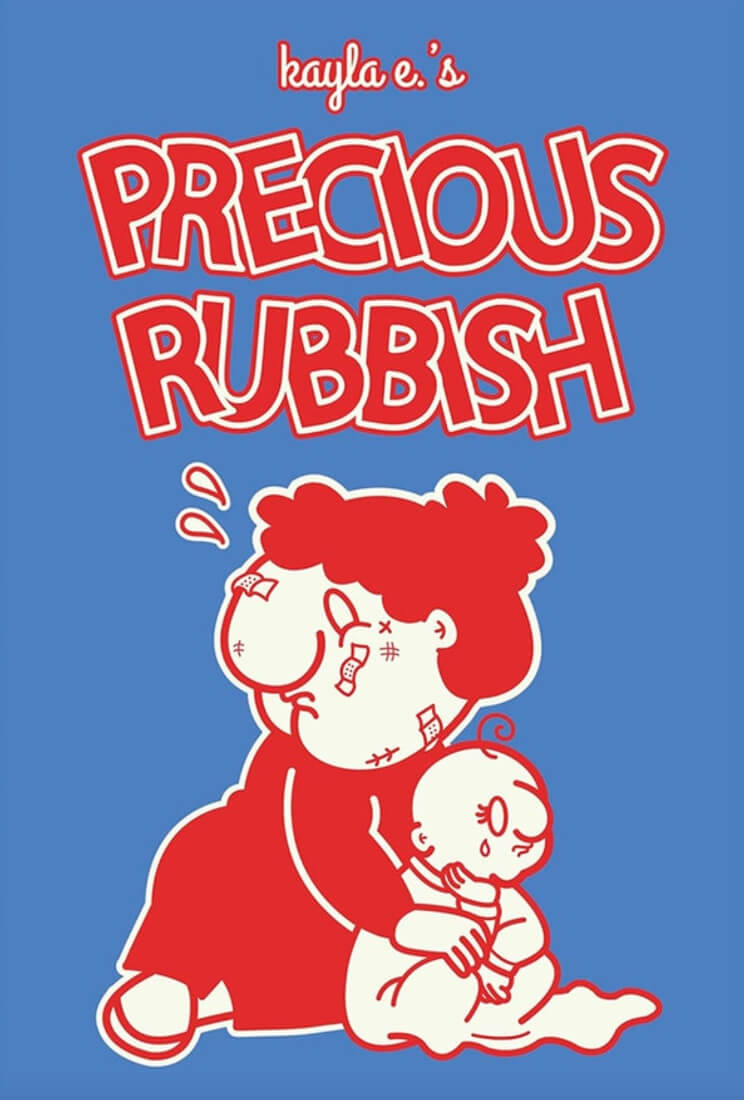
Precious Rubbish by Kayla E. (Fantagraphics)
Precious Rubbish (Image: Fantagraphics)
Cartoonist Kayle E. describes her comics practice as a “map-making exercise” that “imposes order onto recollections once disorganized by intrafamilial abuse, addiction, and sexual violence.” Her debut graphic novel, Precious Rubbish, is a harrowing account of her traumatic upbringing told via comic strips, single illustrations with accompanying text, satirical advertisements, and interactive games. It’s an outstanding feat of graphic design, and the wide array of narrative and visual modes makes for a read that is deeply satisfying in its unpredictability. Kayla E. uses the visual language of retro Archie and Harvey Comics to underpin the theme of lost innocence, directly adapting past works and reinterpreting them through her singular point of view. The result falls somewhere between art therapy and exorcism, unpacking her history of manipulation and mistreatment to reclaim her agency.




 Keep scrolling for more great stories.