I have a palpable sense that there are three buckets of people who need to be addressed in this conversation. The first is those who would love Type Help, but who never encountered it—maybe because they don’t spend the hours I do trawling itch.io for games inspired by deduction games like The Return Of The Obra Dinn or The Roottrees Are Dead. (The last game to get this loving remake treatment from Evil Trout, by the by.) If the idea of futzing around with a text parser and navigating large blocks of writing while trying to unravel the mystery of how a dozen people died in a supposedly unhaunted house appeals to you, I’d recommend stepping away from this article right now and just playing the original game. Many of the additions to The Incident At Galley House are welcome and, indeed, additive, but there’s a purity to the text-based presentation of Type Help that I think makes it truly special, the voices of the doomed dead rendered in stark computer type. Come back after you’re done (probably in a day or two), and we can talk about where to go from there.
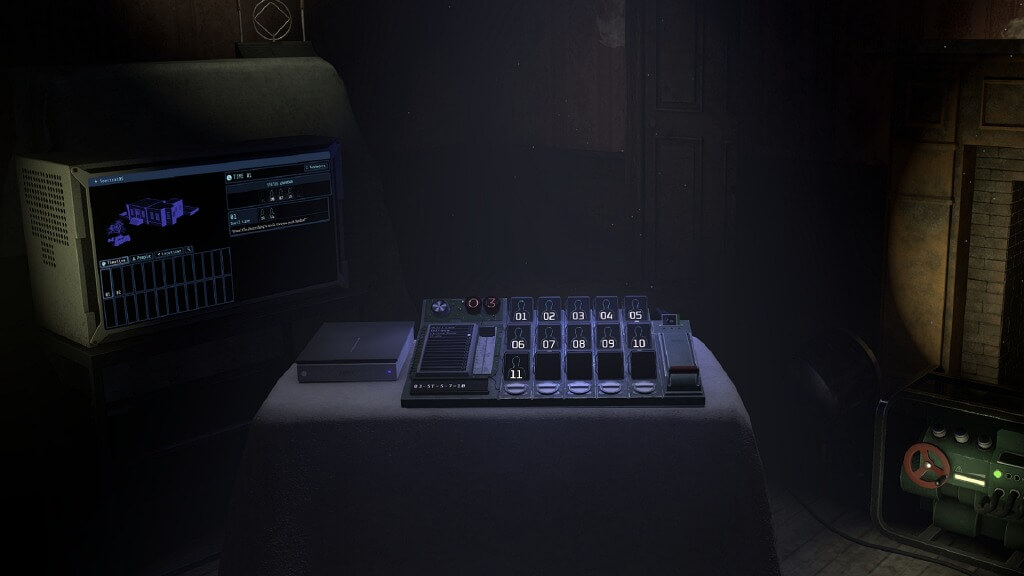
Bucket two is the people who read “text parser” in the above paragraph and immediately moved the game into a mental category best described as “I’ll play this after I’ve retired, if I’m lucky enough that the electricity is still on.” If the game’s central hook—discovering conversations of the long-dead by deducing their existence and participants and then plugging those specifics into a fake computer—tickles something in your brain, but the idea of navigating a fake version of DOS while staring at gray walls of words repulses you, The Incident At Galley House is doing you the best service imaginable. I might suspect that the new game is slightly easier than Type Help—mostly because hearing the dialogue, and the intent behind it, often makes lines much easier to interpret—but the Evil Trout team has done an exceptional job of recreating those core pleasures via the new game’s sound and visuals. When you’re deep into the hunt for new scenes, or slowly working your way toward understanding one of the game’s layered mysteries, it doesn’t really matter if you’re doing it by typing into a text interface or flipping knobs. If The Incident At Galley House does nothing but make this excellent story more accessible to people who otherwise would have skipped it, it justifies its existence then and there.
The final bucket are the people like me, who played Type Help last year. (Or more recently: Welcome back, Bucket One!) The question here is “Should I play The Incident At Galley House if I’ve got Type Help still fresh in my mind?” And it’s one I felt less definitive in answering for most of my time with the newer game. There’s a pleasure in revisiting a mystery with the solution already in your head, after all, of seeing all the clues and foreshadowing be gently plopped down among the red herrings and deflections. The game’s visuals are understated but strong, and the voice acting is generally of a high caliber. (And where it dips, it’s usually because the game traffics in slightly stock personalities as part of its efforts to help keep its characters clear.) But the game is also so slavish in its recreation for so much of its running time that strong memories of Type Help can’t help but threaten to overwhelm the new version, or make it feel like you’re simply moving along grooves you’ve already worn in your mind. It’s only in the closing stretch that players are invited to go epiphany hunting again. Without going into serious spoilers, I’ll note that Galley House does not have a full extra game bolted on to it the way Roottrees did with its included Rootmania expansion—but that Rous and the Evil Trout team have indulged in a few flashes of deep cleverness that serve as a reminder of what made Type Help so exceptional. By the end, I was more than happy to have taken this particular trip down memory lane all over again.
Because, most of all, The Incident At Galley House served to remind me of how excellent this mystery was—of how the game slowly builds understanding on both its micro and its macro levels. That can come from picking up, hours later, a nicely subtle clue pointing you toward one particular scene that’s otherwise a pain to locate, or from having some off-hand comment finally click in your head about what’s actually killing these poor fools. The Incident At Galley House may not go very far in inventing new revelations for players to stumble into, but it does a fantastic job of not getting in the way of what was already there. A well-crafted remake of an excellent game can’t help but be excellent by association; meanwhile, I’ll be happy to take more people playing through this story and it subtle, gorgeous horrors any way they can get it.


 Keep scrolling for more great stories.