The first time Godzilla destroyed Tokyo was less than a decade after atomic bombs destroyed two Japanese cities and conventional firebombs devastated many more. The 1954 Godzilla was an entertaining monster movie, yes, but it was also a serious horror movie with a kaiju-sized metaphor for nuclear war at the center. A decade after that, however, Godzilla was doing a little dance on the surface of another planet after defeating a three-headed alien dragon. Over the course of Godzilla’s more than 75-year history and various franchise reboots, this trajectory keeps recurring. The King Of The Monsters starts out making some serious points but once the sequels add other kaiju for him to fight, the films get silly. Every single time, the popcorn-munching spectacle of two or more giant monsters whaling on each other crowds out any metaphors or gravitas—until Godzilla Minus Zero.
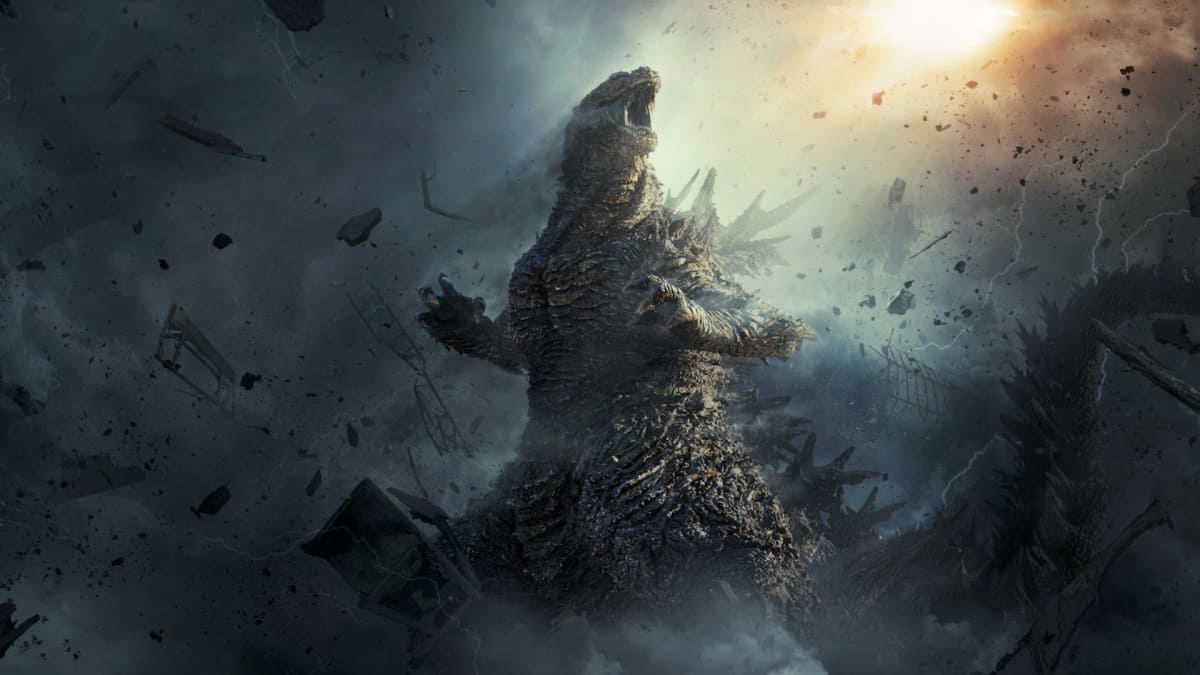
While the previous film, Godzilla Minus One, might have been the first Godzilla movie to win an Oscar, Godzilla Minus Zero achieves another franchise first. This is the first time that a Godzilla sequel has maintained a sense of seriousness and made a critical point. The fact that Godzilla Minus One does this and also has a killer fight between Godzilla and King Ghidorah only makes it more impressive.
It was not a given that Minus Zero would be able to live up to the gravity of Minus One. The 2023 film was originally meant to be a standalone film, and the Godzilla franchise has a decent track record of relative solemnity when it comes to standalone movies or the first entry in a franchise. There’s typically only one monster, Godzilla, meaning they don’t need to contort themselves into making the popular character a “good guy,” nor do they have to one-up any previously established scale of destruction.
The first reboot of the Godzilla series in the ’80s, The Return Of Godzilla, featured just the titular monster and put him in the middle of Cold War fears. The following movie from that era of the franchise introduced psychics who could communicate with kaiju, an adorable baby Godzilla, and an evil version of Godzilla from outer space. The first MonsterVerse movie in 2014, which admittedly does feature some other monsters, wasn’t the most high-minded film ever made, but its tone is lightyears away from the proudly stupid Godzilla X Kong: The New Empire. Shin Godzilla used eldritch horror to comment on the Fukushima disaster, and there was no direct sequel to taint it. Minus One could have been a one-and-done masterpiece, because it seemed like a monster-mashing sequel would surely fumble the tone.
On many levels, Godzilla Minus Zero does threaten to become a sillier film than its predecessor. While the first film was a postwar drama featuring a mutated dinosaur, the follow-up opens with an almost casually tossed-off admission that there’s a new monster and it’s an alien from outer space. There’s a human-kaiju hybrid, a classic mad scientist device that lures Godzilla, and the build-up to the real reason most moviegoers are here: to see Godzilla and Ghidorah fight. Minus Zero delivers on that last front exceptionally well; it’s one of the coolest monster fights in the entire franchise. But Minus Zero is about much more than just that fight. It’s a film about Japan’s relationship with the U.S. while the American military occupied Japan in the wake of World War II. It’s about the American pursuit of bigger and more powerful nuclear weapons, whether bombs or monsters. It’s about what parents owe to their children. It’s about what actually happened to Hiroshima, complete with flashbacks to the blackened corpses of a mother and child. And it’s about cycles of violence, and whether revenge is justified or if it’s simply soul-destroying.
To be fair to some other Godzilla sequels, it’s not as if all of them have been totally empty kaiju calories. Mothra Vs. Godzilla has greedy industrialists. Godzilla Vs. King Ghidorah pertains to Japan’s economic miracle. Godzilla, Mothra And King Ghidorah: Giant Monsters All-Out Attack touches on Japan’s denial of the crimes the country committed during World War II. Perhaps the most successful Godzilla sequel with a message was Godzilla Vs. Hedorah, an acid trip that used its smog monster as an environmentalist parable. All of those movies, however, were more focused on the “vs.” or “Giant Monsters All-Out Attack” parts of their titles than their societal message.
Godzilla Minus Zero has its nuclear-powered cake and eats it too because, even though the kaiju action is massive, the narrative focus and the stakes remain very human. Of the other Godzilla sequels that tried to say something, Godzilla Vs. Hedorah was one of the few to actually show humans dying as a result of these monster attacks. Typically, Godzilla smashes buildings and, while the audience knows that there are people inside of them, the casualties and loss of individual human lives are ancillary. Hedorah contains surprisingly graphic deaths as civilians suffocate on poison gas and their bodies dissolve into bones.
Minus Zero goes several steps further, showing the horrible things that kaiju do to people, and children are not exempt. While fighting Ghidorah in zero-gravity, protagonist Kōichi Shikishima (Ryunosuke Kamiki) looks helplessly as a terrified woman holding a small child screams in terror before the balcony they’re standing on falls back to earth, killing them. In another scene, a woman wails over the body of her dead child in a crowded hospital after a monster attack. The flashback to bodies in the wreckage of Hiroshima and a plot development that makes the atomic bombings a more explicit part of the story than any Godzilla film before gives the film unprecedented grounding in real-life death. The most upsetting sequence comes when we see a vision of what Godzilla’s atomic breath would do to the residents of New York City. The idea of Godzilla attacking the Big Apple sounds fun, until you see what it does to people rather than just landmarks.
Minus Zero also benefits from a human cast whose drama is as engaging as the kaiju action. While Godzilla Vs. Kong director Adam Wingard said he understood that people weren’t coming to see Alexander Skarsgård and Rebecca Hall’s characters, Minus Zero brings back Kōichi, Noriko Shikishima (Minami Hamabe), and their impossibly adorable adopted daughter Akiko—and it’s very easy to be invested in the wellbeing of this found family. With this family in danger, the stakes hit differently when the buildings start crumpling and the kaiju start brawling above them.
The climax of Minus Zero specifically centers on little Akiko, while her parents struggle to decide what’s the best thing to do to keep her safe. Even coming after a knockdown kaiju battle and a shocking character death, this scene is the most gripping moment of the film. It’s indicative of what makes Godzilla Minus Zero a different kind of sequel than any of the Godzilla films that came before it. Even as the monster action escalates and becomes bigger than ever, the focus remains on the people. That, in turn, lets the kaiju be more than just mere monsters.


 Keep scrolling for more great stories.