
Gorillaz was a game-changer in the surprisingly deep history of virtual artists
"Clint Eastwood" was huge, but not actually the music world's introduction to virtual bands.
(Image: Gorillaz)
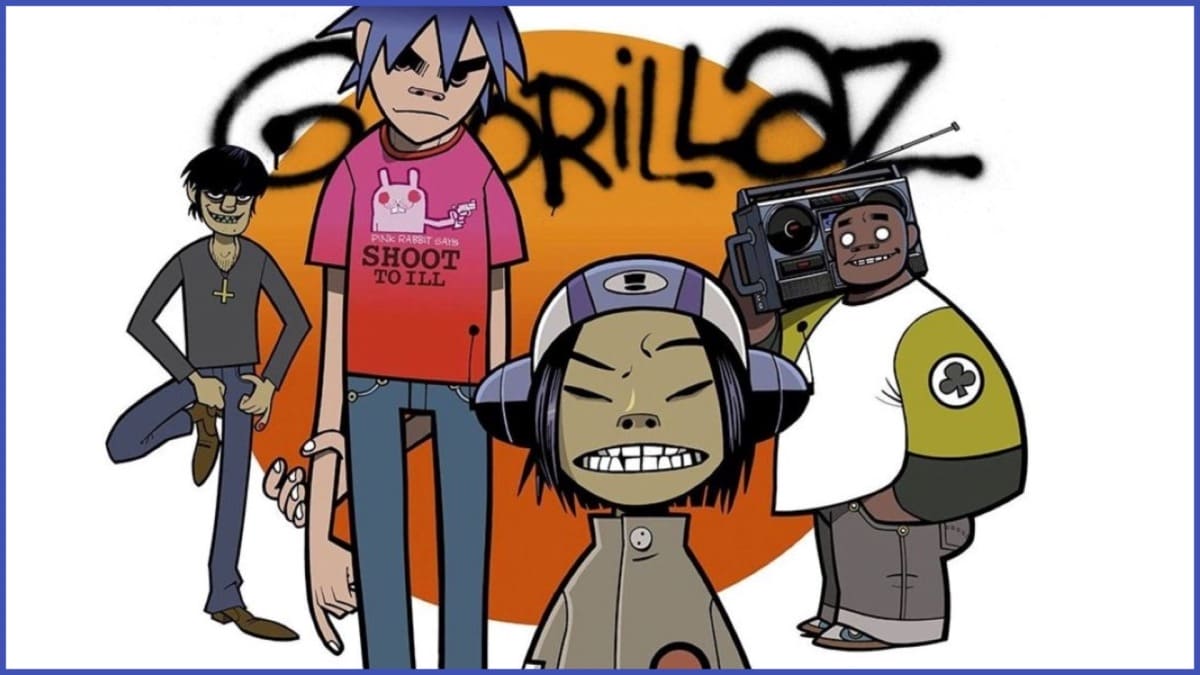
Writer Alan Martin and illustrator Jamie Hewlett were the stars of Deadline magazine (the British comics magazine that stopped publishing in 1995, not the one you’re thinking of). This was thanks to Tank Girl, their hit comic series that even got a live-action movie adaptation in 1995. Among the comic’s fans was Graham Coxon, of the U.K. Britpop band Blur. He was such an enthusiast that in 1990, he arranged to have Hewlett interview Blur for the magazine.
That went fine, but Coxon didn’t stay a fan for long. As Hewlett later explained, at some point after meeting, “I started going out with Graham’s ex-girlfriend, so he hated me.” As for Blur singer Damon Albarn, that relationship wasn’t great, either: Hewlett thought he was “arsey, a wanker.” They eventually warmed up to each other, and by 1997, they were flatmates in London. They didn’t just share that space with each other: it became a major party spot. One eventful night, members of Radiohead, Pavement, and the Spice Girls showed up. Another afternoon, the two got back-to-back voicemails from David Bowie and Pete Townshend, both wondering when the next party was.
“It had to stop,” Albarn later said. “You start looking at yourself and thinking, ‘I’m behaving in a disgusting way. It’s good fun but I’m not happy with it. I can’t possibly do this for much longer.'”
Though that apartment produced some wild moments, it was a calm scene that ended up being most important. “One day, we were home watching MTV with our eyes just kind of glazed,” Hewlett said in a 2005 interview. “Because if you watch MTV for too long, it’s a bit like hell—there’s nothing of substance there. So we got this idea for a cartoon band, something that would be a comment on that.” With Albarn leading the charge musically and Hewlett spearheading the visual identity, the two began work on a project they would eventually name Gorillaz.
The term “virtual band” was popularized to describe the group, consisting of cartoon members 2-D, Murdoc Niccals, Russel Hobbs, and Noodle. Their self-titled debut album arrived in March 2001. Fueled by the moody lead single “Clint Eastwood,” the album was a hit, peaking at number three on the U.K. charts and just outside the top 10 in the U.S. Albarn was the quarterback, but he brought plenty of teammates on board, too, embracing a collaborative energy to deliver diversity and variety of perspective to the stylistically adventurous but cohesive LP.
Gorillaz turned 25 years old in 2026 and it has remained appreciated since its release; “Clint Eastwood” has over 1.2 billion streams on just Spotify and the album is beloved as one of its era’s finest. More broadly, Gorillaz are recognized as pioneers of the virtual band space. What’s important to understand, though, is that they’re far from the first to do it.
If a “virtual band” is defined as a musical act represented by animated characters, the first popular example has to be The Chipmunks, who emerged in the late ’50s and were, with all due respect, a far bigger phenomenon than Gorillaz. Not only was 1958’s “The Chipmunk Song (Christmas Don’t Be Late)” a number-one hit on the Billboard Hot 100, but it was nominated for Record Of The Year at the first-ever Grammys. It missed out on that award but did pick up three other trophies: Best Recording for Children, Best Comedy Performance, and Best Engineered Record—Non-Classical.
 Keep scrolling for more great stories.