Welcome to Crosstalk, wherein A.V. Club writers discuss their varied (or unvaried, as the case may be) perspectives on a pop-culture topic. This time, the entrance of a new smug bastard (not that kind of bastard) in the Dance Of The Dragons has editor-in-chief Danette Chavez, TV critic Saloni Gajjar, and senior TV editor Erik Adams pondering where, exactly, does Ormund Hightower get off?
Danette Chavez: Whether or not you’ve read Fire And Blood, I think we’ve all always known this civil war was going to get a lot uglier before any sort of order (even the illusion of it) was restored. This week’s House Of The Dragon episode, “Unbowed And Unbent,” might not yield the body count of the season-three premiere, but it’s still a pretty brutal installment of this show—the rules of engagement, if they ever existed, are out the window. Guerrilla tactics are now the order of the day for the Greens, and increasingly the Blacks. And at the center of the chaos is Ormund Hightower (James Norton), a man who is prepared to stoop ever lower to conquer.
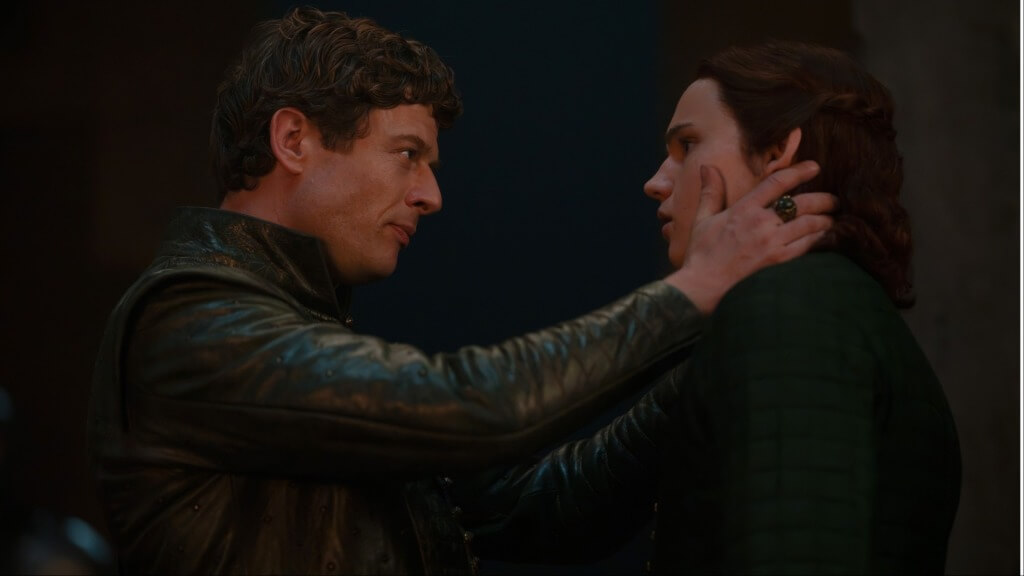
Ormund presents a more than credible threat to all of Viserys I’s heirs, whatever their proximity to the Iron Throne at the moment. He comes from one of the great houses; he commands both a powerful army and one of said heirs; and he sees replacing the Targaryens as his calling. But, if I may, just who the hell does this guy think he is? Ormund seems to have come out of nowhere, sowing more division into a fragmented realm—which, to be fair, was never particularly united; Torrhen Manderly makes a point of noting that “Flea Bottom has ever been a kingdom unto itself”—ready to install his ward Daeron (Benjamin Evan Ainsworth) as king. He even left Otto Hightower (Rhys Ifans) on read this whole time!
Saloni, you’ve read the book—how does the show’s depiction of Ormund so far line up with the source material?
Saloni Gajjar: In the books, Ormund is still a tough general and desperate to get Daeron on the throne, if I remember correctly, but I’m a big fan of how much the show is exploring his evil personality and temper in a way that I don’t think Fire And Blood does. It gives House Of The Dragon a proper villain again, especially now that Criston Cole is trailing behind ever so slowly and Aemond is stuck at Harrenhal. It’s making me like Ormund a lot, if that makes sense, because he’s just outright bad for all the reasons you mentioned, Danette. He seems to want to push the Hightower line ahead, but evidently, he just wants to be in a position of power and Daeron is the closest way for him to get there. It’s a little reminiscent of Alicent’s scheming in season one.
As much as I’m enjoying Ormund’s ways, I grew a little tired of the episode in general. If HOTD has truly struggled with one thing since it began, it’s with pacing, and I think season three—after a strong start—is entering that repetitive mode again. But the end of the episode, and Daemon’s discovery of Luthor and City Watch’s bodies, made me perk up again. How did you both view that scene?
DC: The thing is, I welcome Ormund’s chaos! I think he makes for a compelling complication in what’s already a very messy conflict, one that’s made even messier by all of this week’s entrails. (Who knew House Of The Dragon would be so quick to up the ante on a feast of rats?) Sure, I’m a little concerned that he seems to have been given an expanded role in part to give Alicent and Rhaenyra a common enemy at a time when the show has—to your point about repetitiveness—struggled to find reasons to keep them together beyond the fact that they’re the protagonists, as much as a story like this has protagonists. But he’s more than just a schemer, if the vicious murders of the Goldcloaks are any indication. Ormund fits seamlessly into the broader Game Of Thrones lineage of “guys you love to hate,” guys like Ramsay Bolton and Joffrey Lannister, but the fact that he believes he has a greater purpose—one that involves upending the last however many years of Targaryen rule—is an interesting wrinkle
This man had some random kid’s hair dyed and may even be dyeing his ward’s hair—to make him look less like a Targaryen and remind Ormund less of his “tainted” blood—so he understands the importance of appearances. He seems to grasp how to fight a war off the battlefield better than the rest: sneaking his own currency into King’s Landing at a time when its coffers are empty, making it so defending Rhaenyra seems like a death sentence, presenting a more palatable alternative to the incestuous rulers that have been playing musical chairs with the Iron Throne. The tableau of the slain City Watch and their captain at the end is Ormund’s doing; we see a few people in Flea Bottom trade whispers before one man sends a raven with confirmation of an earlier kill. But I’m wondering how far the conspiracy goes. Ormund’s made a lot of his belief in The Seven, and its legitimacy over that of the barbaric Targaryens. Could the Church be involved in this too?
SG: Yeah, there’s a good chance that the Church could be involved because we know the Hightowers are just so religious. And I agree with your point that he’s more calculating and therefore interesting than the previous dude villains of Game Of Thrones (not just Joffrey and Ramsay, but your Euron Greyjoys and Tywin Lannisters, too) and is willing to patiently play the game, as opposed to rushing into action. It could’ve been beneficial to see Otto and Ormund interact somehow, or to get some breadcrumbs of who Ormund was before he became so pivotal to the show. But I’m appreciative of how detailed they’ve made his arc already. James Norton also just has a great “I’m angry and I’m about to blow up in a second” face. I think they nailed the casting here.
I was also curious while watching episode five about his relationship with Alicent and how much the first cousins share or have shared with each other so far. For example, she didn’t grasp how much her son is under Ormund’s influence, or that Ormund was sending a fake Daeron to trick Rhaenyra and Daemon. Up until now, she’s mostly been the one to manipulate her kids. She keeps wanting to escape King’s Landing with Helaena, presumably to go to Oldtown, but what if she wants to get to Ormund? The fact that she’s also trapped in a tunnel with Helaena at the end of “Unbowed And Unbent” came as a shock mainly because it’s a plot point that is not in Fire And Blood! I wonder where that will lead to and if that will motivate Ormund to hasten his plans at all.
Erik Adams: You and me both, Saloni. The end of this week’s episode recaptured my wandering attention as well—as soon as the crosscutting between Criston, Daemon, and Alicent and Helaena started, I was locked back in. And as much as the “feast for traitors” strikes me as some fairly standard-issue Westeros grotesquerie, the dilemma faced by our former queens consort, however, made me gasp. “Unbowed And Unbent” does a good job of portraying what little room Alicent and Helaena have to maneuver right now—even when they don’t think they’re being watched or listened to, their plans are making it back to Mysaria. So when Heleana notices that mysterious airflow in their bedchamber, it feels seems like escape is an actual possibility. But the dead end they find and the skittering rats make it clear: By striking that pact with Rhaenyra, Alicent sealed herself into the Red Keep with her old friend, and now she and her daughter will probably go down with her, too.
Criston’s invocation of the Seven during his climactic “St. Cripsin’s Day”-esque address to his men could indicate the intervening hand of the gods. The Faith’s iconography and stomping grounds are all over “Unbowed And Unbent”: Alicent pays for her first thwarted escape plan with her Seven-Pointed Star pendant; Rhaenyra and Daemon have their clandestine, High Valyrian conversation about the saboteurs in their midst—and their potentially set-against-fate reign—around the massive altar in the Sept of Baelor. It’s an interesting way to tell a story within the rigid confines of a prequel: Since we’ve already seen where this all leads to—Roberts’s Rebellion and all the Game Of Thrones that comes after it—why not play around with the idea that what’s happening here was already written in the stars? The signs of an impending strike from Ormund (or an uprising whose seeds he’s sowing) are gathering, and he certainly feels like he’s at an advantage this week. But as we look toward the rest of season three, and acknowledge that House Of The Dragon still has some surprises up its sleeve, I wonder: In what ways would y’all like to see that smug look wiped off of Ormund’s face?
SG: Having read the book, I know what largely goes down with Ormund next and with Tumbleton, so I won’t spoil anything. But one of my favorite parts of House Of The Dragon (or any adaptation, for that matter) is to see how writers and actors interpret the source material and try to bring their own energy to it. HOTD has already taken a lot of creative liberties to get to the same destination as where the book ends up, like the deal struck between Rhaenyra and Alicent. It’s the same for Ormund Hightower, whose presence in season three is already more exciting to me than what he was doing in Fire And Blood. I don’t even necessarily want the smug smile wiped off his face—let him win a little! At least he also knows how to keep his men in check, and I wonder what’ll happen to the army if anything were to happen to him. And if someone has to stop his winning streak, wouldn’t it be interesting if Daeron—clearly scared and fearfully obedient of the man—brings him down a peg or two by honestly expressing his feelings about Ormund’s psychological manipulations? Would it hit Ormund harder to see his own ward betray him? Maybe.
DC: Here’s my bold prediction: Ormund Hightower is going to get stinkbombed out of his stronghold at Tumbleton. The one thing Alicent really remembers about her cousin, or is willing to share with Rhaenyra, is that he’s very sensitive to smells. He was introduced taking a long whiff from his pomander and ordering a spa day for the messenger that delivered a message from Alicent-as-Aemond. Right now, it’s a thoughtful little character detail that allows Norton to do wonderful things with his nostrils, but there’s been so much shit this season—literal and figurative, which Aegon (Tom Glynn-Carney) has encountered in near equal measure—that I can’t help but think there’s going to be some, uh, overlap. Picture it (or don’t): Trebuchets launching stinking piles of turds at the Footly ancestral home, and Ormund in retreat, with a pomander for a helmet.
Not that I think that will be the end of the latest Hightower looking to improve their station. Ormund’s ambition and religious zeal make him a destabilizing presence, but he’s just riding the wave of instability that Alicent first set into motion. Team Green and Team Black have both been so concerned with legitimacy and undermining each other’s that they’ve failed to see any outside threats. But questions about legitimacy just beget more questions (just ask Corlys Velaryon). Why wouldn’t someone else with money and backing and a son of Viserys think he had just as valid of a bid?
EA: And if there’s anything we’ve learned about Ormund in our short time with him so far (aside from his olfactory fixations) it’s his confidence in the validity of his actions. Consider the history lesson he gives to Daeron, involving the legendary Dornish ambush that gives “Unbowed And Unbent” its title. Norton revels in the telling of Meria Martell’s defeat of the Conqueror’s forces, expressing Ormund’s regret that Hightowers were among those who fell to her while speaking admirably of her tactics (and making a tacit dig at Rhaenyra by calling Meria “the only woman ever to be gifted with a truly military mind”). The pride and satisfaction in Norton’s delivery suggests that his character sees himself and his exploits as worthy of being recounted by future generations as they push their pieces around the cyvasse board or quaff wine in their well-appointed studies. What an eminently watchable jerk.
I ask how we think Ormund might receive his comeuppance, but I don’t necessarily want to see it—not yet, at least. He’s a prickish shot in the arm that enlivens even season three’s slower passages, a welcome change from the sadboi knights and whingeing Targaryens who’ve served as villains so far on House Of The Dragon. I look forward to him remaining unapologetic in victory—until such attitude leads to his inevitable downfall.


 Keep scrolling for more great stories.