C

Jenna Ortega outshines the rest of Taika Waititi's cloying A.I. riff Klara And The Sun

The filmmaker's adaptation of an acclaimed novel isn't as cutesy as it seems at first, nor does it ever transcend that cuteness.

Jenna Ortega outshines the rest of Taika Waititi's cloying A.I. riff Klara And The Sun

Beneath the praise for and/or criticism against Taika Waititi related to his irreverent sense of humor, supposed tweeness, and riffing on a “level that is frickin’ sublime,” what binds together most of the New Zealand filmmaker’s work is an ache over fractured, absent, or reconfigured parent-child relationships. The perspective shifts—whether it’s a foster child forced to bond with his new dad after his more affectionate new mother unexpectedly dies (Hunt For The Wilderpeople), a soccer coach struggling to cope with a loss bigger than any game (Next Goal Wins), or a young German boy learning the error of his childish Nazi beliefs through the death of his mother (the dreaded Jojo Rabbit), among others—but questions about personal loss and recovery hang over his work as much as that of his fellow deadpan and supposedly twee artist Wes Anderson. Even Waititi’s much-maligned second crack at Marvel’s Thor subseries, Love And Thunder, hinges on a villain motivated by a child’s cruel death and a hero further redeemed by his unexpected willingness to parent. It’s obviously a theme close to the man’s heart, and in Klara And The Sun, it is more than ever his maudlin undoing.

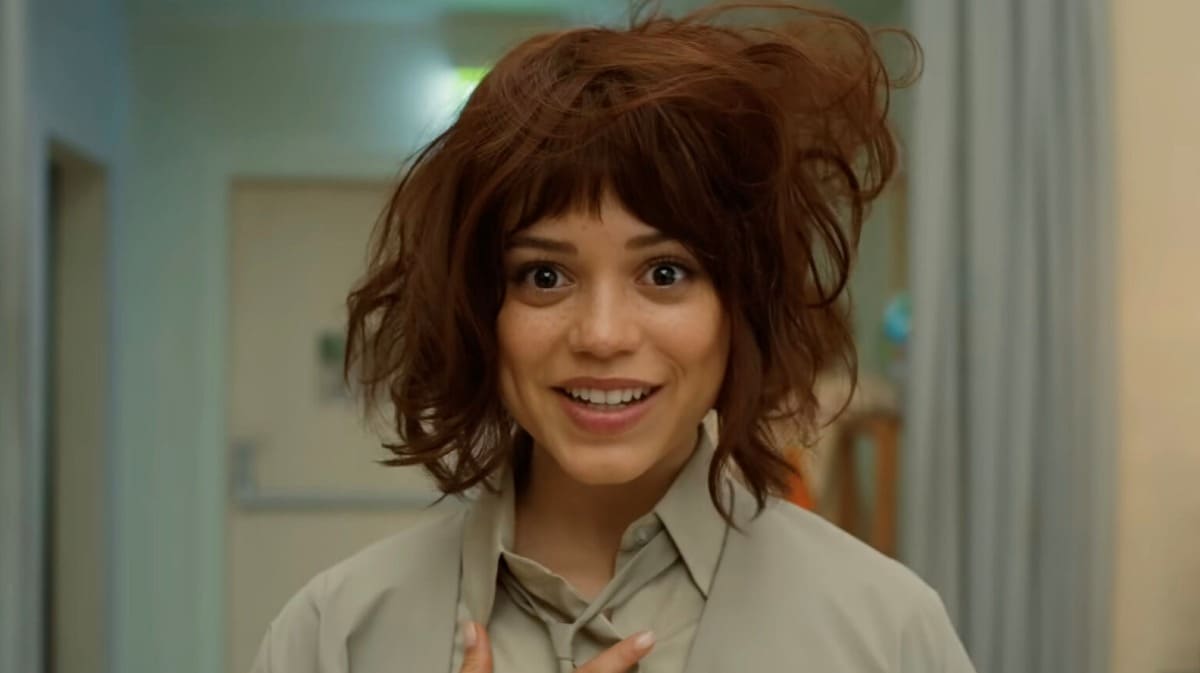
Klara And The Sun, adapted from the Kazuo Ishiguro novel by Waititi and co-writer Dahvi Waller, does have surprises in store, largely because it approaches its heartbreaking story like an entirely different sort of movie. Doubtless this first type—a whimsical, darkness-tinged sci-fi comedy—will annoy plenty of viewers off the bat, especially those combing through Waititi’s work with a cuteness detector and a grudge. But boy, is it difficult to resist the sunny expressiveness of Jenna Ortega as Klara, an Artificial Friend (“AF” for short) who longs for an owner to give her manufactured existence meaning. In this post-internet future (apparently it started World War III, after which our privileges were revoked), electronics-based simulations of friendship haven’t gone away; they’ve just moved over to astonishing lifelike robots, of which Klara is an older model. She waits restlessly at a low-rent store where the friendly if slightly brusque manager (Natasha Lyonne) struggles to compete with other outlets selling newer, sleeker AFs.

The market for these products is apparently entirely teenagers, who have become socially isolated in part because of access to “lifting,” a form of social-genetic engineering that supposedly enhances a child’s intelligence and abilities. This background information is conveyed unevenly; what is easy to imagine layered in with grace on the page becomes a logistical nightmare of what can be conveyed through the POV of Klara, self-described as having the sensibility of a toddler, to be shaped and matured by her hypothetical teenage owner. (It’s telling that the movie’s own logline-level explanation for Klara’s intelligence level neither bears much scrutiny as it relates to Ortega’s inviting performance nor makes much sense within the movie’s world.) Klara is overjoyed when that teenager appears to be Josie (Mia Tharia), who takes an immediate liking to this outdated AF despite the protestations of her fussy mother Chrissie (Amy Adams). Here is where Waititi’s pet theme comes into play, at least for the first time: Chrissie still reels from the death of her older daughter, who Josie remembers only faintly.

Despite Chrissie’s objections to an additional, artificial body roaming around the house, Ortega is never less than winning, enlivening that old actorly challenge of playing a synthetic being attempting to imitate humanity. Actually, Klara And The Sun lets her cheat a bit on this front; unlike, say, Haley Joel Osment in Steven Spielberg’s A.I., there’s hardly an uncanny moment where Klara seems less than fully human; her ability to think and feel never really comes into question. Maybe that’s because Ortega, despite her gothic proclivities, has an innately physical sense of good cheer, from her wide eyes to Klara’s slapsticky approach to navigating unfamiliar terrain such as stairs, or fields of wheat. Oh, and she also talks to the sun, which powers up her batteries and gives her life, causing her to think of it as a sentient deity.

Again, this will be too cute for some. But Ortega is frequently quite funny, especially in the early going, alternating wonder and a deeply human defensiveness about her own weird habits. What grows wearisome about Klara And The Sun is not Klara herself, but the many conceptual hoops the movie lines up for itself to jump through: a synthetic human’s expanding consciousness, a family’s unspoken interpersonal issues, a parent’s coping with a child’s illness, a rigid class structure that the movie may or may not want to address head-on, and more sci-fi concepts predicated on memory, consciousness, sacrifice, and the encroachment of technology upon our emotional lives. That should be the good stuff; a similar kaleidoscope of emotions and ideas made A.I. such a monumental achievement, and Klara really does feel like many of that film’s elements rewired and reprogrammed.

There’s no shame in Waititi not reaching Spielberg levels, but he often feels like he’s taking shortcuts, only to still not quite arrive at his destination. This is most immediately noticeable with the shakily dramatized bond between Josie and Klara, which feels like it’s missing a crucial middle section. But there are greater reverberations, too, in how these characters, who live in relative isolation in a prairie-like atmosphere, relate to the greater retro-future world. The resulting tonal lurches knock some talented actors off-balance, particularly Adams—on a bad-luck streak for the ages, given her all-timer status—who keeps searching for the raw pain beneath Chrissie’s over-polished surface, to little avail.

The undercooked social satire, adrift performers, and Waititi’s tendency to resort to smarmy caricature culminate in a rail-jumping scene where Chrissie hosts a party for Josie to meet other “lifted” teenagers, their own Artificial Friends, and a bunch of parents. The resulting cacophony of thin new character introductions, misjudged poor-man’s Terry Gilliam costuming, and conflicts that never really pay off—in case the movie needed more characters to serve, there’s also Josie’s sweet boyfriend Rick (Aran Murphy)—serve as a Rosetta Stone for why the movie is more off-putting than truly moving or disturbing. Rather than deftly steering between the comic, tragic, uncanny, and beautiful, Klara And The Sun often feels like the result of three or four distinct storylines singing their heart out at once. It’s as if Waititi has become so overwhelmed by different notions of loss (and the enticement of wringing poignant tears from them) that his movies have been trapped in a feedback loop of grief over grief over grief. All that perseverance results in a system overload, which this movie tries to repackage as ambiguity. Klara’s outdated tech can make her a little glitchy, and Klara glitches alongside her.

Director: Taika Waititi
Writers: Taikia Waititi, Dahvi Waller
Staring: Jenna Ortega, Amy Adams, Mia Tharai, Aran Murphy, Natasha Lyonne, Steve Buscemi, Rachel House
Release Date: October 23, 2026

 
Join the discussion...
Keep scrolling for more great stories.