If Heated Rivalry was the steamy gay romance rarely seen in mainstream media, Leviticus is a kind of queer horror movie that unpacks its heavy themes in between potent jump scares and the ever-growing suspense that the killers are getting closer (and better at mimicry) the more time the cursed couple spends together. On the surface, the quiet horror of intolerance gives way to the more overt violence of conversion camps and “pray the gay away” hokum. Nothing is really spoken aloud about the church’s homophobia until it’s time to punish the accused boys—who are very much still children!—for the alleged crime of liking each other. Leviticus, one of the earliest books in the Old Testament, focuses on law and order, what can and cannot be done, and if some sin is committed, what atonement should follow. Forgiveness is not for the congregation to bestow, that’s God’s job, but punishment is theirs to administer. This is the justification of the conversion counselor, who steps in to do something that, at first, looks like a way to scare the kids straight. But that’s not enough for the zealots. Even when the kids sound the alarm about this process, their parents don’t believe that the punishment is costing these children their lives or putting them in danger, only seeing it as a justified means of purification.
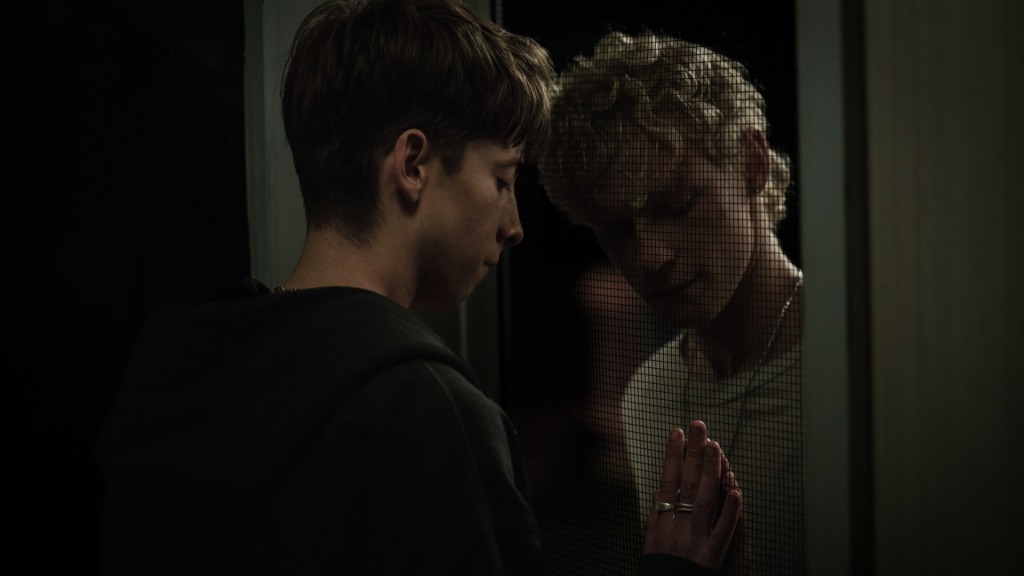
Written and directed by Chiarella (who’s worked on TV like Totally Completely Fine), Leviticus takes on new meaning as Naim and Ryan struggle to survive their newfound horror. They’re afraid to get close to one another, in case it’s not actually the real them but the demonic presence stalking them. In this sense, Chiarella references the embodied terror and confusion of the HIV/AIDS epidemic, which came at a heightened time of intolerance and disproportionately affected the LGBTQ community. There’s a palpable threat that every stolen kiss and moment of affection brings the deadly succubus closer to its targets, and the closer they get to one another, the better the evil beings are at their disguises. Chiarella readily surprises his audiences, and follows his pivots with even more twists, disorienting his characters and keeping his viewers in a constant state of suspense. Whenever either lead spots the other, Chiarella has conditioned our heart rates to spike—and not because of swooning.
To set the mood for this pseudo-Biblical horror, Chiarella and cinematographer Tyson Perkins make use of the industrial setting, remote enough that escape feels like hundreds of miles away but where the boys can still sneak off into the rural areas and abandoned factories for some privacy. It’s a claustrophobic enough small town that they feel isolated and vulnerable. Adding to this aesthetic, it’s unclear how extremist this Christian sect goes beyond the virulent homophobia, but it does look like their religious beliefs prevent them from wearing bright shades, creating a drab palette for the film’s concrete-colored visual style. It’s a purgatory where monotony and conformity are prized by the straight adults, but hold no interest for Naim and Ryan.
Unlike other queer horror classics like Nightmare On Elm Street 2: Freddy’s Revenge or the neo-giallo Knife + Heart, the terror in Leviticus isn’t limited to a serial killer with a penchant for violence. Its violence starts at home, with parents who supposedly love their kids but reject them for loving the wrong person and a community that’s supposed to keep them safe but puts them in the line of hellfire. To save themselves from the fatal conditions forced upon them, the boys try repressing their crushes and themselves, because embracing intimacy may quite directly lead to one’s death. Despite its heartwrenching metaphor and unrelenting suspense, Chiarella gives Leviticus at least one glimmer of hope: Despite all of the terrors facing Naim and Ryan, including ones that wear their own faces, they still at least have each other.
Director: Adrian Chiarella
Writer: Adrian Chiarella
Starring: Joe Bird, Stacy Clausen, Jeremy Blewitt, Ewen Leslie, Davida McKenzie, Nicholas Hope, Zamira Newman, Mia Wasikowska
Release Date: June 19, 2026


 Keep scrolling for more great stories.