
Mel Brooks: The 99 Year Old Man! takes a big-hearted look at an American original
Judd Apatow and Michael Bonfiglio's two-part HBO documentary unpacks a long, resilient life and career.
Photo: Courtesy of Mel Brooks/HBO
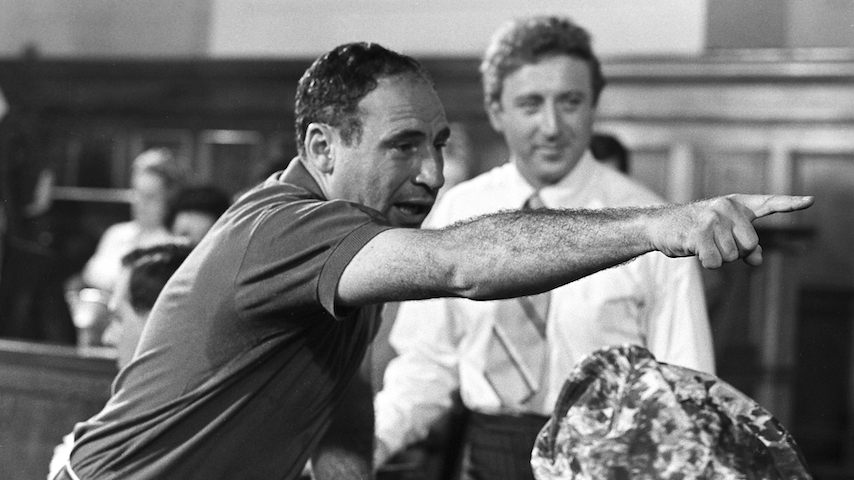
Mel Brooks can really tell a story. That, admittedly, will come off as a painfully obvious observation to anyone who is even remotely aware of him. But one of the charms of Mel Brooks: The 99 Year Old Man!—and there are good amount of them in this two-part HBO documentary from directors Judd Apatow and Michael Bonfiglio—is watching the guy do just that over years, whether it’s on Johnny Carson’s couch in the ’60s, at his home across from Apatow today as he nears triple digits, on a black-and-white TV panel show, or on stages across the States in front of live audiences as they laugh along to jokes he’s probably landed at countless smoke-filled cocktail parties (and they’ve likely heard or read before too).
This move—splicing together footage from across the decades as our storyteller tells the same tale and nails a particular beat, sometimes with more youth and motor-mouthed gusto than others but always with an enviably energy, sharpness, and clear, simple, glint-in-the-eye want to entertain—becomes a signature in The 99 Year Old Man early on. And it helps drive home not just how long Brooks has been around and in the game, but how much that game has changed while the multi-hyphenate continuously figured out a way to carve a space in it. He’s a living link to the dawn of television as a medium, having first been hired as a comedy writer back in the 1940s by Sid Caesar after serving in World War II—and, soberingly, he’s outlived so much of the budding talent he encouraged. (David Lynch tells a wonderful anecdote Brooks, who would go on to produce the The Elephant Man [and took his name off the credits to not confuse his fanbase], coming out of a screening of Eraserhead: “The doors blew open, and Mel came running toward me. He embraced me and said, ‘You’re a madman; I love you; you’re in.'”)
In the opening minutes of the documentary, Apatow lays out Brooks’ breadth of work and unique career plainly: “You’re on TV. You’re funny in the interviews. You’re doing the 2000 Year Old Man. You’re kind of doing stand-up. You’re directing the movies, you’re acting in the movies, you’re writing the movies. To a lot of people who went into comedy, they thought, That seems like the best job in the world, the Mel Brooks job.” (Brooks’ reply: “I’m glad nobody took it.”)
But the documentary, and Brooks himself, does a nice job of selling that his rare position wasn’t without its struggles and, despite his hits (Blazing Saddles and Young Frankenstein were the second and third highest-grossing films of 1974, respectively), he hardly felt on solid ground. While working on the Caesar-starring Your Show Of Shows, the young writer started experiencing panic attacks, would vomit between parked cars during breaks from the stress, and experienced debilitating self-doubt. “I had a dream about being at the wheel of the car and the car was out of control,” Brooks recalls. “I’m not a genius. I’m not smart. I’m not funny. I don’t deserve this. They’re gonna find me out and fire me.”
 Keep scrolling for more great stories.