Well, we’re halfway through, and at least the investigation is slowly getting somewhere. By the end of “Solitude,” the main law-enforcement characters in the Felicia Frost investigation have a working theory related to the connections between victims. It seems that Jurek Walter (or the unidentified Sandman, or both) has a very specific way of targeting his intended prey: disappearing and/or killing their loved ones in order to force them into suicide.
Jonah puts this together over the course of the episode through somewhat convoluted means. Predictably but somewhat frustratingly, none of the obstacles introduced in previous weeks matter here: Quinn is still bothered by Jurek’s note that accused Jonah of planting evidence, but she has no intention of letting that even slightly affect the investigation. There’s even a scene of Chief Ellison urging Jonah to talk to Quinn, but that conversation gets pushed to another week as Jonah goes off on yet another of his unannounced missions, and she reluctantly tolerates it like always.
This time, he’s following up on a lead from a hunter who spotted one of Jurek’s distinct air pipes in the woods. (The usual tree symbols show up, too.) This time, the victims who were buried alive happen to be dogs—beloved race dogs belonging to the late Pat Yodar, who eventually killed himself after they all went missing. Jonah only puts this together after a violent run-in in the drug lab of Pat’s nephews, vaguely creepy villains-of-the-week who initially seem like Sandman candidates.
All of this takes up a decent portion of the episode, and I’m not sure the minor thrills are worth the time. Why did it take a pile of dog bones for Jonah, or anyone, to spot a suicide connection among the friends and family of Jurek’s victims? Why haven’t we heard the name “Ben Tozzy” before now if his suicide (and the murder of his two AA sponsors) form such a key part of this theory? Ditto the motorcycle suicide of Cassie Ford’s son. These new details are introduced clumsily, like puzzle pieces that the characters had access to while the audience didn’t.
The “victims aren’t the victims” theory does sound intriguing, but the show will need to explain exactly how it all works before I entirely suspend my disbelief. Can suicidality really be anticipated so easily, even by an expert in psychological warfare like Jurek Walter? If his real targets were indeed the friends and family of his underground prisoners, what does he have against Ben Tozzy and Cassie Ford’s son? (His personal vendetta against Sam makes a little more sense, at least from his vengeance-driven perspective, and taking Rebecca from his captor without hope for closure is an especially cruel punishment.) Why play the long game on so many fronts, entirely relying on the possibility of his targets eventually choosing to end their lives? Is it just about cruelty, about stringing out his victims’ suffering as long as possible? That would fit the Sandman’s M.O.—just think about the other victims underground, struggling to suck fresh air out of those pipes while slowly, slowly, slowly dying.
We get more evidence for Jonah and Ellison’s theory during the slow-burn Michael Frost subplot this week. I remain mixed on these scenes of mother and son reconnecting; it’s easy to feel for Ida, given the tragedy and horror of her situation and the strengths Chrissy Metz’s performance, but most of the time Michael is too generic of a traumatized-child character to really connect with on a human level. Yes, there are moments this week when the show stays pretty rooted in psychological realism, like when Michael craves the cold solitude (there’s the title!) of a dark closet, both at home and at the local diner. But it’s hard to reconcile those scenes with the stereotypical creepy-kid horror of Michael forcing his mom to play a game of Hangman with a deadly message.
It’s clear that Michael has been through a lot in the last three years, but there’s no consistency to his character here, nothing to latch onto. Two weeks ago, he was happily weeping in his mother’s arms after regaining his sight, and facing the outside world with an anxious smile. Now he’s straight-up telling his mom to hang herself if she wants her daughter to live, and he hardly seems emotional about any of it. It’s an unsettling way to end the episode, sure, but a shallow type of unsettling.
Even the RHU storyline is a mixed success at best right now. The moments when Saga and Jurek actually make direct contact can be electric, and it’s still interesting to watch Saga manage her dual identities, adapting her own organic reactions to the character of Esther. When she threatens to kill Jurek, for example, it’s a tactic to prove she’s authentically crazy and not a cop—but she’s also talking to the man responsible for her father’s death, so there are three years of rage and perhaps bloodlust fueling her words. And when she tricks Karl with her fake sobs in order to get a long face-to-face look at Jurek, she’s behaving as Esther would, not doing anything that would risk blowing her cover.
Nocturne is still dedicated to the slow burn, and that’s not inherently an issue. At this stage, Saga is just finally starting to get some words out of Jurek, and it makes sense to spend some time watching her lay that groundwork rather than jumping right into an unrealistically trusting friendship. This is an evil mastermind she’s dealing with, after all, and escaping his bullshit detector will be a tough task.
Still, it feels more and more like each episode of this show is intent on stretching the mystery thinner, peppering in red herrings and false leads while relying on most of the characters acting deeply stupid. Maybe Saga’s Hopewell River Gorge tip is valuable intel that will point to Jurek’s last kill site, but it feels just as likely that Jurek suspects Saga is a plant and is testing her by sending the cops to this dangerous, remote location. That could make for a tense set piece, but it’s not a great sign when that’s the main pleasure this show has to offer.
Stray observations
- • Another week, another opening flashback that doesn’t really tell us anything new. Jonah planted evidence, as expected, and he did it directly after Jurek taunted him about Sam and Rebecca.
- • Not sure what to think yet about Karl becoming an FBI asset, but it’s quite cathartic to see Quinn really lay into Karl and get it through his head that he’s helping out a compulsive liar and certified insane person. Dude is a moron, and his thoughtlessness reaches new levels later in the episode when he makes that rookie mistake with Saga.
- • There’s more of Quinn arguing on the phone with her ex about custody, but again, I’m not sure it actually illustrates anything new about her as a character.
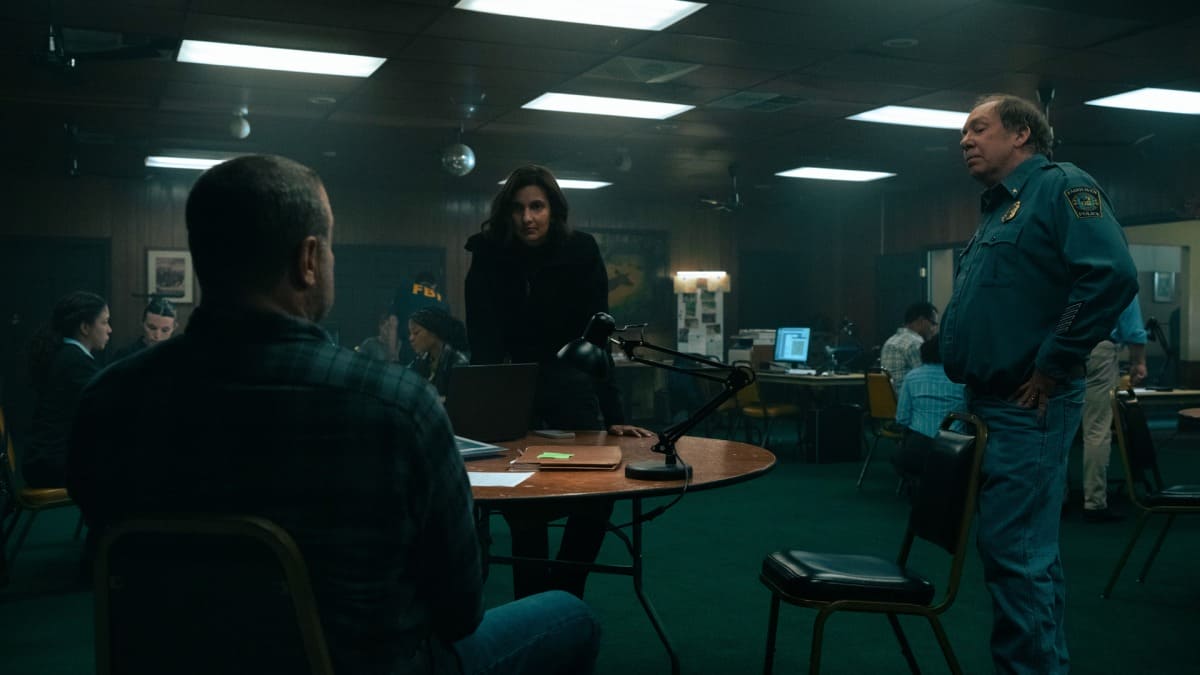
- • Bill Camp brings a nice naturalism to every role, so I’m enjoying his presence here, even if there’s not all that much to Chief Ellison. His energy just feels different from any of the other characters. I love that he didn’t come to Pat’s house with any handcuffs.
- • That said, I’m not quite understanding Ellison’s ongoing guilt about not believing Jonah’s accomplice theory. It’s nice that he wants to make amends, but he came around before long, and that was several episodes ago anyway. Not even Jonah cares.
- • Nathan almost looks proud giggling at Karl’s description of the psychopathic Esther. Kind of cute.
- • Jonah is just now finding out that Saga got moved to the RHU? Why wouldn’t Nathan have discussed that with him immediately?


 Keep scrolling for more great stories.