We know, it’s holiday weekend so you’re probably looking for culinary recommendations. But in case you need a break from family or or fireworks, staff writer William Hughes proffers a panel show as convoluted as it is joyful and editor-in-chief Danette Chavez suggests staying inside with Olivia Rodrigo’s sonic recovery.
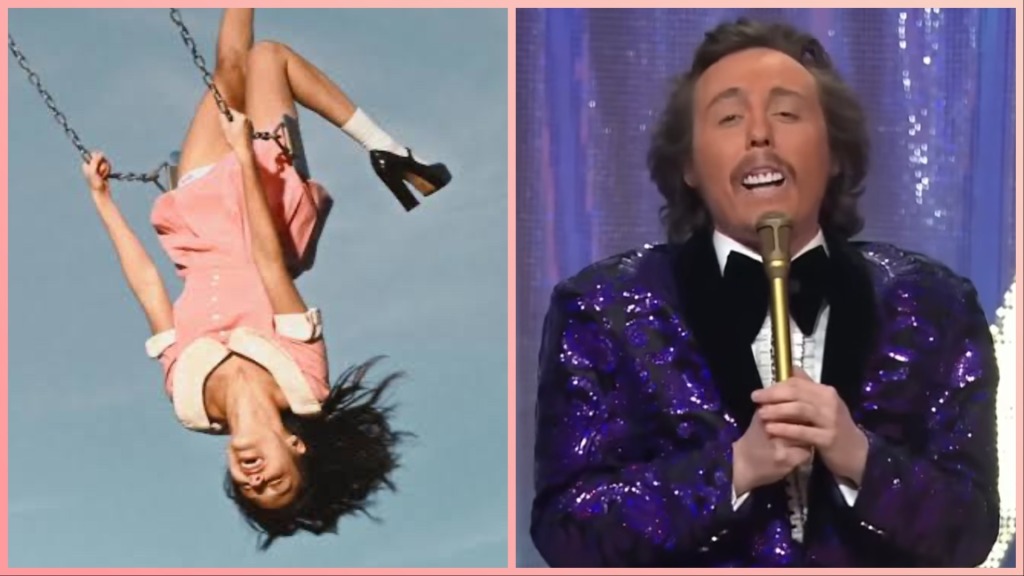
William Hughes: Guy Montgomery’s Guy Mont-Spelling Bee
English is a language of arbitrary and often blatantly unfair rules, which is the sort of thing that makes it hell for students trying to learn it—but turns out to be fertile ground for comedians willing to subject themselves fully to its absurdities. Such are the lessons of Guy Montgomery’s Guy-Mont Spelling Bee, a panel show polite enough to let you know upfront, courtesy of its title, exactly how much convoluted and joyful stupidity it has in store for viewers. Hosted by comedian/Grown Ups 2 survivor Guy Montgomery, the series originally grew out of COVID lockdown frustrations, as Montgomery ran his comedian buddies through Zoom-based spelling bees that were as much about crafting goofy jokes as the precise arrangement of consonants and vowels. It’s since spawned not just one but two TV shows, as the series migrated across the Tasman Sea from Montgomery’s native New Zealand to Australia a few years back, towing its gleefully destructive take on the game show format with it.
It would be inaccurate to suggest that the Guy-Mont Spelling Bee isn’t really about the spelling, because it is: Despite the goofiness surrounding it, the show still clearly has an interest in the blend of palpable tension and “Hey, I could nail that” smugness that powers “real” spelling bee viewing. But even more than that, it’s a meditation on the comedic power of unfairness, as Montgomery—a podcasting and Taskmaster New Zealand favorite who’s found a perfect outlet here for his precise blend of chipper smarm, joy in wordplay, and cheerful cruelty—and his writers invent increasingly elaborate ways to fuck over contestants. I’ll admit to a special fondness for the show’s recurring “Homophones” round, in which players are asked to spell something like “Four beers”—with their only guidance being an elaborately crafted sentence that combines forces with Montgomery’s Kiwi accent to make it impossible to determine if they’re actually being asked to assemble “forebears,” “for bears,” or “four bears.”
The impossibility of the task is a feature, not a bug, as Montgomery (paired up with assistant Aaron Chen for the show’s first few seasons, and Australian chaos monster Sam Campbell for the most recent one) delights in setting his comedians up for failure. The result is a tone that walks a beautifully delicate line between mean-spiritedness and playfulness, genuine pride and embracing the absurdities of looking like an idiot on national TV. (Credit to the show’s casting department, which does an amazing job of balancing comics still working off a lifetime of gifted kid syndrome with those happy to admit they couldn’t give a fuck about the spelling of “Praseodymium.”) The whole thing is arbitrary and chaotic, and yet still comes together to make something really special—not unlike English itself. (If you’re wondering where to start, meanwhile, don’t be afraid to jump in with the most recent Australian season, which not only features Campbell, but a multi-episode appearance by American favorite Demi Adejuyigbe.)
Danette Chavez: Olivia Rodrigo, you seem pretty sad for a girl so in love
“When am I gonna stop being great for my age and just start being good?” Olivia Rodrigo mused about delivering on her potential on “teenage dream,” the closing track to her second album, GUTS. Three years later, she answers the question with you seem pretty sad for a girl so in love, sounding more assured than ever even as she details being overwhelmed by a new romance and then wrecked by its disintegration. Her third outing leaves no doubt about her talent or her influences, opening a new world of creative possibilities and marking her shift from young adult to new adult. It’s an album about heartache, the kind that, when things are good, hurts so good, then just hurts.
Though you seem pretty sad for a girl so in love charts new territory for Rodrigo, she and her longtime collaborator Dan Nigro cheekily nod to her previous work throughout, starting with “drop dead,” the lead single that, based on its title alone, seems more like a kiss-off to a shitty ex, but is actually an early warning of just how hard she’s about to fall in (then out) of love. Rodrigo shows off her signature playfulness as she goes from name-checking a favorite song by one of her favorite bands to naming a song after said band and then featuring a duet with the frontman of that band. These through-lines are clever, and they point to just how carefully calibrated the album is, especially its cadence: The giddiness of “drop dead” sets up the anxiety of “stupid song” and the surrender of “maggots for brains”; “purple” raises questions about co-dependency before “the cure” and “what’s wrong with me” expound on relationship-withdrawal symptoms. The third track, “honeybee,” is the most reverential, complete with a choir-like chorus, and it’s Rodrigo at her most vulnerable—she sings in hushed tones, as if scared of scaring off the object of her affection.
Rodrigo’s influences are more wide-ranging here, too; you’ll hear The Cure, yes, but also The Bangles, The Go-Gos, and even a little Mazzy Star (on closing track “cigarette smoke”). “Songs of the summer” may be vanishingly rare, but here’s an album that captures the haze and promise of the season, and what it’s like to anticipate the return of cooler heads and weather.


 Keep scrolling for more great stories.