Welcome to Random Roles, wherein we talk to actors about the characters who defined their careers. The catch: They don’t know beforehand what roles we’ll ask them to talk about.
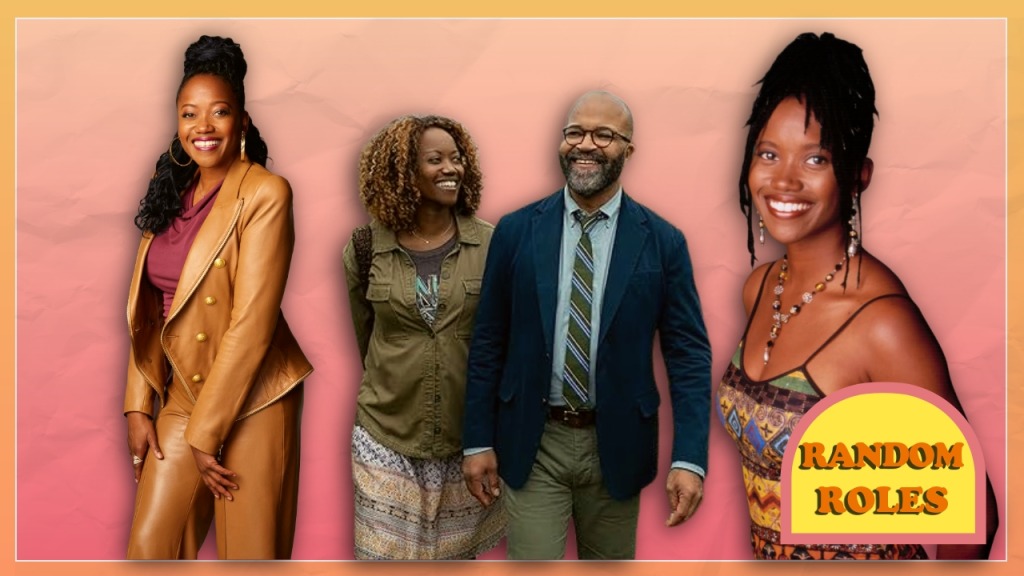
The actor: For a generation of viewers, Erika Alexander is and always will be Maxine Shaw, attorney-at-law, the sharpest tongue in the Living Single brownstone. But Max is one stop on a career that started when Alexander was discovered on a Philadelphia street at 14 and has refused to sit still since. She has crossed nine hours of Peter Brook’s The Mahabharata, sparred with Whoopi Goldberg in The Long Walk Home, turned up in a Steven Soderbergh experiment, played a detective in Get Out, co-created the sci-fi comic Concrete Park, directed a documentary about reparations, and spent presidential campaigns on the trail as a surrogate. Now she is a series regular again for the first time since Living Single, playing sports-agent and ex-wife Monica Reese-Dinkins opposite Tracy Morgan in NBC’s The Fall And Rise Of Reggie Dinkins, which just scored two TCA nominations.
The A.V. Club talked with Alexander about learning to stare down a mockumentary camera, the morning she flew from a Queen Sugar breakdown straight to the Get Out set, why the Living Single fantasy episodes were secretly the hardest ones to shoot, and why her hair has been so integral to her career.
The Fall And Rise Of Reggie Dinkins (2026)—“Monica Reese-Dinkins”
The A.V. Club: Congratulations to you and the Reggie Dinkins team on the TCA nominations! How does it feel to get that recognition your first year out?
Erika Alexander: It’s a beautiful thing. I’ve been in many things in my life that I’m proud of, and certainly the people in them are phenomenal, but you don’t necessarily get acknowledgment. It says something about the times, that they’ve changed. And it says something about the power of resilience and stick-to-itiveness. You have to hope in your life that you can do the thing you love with people you admire, but that doesn’t always mean that people, or awards, will follow. When all three hit, that’s the trifecta. That’s a good thing.
AVC:Seeing Erika Alexander in a power suit, walking headfirst into a boardroom triggers a very specific image for your longtime fans. But as Monica Reese-Dinkins, we also see you come out of that boardroom with coffee all over your front after a bad pitch, still figuring out who you are outside of Reggie. We don’t often get to see Black women who are still growing. Can you tell me about the early conversations and choices that shaped someone so balanced?
EA: Those conversations are often unspoken. When they cast you, or in this case invite me to do the role, I’m coming into their world and taking on the characteristics the writers have set forth. At first the character took second position in my mind, because I needed to understand the environment first. And inside that environment, I couldn’t just apply what I’d already known. What I’d known is that I could play a woman in a suit who had a strong opinion, who was diabolical when it came to debate.
So I believe I come into the room balanced, meaning Erika Alexander, and they’re going to get that aspect. What was imbalanced is that I didn’t feel as comfortable as all the people who’d worked together before. And I decided after a while that I should embrace that, that that’s who the character would have to be, because that’s who I was. The only person in the script who had a description of what they wore was her. No one else did. They said she was dressed impeccably. So I went, okay, that’s somebody who spends a lot of time thinking about appearances. I’d recently met an entrepreneur who became my mentor, Phyllis Newhouse, and she’s the inner core of what I’m drawing on. I was going to make it up until I realized I didn’t need to. What you see is a woman who doesn’t know exactly who she is right now: that is me. A woman who, despite that, cares what people think, who wants to appear like she’s got it together: that’s partly me. A woman whose ex has a fiancée who’s beautiful and young and vivacious, who maybe wasn’t ready to think about those thoughts. Who am I to myself? What’s attractive, and who am I attracted to? That, to me, is comedy. I’m hoping to get a lot of juice out of that squeeze.
AVC: You have these strong multi-cam sitcom roots, and now you’re stepping into a mockumentary. Was there an element of adjustment to that, even as a veteran?
EA: Growing up learning a little about acting, you never stared directly at the camera. Now it seems like this style is just always right there. Me and Daniel Radcliffe totally are like that, and so is Bobby Moynihan, who’s doing another job, some sort of who-done-it procedural. He’d go back and forth between those shows and staring at the camera, and they’d say, “Bobby, do you know you’re staring into the camera?” It can make you feel discombobulated, because that’s when you want to feel the most sure. These are your inner thoughts, you’re feeling the most free to say them, and at the same time you’re feeling like, good God, what am I doing, who am I staring at? People have created this blueprint, and we’re definitely trying to add to it in our own unique way.
American Fiction (2023)—“Coraline”
AVC: Do you have any stories about working opposite Jeffrey Wright?
EA: I love Jeffrey Wright. That’s the best thing, when someone says the name of someone you’re going to work with and everyone goes, whoa. It’s a visceral reaction. Jeffrey Wright is maybe one of the wonders of the world. And I thought, this is going to be delicious, because I get to crawl over and kiss him. If I’d thought about it, I hadn’t seen Jeffrey Wright in many romantic parts. It’s not something he gets to do.
So I thought, what do I get to do with this very serious persona? Let the script lead you, and the writer-director, Cord Jefferson, was fantastic. He hired people he thought would have those questions and go over those hills without needing him to translate too much. Cord told me later, “We really didn’t know whether the romantic part was working while we were filming.” I could feel it was working. We are grown-ass adults. It’s a feeling of respect. What you felt were two very solid performers getting to know each other in real time. The falling-in-love thing is the thing we won’t perform. It is not performative. We have to meet each other.
By the time we got to the beach town, that’s where everything happens. Coraline drops her vegetables, she gets invited to dinner, she invites him to wine. I thought that was a beautiful space to live in. We’re not jumping on each other’s bones, and yet there is a hotness. I could feel he wasn’t going to make any move; the character was going to allow her the space to fulfill the desire of his heart, but only if she wanted it. And his character was gruff. He’s got to do it that way, otherwise it’s not authentic to who he is. Cord wrote a smart, romantic relationship inside a smart comedy. We did it the way he intended it, in a way that was respectful and authentic. It wasn’t meant to be messy. It’s meant to be orchestrated, like a delicate, beautiful love song.
Black Lightning (2018)—“Perenna”
AVC: You weren’t exactly new to the comic book world around this time. You’d already co-created your own sci-fi comic, Concrete Park. Did being a comics creator yourself change how you approached a character who had no prior history in the DC world, who was original to the show?
EA: Yes, absolutely. I knew from spending my own time with a bunch of nerds that this was sacred territory. You needed to take it very seriously. I didn’t know what it was going to be, because I was only hired at first to do one to three episodes, and then they kept writing me in. I knew Cress Williams from the Living Single oeuvre. I hadn’t worked with China Anne McClain, but I knew her to be a smart young performer I could depend on, so I wasn’t there to teach her anything. I was a mentor, an auntie, teaching her how to focus her powers so they wouldn’t work against her. I was born for that. What Black woman, at a certain point, is not born for that, especially as an advocate? Those powers emanate from mythological archetypes that are in every form of storytelling. I asked my hairdresser for braids that would flow back like a crown, so I could step into it with no artifice and some kind of stature.
When I first started, one of the producers didn’t like my first take. He wanted me to take it slower, but also much more seriously, which took me aback, because I thought I was taking it seriously. Somehow my voice was living in a kind of shopping list, as opposed to really going in. Once I got out of my own way—because sometimes you have to realize you have ego—I did it slower, more methodical, and the direction went away. From there, that’s how I played the character. If you’ve done something for a while, whether you deny it or not, you don’t really want people telling you what to do. But my whole life is directors telling me what to do, despite myself. I have to go very quickly: What are they saying, do I agree, can I give them what they want even if I don’t agree, in a way that’s authentic for me? That right there is where you become an artist. You say, it’s not my thing, it’s their thing. I’m hired to do this gig, and they’ve got to see a piece of themselves in it. And that’s when you become brave and courageous, and you expand, like Neo.
Queen Sugar (2016)—“LeeAnne”
AVC: Where were you in your life in 2016 when Ava DuVernay invited you to guest on the show?
EA: Girl, I was all in on that election. I’d been with Hillary Clinton since 2007. I turned out to be her most-traveled surrogate outside of Bill and Chelsea Clinton; they told me that. I was also chosen as a delegate to the Democratic Convention. I had no idea that would be my life. I was using the skill sets I had in communication, but I was very much into supporting strong women, and it turns out I met a whole mess of strong Black women supporting that woman, who’d been there for decades, women I admired from Maya Angelou to Cicely Tyson to Sheila Jackson Lee. A lot of my formative years in advocacy came from 2007 and 2008. I went to Africa with the Clinton Global Initiative to see their work on women and girls. I became a sponge.
I had also auditioned for Queen Sugar as one of the leads and didn’t get it. Ava brought me into the audition at Warner Bros., made everybody else leave the room, and said, “Where have you been? What have you been doing?” Maybe she wanted to see what headspace I was in. I said television had changed, I was doing a lot of different things to make a living, creating things, producing. Then I got called back to read for the wife of the character played by [Omar Dorsey] and they told me I was too old for the lead Rutina Wesley played and too young for the role they wanted to be an older woman. Then I got a call: “Ava wants you to do this role, she created it for you.” Not only was it a yes, it was a woman with bipolar disorder, which would be very interesting for me. But in the middle of everything I was doing, going deep on something like that was one of the last things I had room for, because I was so focused on the election. Still, I wanted to do my job, and there are some of the best performers in all of God’s creation on that show.
The morning after a huge scene where I melt down, Salli Richardson-Whitfield directing, I flew straight to Alabama to do Jordan Peele’s Get Out to play Detective Latoya. Then I flew straight to Harlem to be an advocate at a rally. That was my life, making it all happen at once, being everything to everyone, trying to show up differently for each one so I didn’t mess up my reputation. That’s a reputation I value: No matter what, good, bad, or ugly, I’m going to give you my A game. It was tough, because I needed to make a living. But I also wanted to make a life, and that was the advocacy. They don’t get to separate.
AVC: When you were deep in the advocacy work, traveling as a surrogate, were your thoughts still with your acting career, or were you all in?
EA: To me, advocacy is partly acting. Through the filter of my own life, I speak as a surrogate about someone else’s record and what they’re going to do, using the same skill sets, except they’re authentically mine. I have to tell the truth about who I am and also speak for someone else when they’re not there. I didn’t get at first that that’s what I was doing. It was the first time people had asked me to use my own words. I was always playing a character, tooling around in someone else’s toolbox. Here, I was going to be a tool for a campaign, and inside of that, tell the truth about who I am.
Déjà Vu (2006)—“Shanti”
EA: [Director]Tony Scott. Brilliant. One of the kindest people I ever met. He asked me to do a small voiceover before I was even on set, and then he sent this huge bouquet of flowers as big as my table. I realized how generous he was, how he thought about my time. Even though it turned out to be a role that kept getting cut down, with my part given to other people in the room—she was the lead scientist when I first read it, but she wasn’t by the time I got in that room; Adam Goldberg and all sorts of other people were in those positions, and I was suddenly relegated to moving dials, which was a great disappointment to me—in that space with the great Tony Scott, rest in peace, I never felt that he didn’t see me. I’m grateful for that.
Full Frontal (2002)—“Lucy”
EA: We were dressing in offices. Steven Soderbergh, the director and the writer, was running camera himself, and it was a very small crew, and I never knew what was going on. I’m sitting next to Brad Pitt at the table with Blair Underwood, and there’s Jennifer Aniston at the door looking at the scene, and Julia Roberts, and I couldn’t tell you anything else about it. Part of it was guerrilla filmmaking. I’ll always be grateful that those people were interested in doing guerrilla filmmaking, because they were as big as they came. It was like going through some kind of weird portal. Naked. In front of everyone. That’s all I’ve got to say. Fun, fun, fun. Steven Soderbergh is one of the best ever, and he’s a true indie dude.
AVC: Given your own indie roots, do you prefer the scrappier productions or something more buttoned-up?
EA: Definitely. I’m an indie girl. I just did an itty-bitty thing with RZA. He called me up and said, “I wrote this part for you,” and next thing you know I’m doing martial arts in the middle of a desert valley. He said, “You haven’t read it, you said yes.” I said yes to the independent spirit. You’re calling me as a friend, and you are a river to your people who’s created a lot of jobs, and I don’t need to read it. I’ll show up for you, brother. It’s going to be great when it comes out, because it’s done in that spirit of trying to make a way out of no way and create a whole genre.
Living Single (1993-1998)—“Maxine Shaw”
AVC: You’ve been reliving the Living Single experience with your co-star and cohost Kim Coles through the podcast, ReLiving Single. Through those discussions years later, have you had any new revelations about Maxine?
EA: Yes, that I was very young, and I was doing her kind of on autopilot. I didn’t know who she was, but I knew who I was in that moment. I can’t talk about Maxine Shaw without talking about who came in that door, with those locks, and all the people who’d poured into me, from Cicely Tyson to Lorraine Toussaint to Hattie Winston. CCH Pounder played my mother in a miniseries. I’d already done The Long Walk Home with Whoopi Goldberg playing my mother and Ving Rhames playing my dad. I’d already gone around the world with Peter Brook in that nine-hour play. All of that had happened, and being discovered at 14, and four plays at the Public, and I was numb, because my father had just passed and I hadn’t really processed it. I didn’t necessarily want the role; I wanted another one and didn’t get it. So I numbed myself and walked in there because I had to do both auditions rapidly, and got chosen for the second one in a space of just, okay, let me get this done. I wasn’t full of high hopes.
I’d always played strong characters. They put me in a suit and said I was a lawyer. My father was a preacher, my mother was an educator and a minister. I know how to speak in front of people and persuade them. I went to Philadelphia High School For Girls. I came from Freedom Theatre, where they told us we were young, gifted, and Black. I was that Max. The hairstyle gave me strength, because it was boyish and no-nonsense, and refreshing for me, because I had hair that didn’t cause me any consternation. I wasn’t worried about who was going to do my hair or whether my roots would get torn, which happened all the time. So that’s who comes through that door. Max was secondary. Erika Alexander was who I was for many years, until I started to see the persona of Max take over and drive it, with a clear dance partner in T.C. Carson. There were a lot of choices made off screen. He and I were both dark-skinned, coming in with similar hairstyles; he’d made that choice too. Then I learned Max over four years.
AVC: There’s a through-line in your career that a lot of Black folks identify with: that our hair can determine our trajectory, because so much of our culture and how we feel is attached to it. Maxine’s blunt braided bob, Perenna’s crown, Monica’s blue braids—it’s all self-discovery communicated through hair.
EA: Black liberation lives in our hair. The freedom from having to conform to a Western, European ideal is a form of resistance and protest. But outside of that is also where we live, culture. We’re trying to gain an identity for ourselves that’s divorced from an enslaved façade. We ask ourselves all the time, who are we? Is it okay for me to press my hair? Is it safe? Was it safe for my character to press her hair? When my edges fall out, what kind of stress am I under? These protective styles are where we can do that. And Monica, that’s the same hairdresser who did the Maxine Shaw braids. So Monica is Max 2.0. With all the people in middle age coloring their hair, even older women with blue and pink, it’s a form of expression and freedom.
AVC: Living Single gets a lot of deserved credit for being at the forefront of Black-women-friendship comedies. What it doesn’t get enough credit for is how well it played with fantasy concepts and alternate universes, whole episodes where the Brownstone crew would become a Supremes-like ’60s girl group, or run a jazz club during the Harlem Renaissance. How did you prepare for these one-off moments?
EA: We don’t get to prepare. So much of your prep comes way before. I’d watched sketch comedy for years; I grew up with Carol Burnett and people who would put on the costumes of different characters and come out and do their best version. We didn’t know from show to show what was going to happen. We’d open the pages on read day, on Monday, and go, oh gosh, this is going to be a hoot, and we’ve got three days to learn it. We’re performing on the fourth day, in front of two audiences. You learn a play a week. That is not the time to be shucking and jiving. You make a lot of choices very quickly, and they lead you. You’re shot out of a cannon. The audience is so important, because they tell you whether they accept it; they tell you the parameters.
I’m glad you caught that, because the alternate-reality shows are some of the ones we disliked the most. We didn’t like the Flavorettes show at all, because we were missing T.C. Carson at that point. We didn’t know why that filming week was going so badly in terms of our feelings and frustrations. Then the audience came in and started to laugh, and all that fell away, and we just played, like the laugh whores we are.
AVC: As an audience member you only get the final product, so hearing that that was a difficult week is surprising. Was there a moment you worried it wouldn’t work?
EA: No. I figured by the time we got it, we showed them something. I’m just surprised it’s one of people’s favorites of all time. We had almost been written off by our studio, and people wrote in to save us. There was all this pressure, all these backstage changes nobody was speaking to, very consequential and emotional and disruptive, and we still had to go out and be funny. Funny often comes from a lot of pain. You hope it’s not your own personal pain feeding it, but it becomes escapism. The audience reminds us this is not only a job, it’s a privilege. They’re willing to lift us up and give us buoyancy, not knowing how far down we’d sunk.
“You’re Makin’ Me High” Music Video, Toni Braxton (1996)—“Friend”
AVC: You’re there with Tisha Campbell, Vivica A. Fox, and Toni Braxton, and it plays like the quintessential snapshot of ’90s-era Black womanhood. Were you cognizant at the time that you were part of something so culturally major?
EA: No, and you never are. I just knew Toni Braxton was the biggest thing, and she was like a little doll, and I was so glad to be included. I was never included with the cool kids, ever. I never hung out with them. I knew Tisha Campbell, but we were always working, and Vivica Fox was a big movie star. Billie Woodruff directed it, and I’d never done a music video, so I was looking for them to tell me what to do. They dressed us up more than I’d ever been dressed up in my life and told us to look there and rate the men, and then it was over. I’m grateful Toni Braxton thought enough of me to say, “Give me the cool girls, let’s mix it up, and Erika is one of them.”
The Mahabharata (1989)—“Madri / Hidimbi”
AVC: You mentioned this earlier. You were really young, and it was this big epic. What did you learn on that set, especially working with Peter Brook?
EA: Everything. I was one of the only people who didn’t speak French, and French was the most-spoken language among the troupe. My life is a series of discoveries, just plucked out of nowhere and thrown in the deep end. Peter Brook is about as prolific and as big as it gets in Europe, one of the biggest stage directors of all time. He needed a replacement for one of his six women in the troupe of 28, who’d fallen in love with a rock star in Los Angeles. She was a real African princess, and I was replacing her in this nine-hour play based on the Sanskrit text. I didn’t know anything about it. Nothing. That’s why I say I’ve spent my life going, okay, I’m going to learn.. Brook was kind and instructive when he needed to be, but he mostly left me alone. I find that when people think you can do a job, they leave you alone to do it, and when they do tell you something, you listen on a deeper level, even if you don’t understand. He’s not speaking to somebody who went to classes; I’m a person who was discovered off the street. So I’d think, that pitch isn’t working, let me put a little spin on it, or less spin, take myself out of it, be calmer and more intentional. You’re trying things. It was one of the most beautiful things in my life. And I got to talk to Daniel Day-Lewis. Every major performer I meet, I say I was in The Mahabharata, and that level-sets immediately. They go, okay, I’m not talking to a buster here. I say, “No, you’re not.”
My Little Girl (1986)—“Joan”
AVC: How did you land your first role?
EA: I was in a five-week program at Freedom Theatre in Philadelphia, a performing-arts program for kids, my first summer, and a movie came to town. They encouraged us all to audition. I was the second one in line, nearly five o’clock in the morning, and the line went around the building several times. Everyone from the tri-state area trying to be a Black and brown performer auditioned. By the middle of the afternoon, they handed me the script and said they wanted me to read a different role, and I thought, oh no, I messed up. But it was the lead. After several screen tests, it came down to me and Janice Roderick, the darling of Freedom Theatre, a phenomenal performer, and they chose me. I couldn’t believe it. Got my little SAG card, and suddenly I was on my way. The casting director and director thought I could have a real career, and they got me a meeting with the Gersh Agency. At the time they didn’t take teenagers, they told me. But they had Michael J. Fox, and they decided to take me. Kismet again. Fortune finds you, but you work for it, too.


 Keep scrolling for more great stories.