
Sherman's March confessed to the camera long before the social media era
As his breakthrough film gets a 4K restoration, Ross McElwee talks about finding his voice.
Photo: Music Box Films
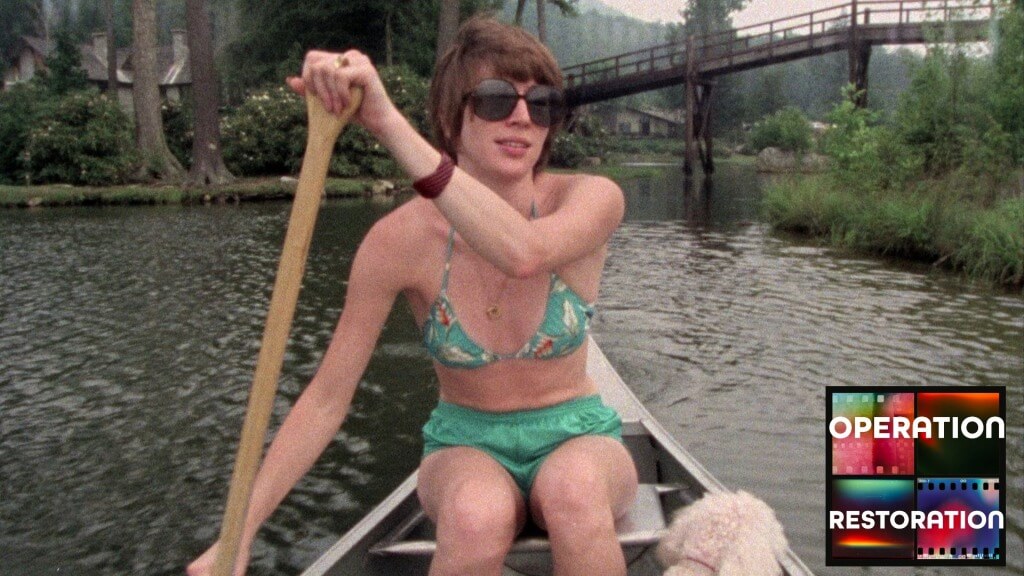
Documentarian Ross McElwee was in his mid-thirties when he picked up a camera to work on what would eventually become his breakthrough 1986 Sundance hit, Sherman’s March. It was like few films at that time: a cinéma vérité documentary focused on the director that followed his narrated version of events as he merged his flailing love life, his interest in revisiting Civil War General William Tecumseh Sherman’s path through the South, and his anxieties about nuclear war into one cohesive narrative. However disparate those ideas seem, in McElwee’s creative narrative, one flows into another like a stream-of-consciousness confessional, decades before phone cameras were in every pocket and social media made it popular to talk through your thoughts. Like a forerunner to How To With John Wilson, McElwee’s idiosyncratic exploration of the larger world through his specific lens feels both unique and universal. For its 40th anniversary, Sherman’s March is returning to theaters with a gorgeous 4K restoration that keeps the 16mm grain intact with McElwee’s rookie mistakes incorporated into the film.
After studying with documentary legends like Richard Leacock and Ed Pincus at MIT and working for D.A. Pennebaker, McElwee steeped his approach in the practice of observational documentary filmmaking. However, with Sherman’s March, an indie hit long unavailable in anything more than a modest standard definition format DVD, the director became the story. “I did a short film called Backyard previous to this, which was a kind of test case,” McElwee tells The A.V. Club. “Back then there weren’t many filmmakers who were putting themselves into their documentaries as subjects themselves along with everybody else who was being filmed. All of that was kind of an experiment and I wasn’t sure how that was going to play out, but I did have an instinct that as a documentarian, it was best to try to capture what you could as it unfolded without directing it.”
For McElwee, the experiment meant breaking with tradition. “The big difference was that I put myself in the film as well and also gave it a written narration, which of course, the true pioneers of cinéma vérité would never do,” he said. “Frederick Wiseman never narrated his films, and they stand as an amazing monumental work because of his rigor about how he made the movies. That rigor is totally absent from my filmmaking. It’s whatever seems to work at the time that I’m willing to embrace.”
Sherman’s March begins with McElwee returning home after the end of his latest relationship in Boston. His family arranges a picnic and, at the behest of his sister, they encourage him to get back out there. With a half-formed idea about retracing General Sherman’s March To The Sea, McElwee turns his camera to the South, both to its history and to its dating pool, looking for love and meaning in the nuclear age.
 Keep scrolling for more great stories.