
Cinderella's Steps get their own shaky stop on the villain image rehab tour
The animated fairy tale undermines the classic in all the expected ways before turning into a pumpkin.
Photo: Netflix
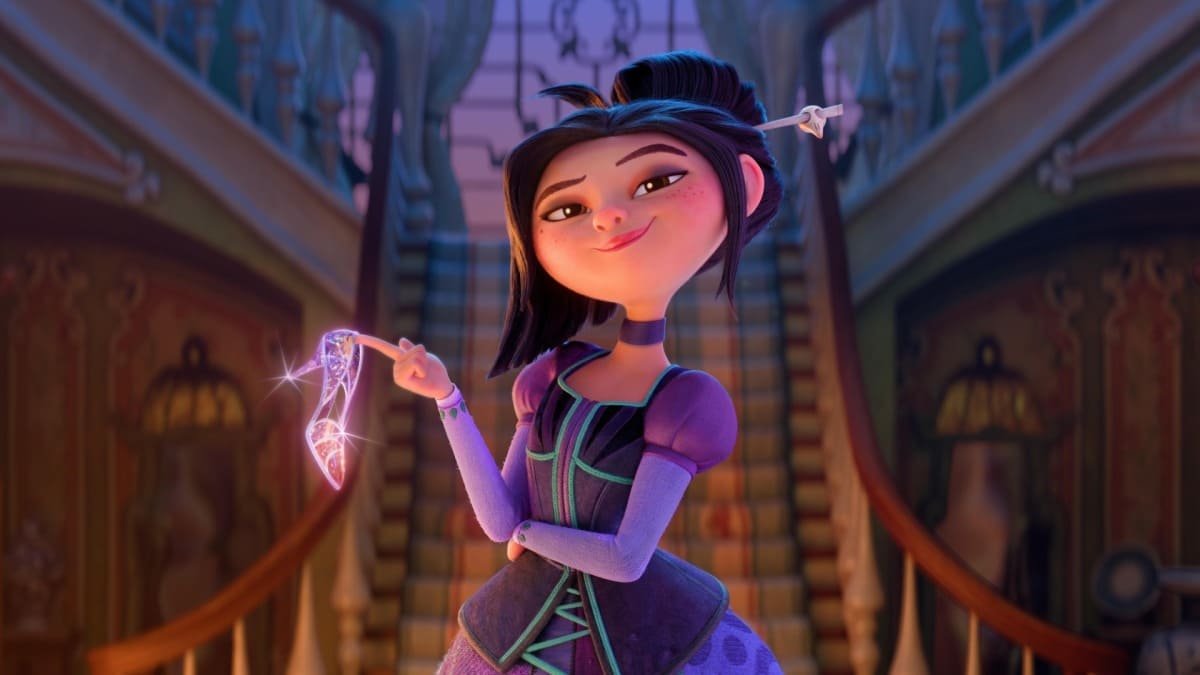
Another entry into the genre of animated, self-referential, “not your (Grimm) brothers'” fairy tales, Steps looks past its blonde goody-two-glass-slippers heroine to focus on Cinderella’s so-called evil stepsisters. Or, at least one of them, for as long as it can stay focused on its meandering fantasy journey. Initially supposed to go full-bore into Disney parody, with songs by comedy band Garfunkel And Oates (members Kate Micucci and Riki Lindhome came up with the original script), Steps lost that sharper sense of personality over the course of its production at Netflix, sanded down into something stuck between the snark of Shrek and the feel-good pop chaos of KPop Demon Hunters.
Perhaps that’s to be expected from a screenplay with five credited writers. (All five, as well as Micucci and Lindhome, get “story by” credits, bringing that total up to seven.) With so many creative fairy godmothers vying for control, bibbidi-bobbidi-booing the more mundane elements of Cinderella into self-aware updates of varying quality, it’s no wonder that these half-baked changes compete with one another. The pivot with the most potential, and the one that’s least engaged with by the film, is that in this telling, the stepsisters aren’t evil, they’re just Asian. Lilith (Ali Wong) and Margot (Stephanie Hsu) arrive in the kingdom of Alouette wearing the wrong clothes and looking nothing like their Disney-ready new stepsibling, Cinderella (Amanda Seyfried).
But while the assimilationist plight of their dressmaker mother, stuck adapting her style to the poofy European one preferred by the kingdom’s French-like aristocracy, is briefly alluded to—as is the idea that Cinderella and the magic pushing her towards a “happily ever after” is a stand-in for white privilege—any insight gleaned from this “creative license” (as one character puts it in the film itself) is muddled by the movie around it. The real problem isn’t that the otherwise diverse kingdom (Black characters are in the background, though none have speaking roles) is racist, but that Cinderella doesn’t stick up for her new siblings when they’re bullied by the Marie Antoniette-like Priscilla (Nikki Glaser), leader of some fairy-tale Mean Girls. It’s this incident that pushes Lilith to become a rebellious goth who resents Cinderella, her endless smarmy voiceover explaining how this grudge has led the townspeople to view Lilith as the villain to perfect little Cinderella.
As the story strains to reimagine its classic source while setting up a sisterly bonding adventure between Lilith and Cinderella and a narrative where they must save the kingdom from Priscilla’s schemes—a bit like The Emperor’s New Groove, stuffed into a ballgown—some of the odd asides that feel like straggling subplots from another version of the movie stick out. The most prominent example is Margot, Cinderella’s younger stepsister, because the happy-go-lucky character doesn’t quite fit into the tale. After dancing to some electropop with Lilith, she’s got nothing left to do. Turning her into a talking frog (Bette Midler’s Fairy Godmother loses her wand—don’t ask) for the majority of the runtime mostly feels like an excuse to sideline her, and to make sure that the remaining main characters look even more like top-heavy bobbleheads than their Disney counterparts. Margot boasts one of the rare character designs in Steps that doesn’t look like a Bratz doll, so it makes sense that they’d frogify her as soon as possible.
 Keep scrolling for more great stories.