
The Further Mis-Adventures Of Cliff Booth mis-fires, trading Hollywood glam for Brad Pitt grit
David Fincher doesn't care much for history in his tonally uneven sequel to Quentin Tarantino's Hollywood epic.
Photo: Netflix
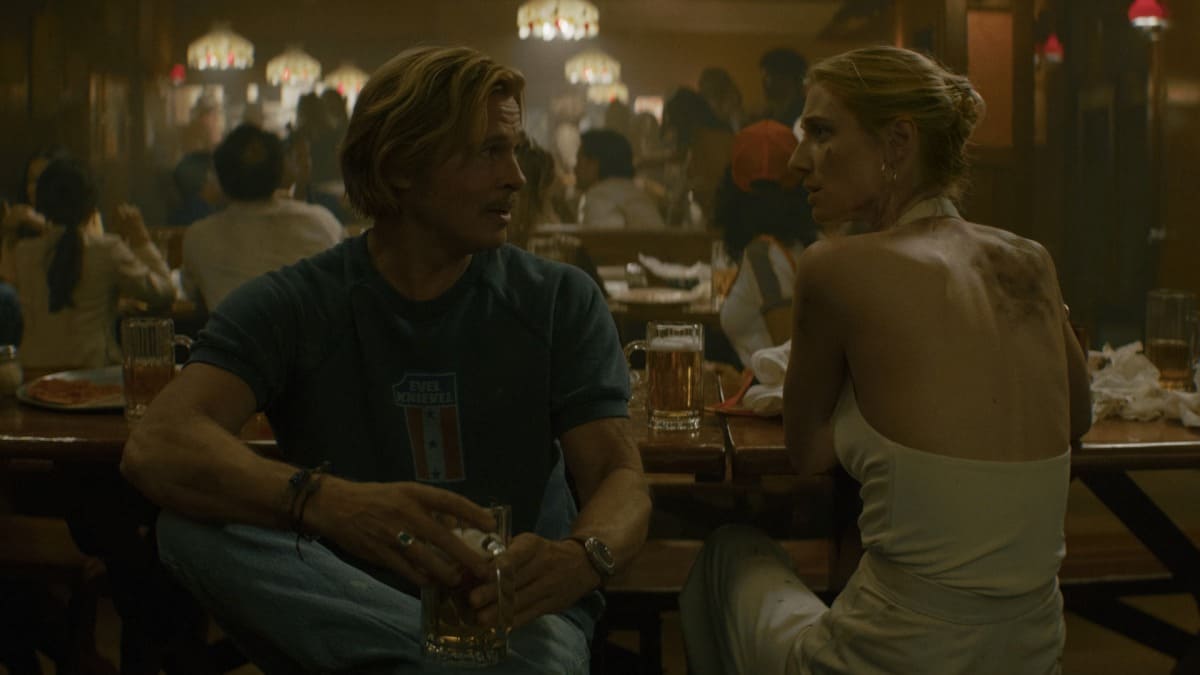
Quentin Tarantino’s Once Upon A Time… In Hollywood was a nostalgic trip to a wild time in Los Angeles, where fading star Rick Dalton (Leonardo DiCaprio) and his trusty stunt double, Cliff Booth (Brad Pitt), fumbled their way through backlots and cultural changes of the late 1960s. In The Further Mis-Adventures Of Cliff Booth, eight years after the events of Once Upon A Time, the company town has settled back down, but life has not been easy for Booth. After Rick Dalton moved to star in an Australian TV show, Booth stayed back in a less shiny Tinseltown, working odd jobs in the New Beverly projection booth and behind the bar slinging tiki drinks. Occasionally, he hustles as an old-school fixer, helping famous entertainment folks get rid of their problems. One of these issues is brought to him by an agent named Karen Crosby (Elizabeth Debicki) who’s representing a hapless actor, Charlie Peters (Scott Caan), now in over his head. While working in the Phillipines, Charlie accidentally orders a hit on his wife, Toni (Carla Gugino), and the murderous Verdusco brothers (Matt Groove and JB Tadena) are not walking away from their promised payday—unless Booth can persuade them to see things his way.
Taking the reins from Tarantino, director David Fincher has a very different view of Los Angeles for his sequel. Gone are the glow of neon signs and nostalgic warmth of yesteryear. Instead, Fincher and cinematographer Erik Messerschmidt envision a gray, gritty Hollywood with copious amounts of moody backlighting. Much of the story takes place at night like a brutal neo-noir, a tonal whiplash that doesn’t always play nice with Booth’s sly humor. The movie is fixated on detailing all the different corners of L.A. Booth travels to, listing the miles between Compton to Malibu and Pacific Palisades, a rather confounding choice if you have no measure of how long it takes to get from the Palisades to the heart of Hollywood. These little details lose the lyricism of Tarantino’s original hangout film which, while mostly sequestered in Hollywood, still journeyed out to the surrounding areas as one giant sprawl. While Tarantino used iconic spots like Musso & Frank or El Coyote, near the real New Beverly (a theater he owns), Fincher doesn’t care much for accuracy. Hollywood is barely a state of mind for The Further Mis-adventures Of Cliff Booth, just an afterthought.
 Keep scrolling for more great stories.