
The Good Daughter squanders its promise
Author Karin Slaughter adapts her disturbing thriller into a tedious Peacock limited series.
Photo: Peacock
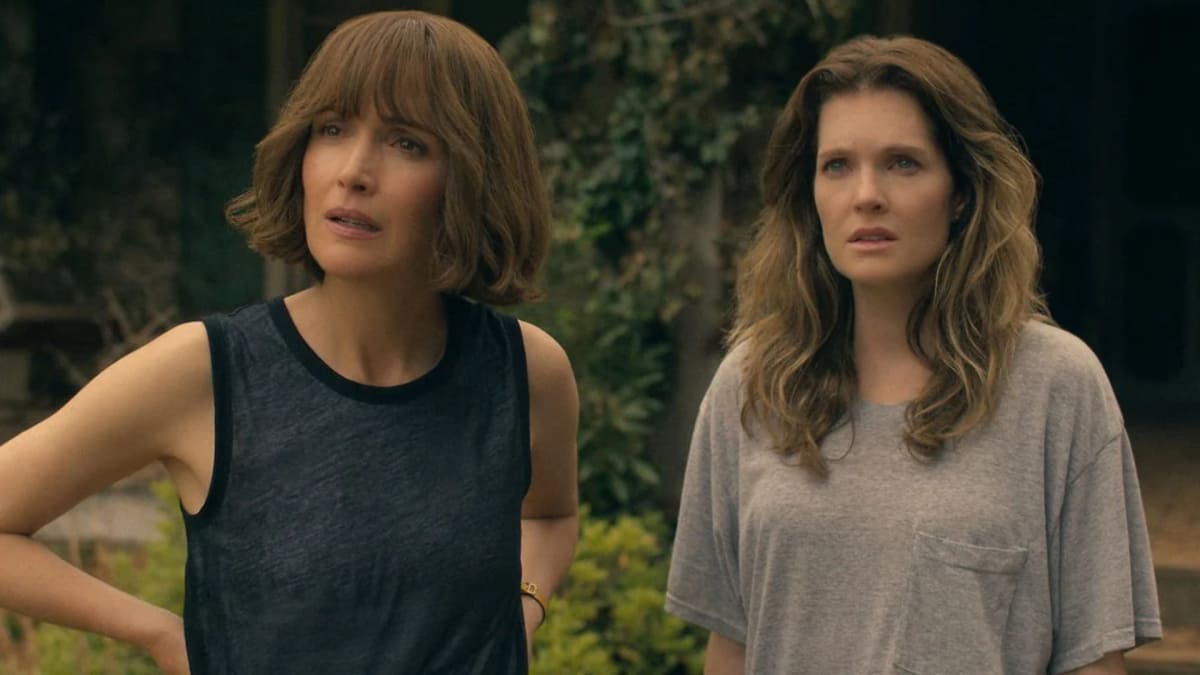
Trauma courses through the veins of The Good Daughter’s main characters. Samantha (Rose Byrne) and Charlotte Quinn (Meghann Fahy) often communicate this fact to the show’s audience through exposition-heavy dialogue, if that’s any indication of how dreary this psychological thriller can get. The two sisters struggle to move on from a horrific event that occurred when they were teens: They watched their mother die during a home invasion and were briefly taken hostage in the nearby woods. Neither Samantha nor Charlotte escaped entirely unharmed. Two decades later, the estranged siblings reunite when their father, Rusty (Brendan Gleeson), is attacked in their rural hometown of Pikeville, GA, forcing them to unpack further calamities that have befallen their family. The Good Daughter is exactly as jarring as these descriptions make it out to be, but the six-part series lacks the emotional heft needed to balance its incessant shock value.
The 2017 page-turner that inspired the series examines, in vivid detail, the repercussions of multiple violent and emotional ordeals on Sam, Charlie, and Rusty’s lives. Adapting her own novel for Peacock, author Karin Slaughter sacrifices that depth in favor of simply getting the characters from point A to point B without digging into who they are as people. While it’s clear that the interpersonal relationship between the Quinns is fractured because Rusty’s job as a defense attorney got his wife, Harriet (Olivia Williams), killed, the show doesn’t sit with the gravity of their situation in the past or present timelines—it’s always in a rush to move on to the next big turn. Nor does the series invoke the systemic injustices, communal prejudices, and moral gray areas that Slaughter reckons with in the book. Without this dive into its protagonists’ vulnerable complexities, The Good Daughter has no heart.
An intense focus on the plot, which is disturbing but predictable, leaves the audience with less time to spend with Charlie and Sam as they cope with and strive to overcome survivor’s guilt. It’s a bummer, because whenever Fahy and Byrne are on screen together—whether Charlie and Sam are fighting, begrudgingly getting along, or comically struggling in vain to shut a coffin—The Good Daughter finds its footing. Fahy, in particular, delivers an aching portrayal of a chaotic woman who feels burdened to hold on to her only surviving parent, no matter what—if only to make her trauma make sense. Despite her co-stars’ Hollywood bona fides, the White Lotus actor emerges as the undisputed MVP.
While both of Rusty’s daughters followed in his professional footsteps, only Charlie—a criminal defense attorney for mostly underprivileged youth—has remained in Pikeville. Her lawyer husband, Ben (Michael Dorman), moved for her and stuck around even though they’ve been separated for months when the series begins. Even this romantic entanglement isn’t fleshed out, leaving the angsty back-and-forth between the couple listless. How did they get together? Why did their marriage end? Who is Ben, and how did he affect Charlie’s life? Disappointingly, The Good Daughter doesn’t have the answers, leaving the impression that we’re not supposed to care about these problems, even though the connections between them form a major subplot.
 Keep scrolling for more great stories.