
The Gray House overstuffs a fascinating bit of Civil War history
Prime Video's series centers on a female-run spy network.
Photo: Prime Video
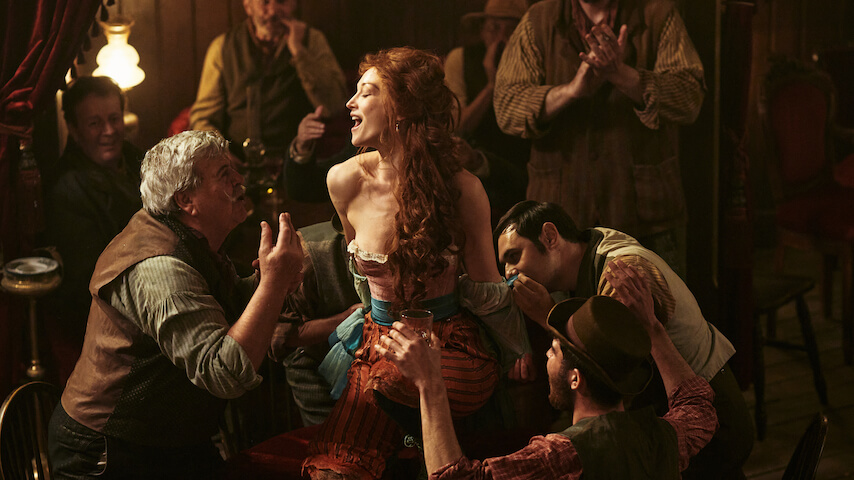
There is some cool-as-hell history in the Civil War-set series The Gray House, the kind that bears further geeking out over post-watch. However, as compelling as TGH aspires to be, and often is, it can’t seem to decide what aspect of its storytelling to emphasize, instead leaving it all in there, resulting in eight episodes of television that feel as overstuffed as a 19th century socialite’s skirt.
And the central figure in this is a socialite: Elizabeth Van Lew (Daisy Head) of Richmond, Virginia. The EVL of historical record was fascinating. An abolitionist, she ran a women-assembled and -run spy network, aided by her mother Eliza Van Lew (Mary-Louise Parker) and Mary Jane Richards (an excellent Amethyst Davis), a formerly enslaved woman with a photographic memory. In this fictionalized version, a courtesan named Clara Parish (Hannah James) also helps to dig up dirt from her johns as she’s bedding them, and an Irish-American baker played by Christopher McDonald contributes mightily to their cause as well. It’s genuinely interesting to watch this team snoop around and relay key military details to the North, especially with the knowledge that this is something that actually happened. But TGH throws a whole lot more into the mix that convolutes the stated aim of highlighting these unsung women of history.
Elizabeth’s made-up suitors add a dose of romance, some steamy shirtless scenes, and lovers to root for or against. In this case, the fellows courting Lizzie Van Lew also represent the opposite ends of the conflict at hand: One is a southern gentleman aligned with the Confederacy, the other a captain in the Union Army who Elizabeth frees from a prison camp. There’s not all that much to either of these men as characters, so every moment with them onscreen feels like a bit of a waste.
There is also too much time spent on men airing their grievances and laying out biases at social gatherings and in bars and brothels. Showing dudes talking strategy and ideology in a show about war is permissible and even necessary to a degree for viewers to understand the historical context. But man, do these guys do a lot of yapping for a series that purports to be about women subverting secessionists. And it can be hard to differentiate one white Confederate ghoul from another as they gripe about the Yankees and the people’s bodies to whom they feel entitled. There are just so many characters in this who provide a somewhat similar function plot-wise and leave little impression on the viewer, because they simply serve as mouthpieces to an ideology. That said, Ben Vereen’s formerly enslaved ally and Keith David’s reverend offer some powerful moments.
 Keep scrolling for more great stories.