The 1960s were a golden era for TV theme songs. Throughout the decade, the likes of Gilligan’s Island, Green Acres, and Rawhide welcomed in new and returning viewers with catchy statements of purpose and premise; one of the era’s defining intros only needed a single word and some vocables to get its point across. When the British spy series Danger Man came to the United States as Secret Agent in 1964, its imitation James Bond gained an imitation “James Bond Theme,” and for the next two years, each new mission for John Drake (Patrick McGoohan) was preceded by the refrain “they’ve given you a number, and taken away your name.”
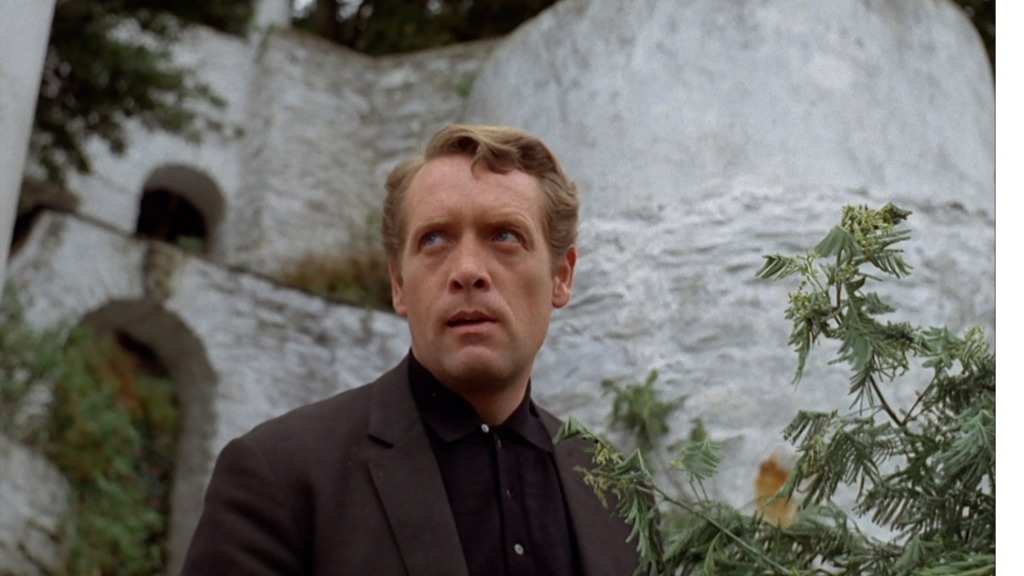
The next time McGoohan fronted a TV show, things started on a different note. Almost every episode of The Prisoner begins by conveying the required details in what’s practically an experimental short film. An unnamed British intelligence agent (McGoohan, doing such a riff on Drake that persistent fan theories suggest The Prisoner is a Danger Man sequel) speeds to his superior’s office, angrily quits, packs to leave, and is drugged via gas through his keyhole. He awakens in a carefully constructed place known only as “The Village,” a seaside community cut off from the rest of the world. Given a number (Six) instead of a name, our protagonist runs into the shadows, proclaiming: “I am not a number! I am a free man!”
This was cutting edge stuff for 1967 (or 1968, when CBS first broadcast The Prisoner in the U.S.). It’s still pretty outré for 2026, which explains why the single-season show has been a secret handshake among multiple generations of the hip and in-the-know, who understand The Prisoner’s essential place in TV history—whether or not they’ve actually seen it. Futilely remade by AMC, parodied by The Simpsons, and name-dropped by the “professional appreciators” of High Fidelity, it has seen its legacy grow as more and more acclaimed series adopted its artful and elliptical ways. The surreal new reality of Pluribus, the trapped survivors of Lost, and even the existential dread of Twin Peaks owe a debt to the show’s general refusal to explain nearly anything. But the canonization of The Prisoner gave the show a reputation built more on what it inspired than what it actually is.
And what The Prisoner is—as made apparent by the remastered version of the series that’s now streaming on Criterion Channel—is immediately fun and thematically ahead of its time. It’s not just a show that taught future TV creators it was okay to be weird; it’s a show that speaks to the issues of 2026 even more than it did to those of 1967: the way we trade personal information like currency, or the pervading sense that we’re all pawns in an unwinnable game. The Village’s web of cameras, listening devices, and informants was once mere metaphor for the ways governments and other institutions surveilled, trailed, and harassed marginalized communities, revolutionaries, and anyone else the powers that be deemed “subversive.” Today, they’ve been literalized, commodified, and normalized by Palantir, Ring, and Citizen—it’s a wonder none of these torment nexus peddlers has adopted the villager’s ominous parting gesture, “Be seeing you,” as an advertising tagline. It’s long been said that you need to watch The Prisoner to really “get” shows like Lost, From, and Twin Peaks. It might be truer to say that you need to watch The Prisoner to understand life in the 2020s.
The push-and-pull of the series’ 17 episodes is relatively simple: An unknown establishment, usually represented by an ever-changing authority figure known as Number Two, wants “information” from Number Six—most importantly why he quit. Most episodes feature Number Six planning an escape—usually thwarted by a giant, menacing balloon the villagers call Rover—or discovering the latest way in which The Village is trying to destroy his individuality, only to have to do it again next week.
In the premiere episode, Six says, “I will not be pushed, filed, stamped, indexed, briefed, debriefed, or numbered. My life is my own.” It’s a sentiment obviously aligned with the growing counterculture movement of the late ’60s, but it also tracks perfectly with the tech-addled 2020s. So much of who we are has been reduced to data points on company servers, the better to feed the algorithm. We are all increasingly an assembly of digits for someone to interpret—a number, maybe even six, on some company’s spreadsheet.
Pitting the individual vs. the group collective is a theme current enough to draw a thick line from The Prisoner to Pluribus, but it’s not where the timeliness ends. Consider how frequently the characters of The Prisoner talk about information—it’s a preview of a 21st century where anything’s free, provided you’re willing to divulge your location, age, income, or purchasing history. The episode “It’s Your Funeral,” envisions predictive A.I. in all its dangerous complexity. The Village has developed a computer that can tell the latest Number Two what Number Six is going to do before he does it, utilizing not just his past behavior but data from the rest of the villagers. At one point, a computer attendant tells Number Two about how the system has developed enough to withhold information to protect itself—forecasting the most fantastical, though difficult to verify, claims of developers at AI firms like Anthropic and OpenAI.
And in the monitoring and processing of Number Six’s every move, The Prisoner foresaw our age of sports-arena panopticons and license-plate readers that track way more than license-plate numbers. Number Two’s lair, with its domed ceiling and seesaw of cameramen, was a clear influence on The Truman Show—itself a herald of reality shows and 24/7 streamers to come—but it’s also a vision of a 2020s when everything is recorded and broadcast to those with clearance enough to see it. At some points of The Prisoner, it feels like Number Six is fighting to evade the cameras as much as his captors.
Number Six has all the ingenuity and cunning of other ’60s spy heroes, but the show he’s in has a contemporary cynicism. A sense that resistance is futile pervades The Prisoner. Ignoring the rushed and bizarre finale—and even that suggests that Number Six’s “victory” may not be all that it seems—the overall arc is one of a hamster on a wheel. In the show’s best episode, “Many Happy Returns,” Number Six finally escapes, reaching London only to find someone else living in his townhouse. He’s been replaced, and the world has gone on without him. As if that’s not depressing enough, the episode ends with Number Six leading an aerial search for The Village, only to be ejected from the plane (and returned to confinement) after the pilot turns around to offer an especially chilling “Be seeing you!”
And yet, this Sisyphean tale never turns punishing. Even the end of “Many Happy Returns” comes with a punchline and a smirk, reflective of how much McGoohan’s unusual performance informed the tone of the show. His choices as Number Six often feel like they verge on parody—there are echoes of Robert Wagner’s Austin Powers henchman Number Two (interesting name!) in his perfectly-tailored frustration—but they’re essential to buoying the dark themes that run through The Prisoner. The way McGoohan plays the character’s constant drive, ceaseless suspicion, and unshakable morality give the show its unique feel; it’d be a completely different story with a lead who portrayed Six as a tortured victim. Vibrant costume design amplifies the fun factor, as do clever musical choices, including recurring use of “Pop Goes The Weasel.” That’s a song associated with both repetitive patterns and the conformity of group dancing—we’re all prisoners in a group dance.
Take away the swinging ’60s fashions and bouncy score, and you can almost picture the dark joke ending of “Many Happy Returns” taking place in 2026. That’s the case with so much of The Prisoner. Today, we do what we can to push back against the Number Twos of our modern world, only to end up back in a Village of endless privacy invasions and unwanted technologies, where our only defense is a sense of humor. Nearly 60 years on from The Prisoner’s premiere and we’re still fighting to be seen as more than a number.


 Keep scrolling for more great stories.