Associate Editor Casey Epstein-Gross’s column Cultural Reset features regular deep dives into the impact of music on culture—and vice versa—in the 21st century from the perspective of someone born and raised within it.
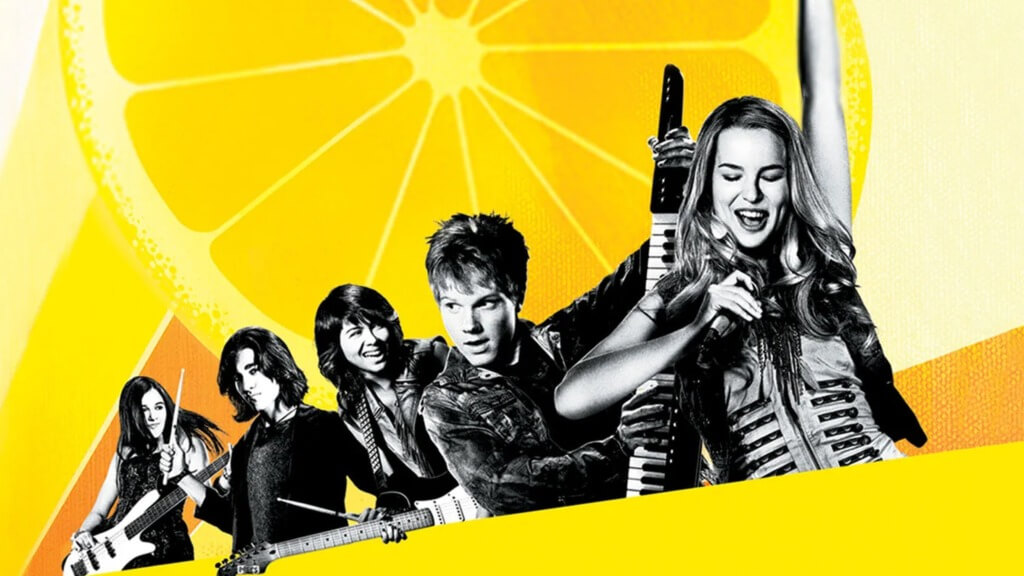
When I was about eight years old, I decided I wanted to be seen. Or not seen, really, but heard. I spent the next ten or so years of my life dreaming not of being a princess or falling in love or starting a family—all those things young girls are supposed to dream about—but of being discovered. I wanted to be Mitchie in Camp Rock, singing alone in a moment of vulnerability but secretly overheard by a hidden popstar in the bushes; Tori in Victorious, thrown onstage at an audition she didn’t intend to perform at, only to change her life in the process; Olivia in Lemonade Mouth, spontaneously singing along to an impromptu beat tapped out on a desk in detention with her soon-to-be bandmates.
I’d crack open a window the slightest amount when I belted songs in my room in the Tallahassee suburbs, in the hopes of being heard by a record label hiding in my backyard (again, I lived in the suburbs, so the only things that heard me were my swing-set and my neighbor’s incredibly loud dog). I rocked myself to sleep with fantasies of being called out of Ms. Webber’s fourth grade class by whatever star dominated the zeitgeist at the time—most embarrassingly, I have a distinct memory of a recurring daydream where Macklemore (?????) somehow overheard me humming a tune and came to the Gilchrist Elementary School front office to whisk me from recess, welcome me into his limo, and take me straight to the studio. In the years leading up to my 15th birthday, I not-so-subtly hinted to my parents that the only birthday present I truly wanted was to be taken to an American Idol audition (they, perhaps smartly, did not follow through).
The thing is, as much as I desperately wanted to believe I was special for this, I was—at least in this specific sense—quite possibly the least original child alive. Looking back from here, it seems almost mathematically inevitable that a girl of my age, from my generation, raised on certain specific television channels, would end up exactly that way: windows cracked, voice out, hope embarrassingly intact. A UCLA study published in 2011 found that, by 2007, fame had become the single most important value reflected in popular tween television programming. Not kindness, not community, not even love. Fame: ranked #15 out of 16 measured values in 1997, then 10th, then third, then—by 2007—first. (But, according to a later study from 2021, fame was less in-vogue by 2017, now back down to seventh). The two properties researchers identified as the primary drivers of this shift were American Idol and Hannah Montana. I was, in other words, a statistic—the intended outcome of a machine so well-calibrated it didn’t even feel like a machine. It just felt like, well, wanting something, and wanting it so bad it made me almost vibrate out of my skin.
Disney Channel’s foray into the teen-star-via-music pipeline didn’t quite begin with High School Musical. The initial groundwork was laid back in 1956, with the founding of Walt Disney Records. (Nickelodeon followed suit with their own label, Nickelodeon Records, in 1993). But it wasn’t until Hilary Duff graduated from Lizzie McGuire into a successful pop career that the network truly realized a Disney Channel star could sell records, a concept they would spend the next decade strip-mining. Then came The Cheetah Girls in 2003, then a musical episode of Even Stevens that gave executives early confidence the format could work, and then, in 2006, the whole thing detonated—twice.
Hannah Montana premiered in March of that year, built entirely around the premise of a teenage girl with a secret pop star identity, and became the network’s highest-rated series launch in years. Nine months later, on January 20th, High School Musical arrived and finished the job, premiering with 7.7 million viewers on a budget of $4.2 million, which is remarkably modest for a movie with such outsized influence. The HSM soundtrack debuted at #133 on the Billboard 200, then climbed for 13 consecutive weeks without a single song receiving meaningful radio airplay outside of Disney’s own station, until it hit #1. No one at Disney had planned for this. Retailers kept running out of stock. Kids were buying the album digitally when digital sales weren’t even the dominant data yet. Hannah Montana‘s soundtrack, released that same year, hit #1 on the Billboard 200 outright and went 3x platinum. Together, the two properties did something that hadn’t quite been done before: they proved that the music and the show could sell each other, indefinitely, in a loop.
By the time High School Musical 2 premiered in August 2007 to 17.2 million viewers (the most-watched basic-cable telecast in history at that point), the question of whether any of this had been a fluke was definitively settled. “There was a moment where the rest of corporate Disney kind of turned their heads to the right to see what Disney Channel was doing,” producer Kevin Lafferty later recalled. “They started to say that the Disney Channel movies were now jewels in the Disney crown, like they had become as valuable to Disney as Mickey Mouse and Donald Duck.” The franchise eventually generated around $4 billion in global retail sales. Utah created the largest tax incentive in its state history specifically to keep the production there. The third High School Musical film got a theatrical release and grossed $250 million worldwide, despite only having an $11 million budget. All of this from what had been, on paper, a low-budget made-for-cable movie about high schoolers putting on a show.
THE GOLD RUSH THAT FOLLOWED was swift enough to be almost funny in retrospect—an arms race, except instead of nukes we have teenagers with hair feathers and Auto-Tune. Music and Lyrics and The Naked Brothers Band in 2007. Camp Rock in 2008: 8.9 million viewers, Demi Lovato, the Jonas Brothers. Bandslam, Big Time Rush, and Glee in 2009. Victorious, Starstruck, and Standing Ovation in 2010. A Cinderella Story: Once Upon A Song, A.N.T. Farm, Austin & Ally, and Lemonade Mouth (the most-watched original cable movie of its year) in 2011. Pitch Perfect, Radio Rebel, Let It Shine, Rags, and How to Rock in 2012. Then… virtually nothing.
Between 2008 and 2012, Disney and Nickelodeon were locked in a pitched battle over what one CBS report called a “$335 billion market” of tween consumers, and in the process, the two studios collectively released more music-centered properties than the previous two decades combined, most of them following recognizable variations on the same template. The ecosystem that sustained all of it was essentially airtight: Radio Disney, which by 2005 reached 97% of the country, played the soundtracks; the soundtracks sold; the tours sold out; the merchandise moved; the whole cycle started over. It was a vertically integrated fame factory, and it was pointed directly at children between the ages of eight and 14, and—at least, if my childhood is any indication—it worked perfectly.
What made it work wasn’t the notion of fame itself, exactly. (Although the fame didn’t hurt, of course; a follow-up to the UCLA study surveyed 315 kids with an average age of 12 and found that how often a child imagined being famous correlated directly with their social media activity—the more they were online, the more they wanted it, and the more realistic they believed it to be.) But I’d push back slightly on the framing of “fame” as the operative fantasy here, because I don’t think that’s quite what these shows were actually selling. It was something more specific, more intimate, than that. What they were selling was recognition: the fantasy of being found, specifically, by the right person at the right moment, without having to fight your way through any formal audition process or navigate the brutal machinery of the industry. Shane Gray hears Mitchie Torres by accident, singing alone at a piano, thinking no one is listening. Tori Vega was supposed to help her sister apply to Hollywood Arts, but someone in the audience realized what Tori was—what she could be—before she did. Olivia White simply started singing along to a beat someone else tapped out, because the music was already in her, waiting to be discovered.
Although American Idol popularized the average-Joe-to-charting-popstar pipeline, the mechanism of discovery in these stories was never competition, never that public gauntlet of judgment and elimination. It was fate, proximity, and the quiet devastation of being heard. The message, delivered show after show and movie after movie throughout my entire childhood, was consistent and intoxicating: Your talent is in you already. You just have to be in the room when someone notices it. This is, to be clear, a slightly insane thing to teach an entire generation of children. A beautiful one, maybe, at least for the few among us for whom that kind of maxim might hold true. But to be frank, most of us simply aren’t that special.
Because the thing is, the music was genuinely, legitimately good—certainly good enough that most of us kids could never have dreamed of making anything remotely like it. Sure, some of it was exactly as bad as you might imagine, the kind of aggressively inoffensive bubblegum that sounds like it was written by a committee of marketing executives who had been briefed on the concept of “fun” but never personally experienced it. But even the lesser ballads still held sway: “This Is Me,” Demi Lovato’s climactic number from Camp Rock, is about as trite and simple as a song can get, but something about its earnestness resonated anyway; it charted on the Hot 100 and has since clocked over 200 million streams, which suggests the feeling it was daring people toward was pretty universal. And when the music was good, it was good. Lemonade Mouth‘s “She’s So Gone” ended up on Rolling Stone‘s list of the 50 best songs by fictional bands, and honestly, if you listen to it now, that’s not a charitable gesture; it’s simply accurate. “Determinate” is a legitimate pop-punk banger that holds up better than a significant portion of what was charting on adult radio in 2011 (I will be rapping the “I’m Wen and I’m heaven-sent” verse until I’m on my deathbed).
And Victorious—my god. What isn’t there to say? I want to be clear that I am approaching this next paragraph with the awareness that I am a full-time music critic with strong opinions about the canon, and that what I am about to say is: the Victorious soundtrack is, genuinely, an astonishing piece of work. “Freak the Freak Out,” the show’s breakout single and one of its most iconic scenes (Victoria Justice’s Tori Vega disguised as a nerd, removing her glasses mid-chorus to reveal herself as someone you should not have underestimated, which is the kind of thing that burns itself into an eight-year-old’s brain permanently), is a legitimate banger that earworms itself into your skull so completely that I have, on multiple occasions, caught myself humming it in the shower over a decade after last watching the show. “Beggin’ on Your Knees” charted on the actual Hot 100. “Best Friend’s Brother” charted on the actual Hot 100. “Take a Hint,” the Tori-and-Jade duet written by Meghan Kabir, was my absolute favorite even as a kid, and it’s only gotten better with age. At 12, I didn’t exactly get lines like “You asked me what my sign is, and I told you it was ‘Stop’ / And if I had a dime for every name that you just dropped / You’d be here, and I’d be on a yacht,” but now, at 24 and living in the hellscape that is the age of performative men, Kabir’s words have never felt more apt.
Of course, “Give It Up,” the duet between Elizabeth Gillies’ Jade West and Ariana Grande’s Cat Valentine, remains an all-time pop number to this day. There’s a reason a Vulture critic compared it to a Christina Aguilera track and an Entertainment Weekly writer called it “an iconic karaoke number.” It debuted at #3 on Billboard‘s Kid Digital Song Sales chart, making it Ariana Grande’s first charting single anywhere, full stop. The cumulative effect of listening to the Victorious catalog in 2026 is deeply strange: it sounds less dated than it should and more considered than it had any obligation to be. But, then again, it featured early recordings by a then-unknown Ariana Grande, alongside Liz Gillies, Victoria Justice, and recent Grammy Award winner Leon Thomas, so is it really that much of a surprise?
But the music, good as it was, is almost beside the point. Well, not beside the point, exactly; more like table stakes. The more interesting question is why these particular shows, at that particular moment, hit the way they did. And I think the answer, embarrassingly, is that they were just cool. Like, Hollywood Arts was a genuinely cool place to go to school (so cool, in fact, it may or may not have influenced my decision to attend a high school with a performing arts magnet program). Glee, at its peak, performed the single most radical act available to network television in 2009, which was making the “gleeks” the most interesting people at a fictional high school. Pitch Perfect made a cappella something you’d voluntarily bring up at a party—a cappella! In some senses, then, the machine worked on two levels simultaneously: it sold both the emotional fantasy (you deserve to be found) and the social fantasy (performing is what the cool kids do). And those two things in combination were almost impossible to resist—one of them told you that you were special and the other told you that being special looked like this, specifically. It didn’t just make you want to sing. It made you want to be the kind of person who sings.
FOR A FEW YEARS THERE, it worked on basically everyone. And then, more or less overnight, it disappeared. The fall, when it came, came fast—and from a direction that had little to do with the quality of the content. The tween music movie industry died in large part because the specific economic logic that had made music shows uniquely worth producing ceased to exist. The whole machine had been built, from the beginning, on selling records. That was the point of the vertical integration. Like I said: Radio Disney played the songs, kids bought the album, the album funded the tour, the tour sold the merchandise, and the cycle started over. High School Musical‘s soundtrack moved 5 million copies in 2006. That’s what made the format worth the investment—not just the viewership, but the revenue stream the viewership generated downstream. A Disney Channel show about skateboarding or wizards couldn’t do that. A Disney Channel show about teenagers who sing could, and did, and that’s why they kept making them.
But then Spotify arrived in the US in the summer of 2011. Domestic digital track sales fell for the first time ever in 2013, which was, notably, the same year Victorious was cancelled and Nickelodeon gutted its entire tween slate. By 2015, the top-selling album was the Descendants soundtrack, but it had only sold 42,000 copies (a mere 30,000 of which were pure album sales)—which, you might note, is not a lot; in fact, it was named “the worst-selling #1 album of all time” later that week. Compare that to the Hannah Montana soundtrack sales from almost a decade earlier: 281,000 units moved in its first week. In other words, the format hadn’t lost its audience; the audience simply wasn’t paying for the music anymore, and nobody had figured out how to make the math work without that. The business model that made this specific genre worth producing had been structurally dismantled by a Swedish startup that nobody in Burbank saw coming.
There were the other, more generic reasons, too: cord-cutting, for one; oversaturation, for another. Pay-TV lost subscribers for the first time ever in 2013, and by 2015 only 34% of Americans between ages 18 and 29 still had cable. Disney Channel, which had built its entire empire on the assumption that kids would be in front of a television on a Friday night, saw its viewership fall roughly 90% between 2016 and 2023. Nickelodeon fell 86%. The Friday night premiere—the event, the thing you called your friends about, the cultural moment that made 17 million people watch High School Musical 2 simultaneously—simply ceased to exist as a unit of cultural currency. You can’t manufacture a monoculture moment on a platform where everyone is watching something different, alone, on a device in their pocket. Meanwhile, the formulaic nature of the genre had itself gotten rather stale. As Simon Cowell himself noted of music-themed media: “They flooded the market. There have just been a ton of shows, and something has simply gone awry.” This was true for shows like American Idol and X Factor, of course, but it also applied to the scripted teen space as well. By 2013, the same skeleton (insecure teen makes music, gets discovered, faces obstacles, triumphs in the end) had been recycled so many times that fresh angles were already obsolete.
Simultaneously Disney, having correctly identified what a cash machine the format could be, proceeded to destroy it in the way that large corporations reliably destroy things that are working: by scaling them past the point of meaning. Pre-High School Music, roughly one in five Disney Channel original movies were franchise or IP-driven. Post-High School Musical, it was closer to one in two. “The tentpole strategy ruined creativity,” producer Michael Healy later said, “because you couldn’t make a little great movie, you had to make a big great movie.” The scrappy, accidental quality that made High School Musical feel like a discovery became impossible to replicate once the network was explicitly trying to replicate it. Funny how these things work.
These are all the reasons cited most for the genre’s downfall, and for good reason. But I wonder if there was a subtle cultural shift behind it, too—if maybe the fantasy the shows had been selling (your talent is already in you, you just have to be in the right room) had been quietly made obsolete by the invention of a room that everyone was already in. By the time Victorious was cancelled in 2013, YouTube had become the actual discovery engine. You didn’t need to be overheard by the right person anymore; you could upload a cover from your bedroom and hope that a friend of a Republic Records executive happened to find it. That might sound, on the surface, like the logical evolution of everything these shows had been promising. The discovery model, finally democratized. No gatekeepers, no auditions, no waiting to be overheard; just you, a camera, and an upload button. Except that’s precisely where the fantasy cracks, because it was never really about the destination. It was about the mechanism: fate, proximity, the right person in the right place, the idea that your latent talent would announce itself without you having to push it forward.
The magic of Mitchie’s story wasn’t that she became famous, but that she became famous through her existence alone. She just sang alone in a room, without knowing she’d be heard, and the rest followed. YouTube does not work like that. TikTok does not work like that. You can post videos of yourself every day for a year, but it won’t matter; you simply might not be good enough, or pretty enough, or marketable enough. You can watch your failure in real time, with a view count attached. The fantasy dissolved precisely because it became possible—and in so doing, might have inconveniently proved that it wasn’t possible for you, specifically, because you simply weren’t special the way you thought you were, the way these shows and movies made you think you were. There was no longer anything to blame but the algorithm and yourself, which was in some ways a much crueler outcome than never having been in the right room.
I never did make a sincere effort at “being heard,” so to speak, in the end. Never posted a cover, never sought out the American Idol audition, never did the thing that might have proved or disproved anything. And I think, maybe, that was partly the point—because if I never opened the box, the cat would still be alive. The dream of it, the potential of it, the maybe of it, would remain intact and uncontested inside my voice memos, neither confirmed nor killed. Besides, the reality of actually doing it—the grinding, the rejection, the friends I now watch struggle through this industry unable to make ends meet, unlikely to ever quit their day jobs over it—that version is so far from what I was shown that it almost doesn’t compute as the same dream. In some ways, the effortlessness was itself the fantasy.
But even then, I spent years still half-expecting that movie moment would happen for me anyway, the way the shows had always promised it would: unprompted, unearned, arriving by accident in the right room at the right time. And if I’m being fully honest, on some humiliating subconscious level, something inside me still does. I know it’s idiotic. I know that the music that exists only in my head is almost certainly going to stay there (I have the nodes from doing bad musical theater in high school); I know that nobody is coming to the front office to whisk me anywhere. I know all of this. And yet some small, sick part of me is still waiting to be overheard. Still cracking the window, just a little, just in case.
Casey Epstein-Gross is Associate Editor at Paste and is based in New York City. Follow her on X (@epsteingross) or email her at [email protected].


 Keep scrolling for more great stories.