
The past boldly sings, shakes, and quakes in The Testament Of Ann Lee
A mesmerizing Amanda Seyfried leads the Shaker biopic, which captures how ecstatic 18th-century religious experiences actually felt.
Photo: Searchlight Pictures
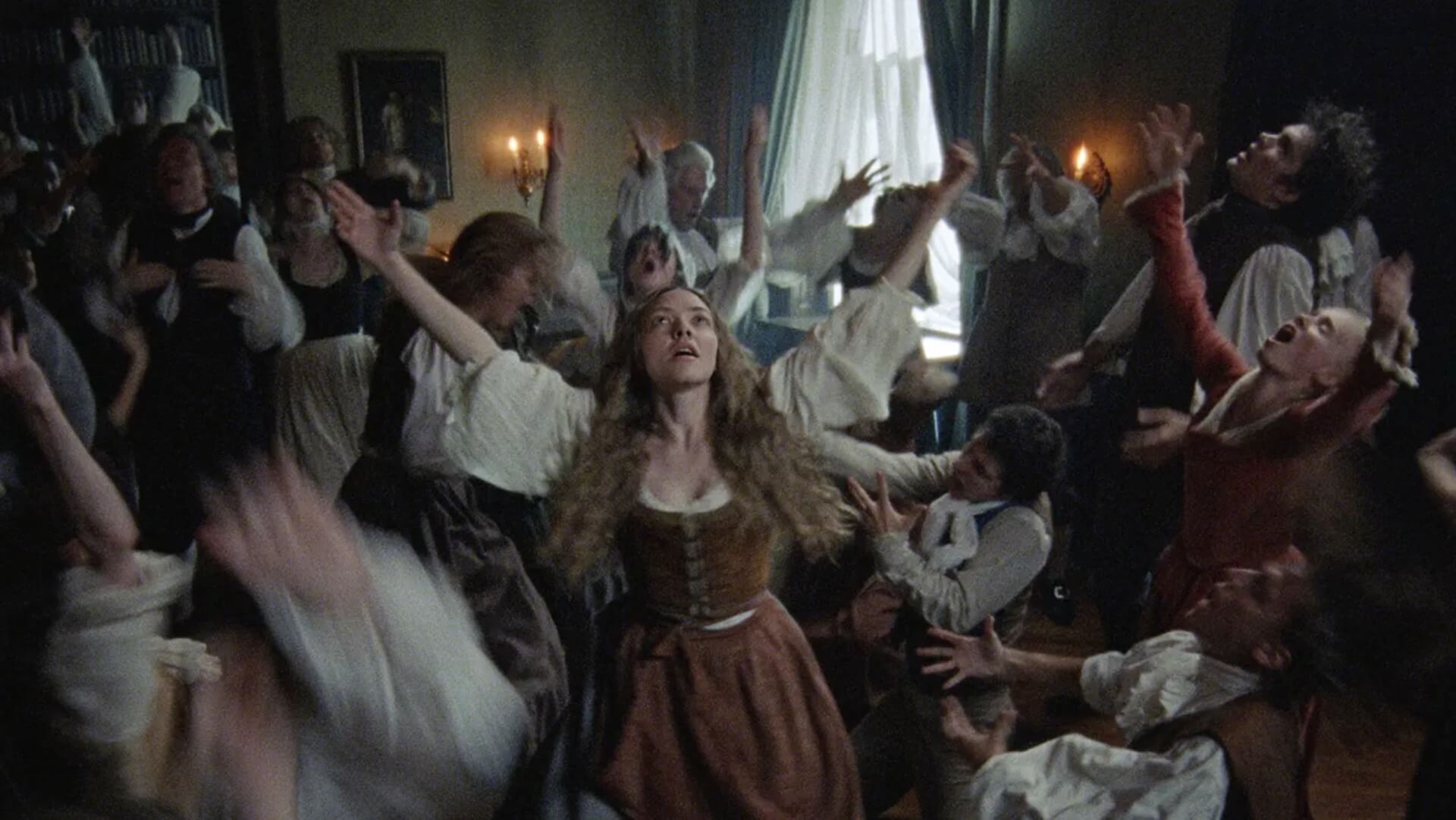
The aim of most period pieces is to make the past familiar. To draw a line between the way people used to live and the way they do now—to hunt for continuity in the human experience. But writer-director Mona Fastvold has a different goal in mind with her historical drama The Testament Of Ann Lee. What if the past vibrated on such a different frequency that it almost felt like a foreign world? What if it literally sang?
It’s the ethos of a film that does, ultimately, find continuity in the human experience, but takes a bold, disorienting path to get there. Shot on 70mm and starring a mesmerizing Amanda Seyfried as the titular founder of the Shaker religion, The Testament Of Ann Lee captures how ecstatic 18th-century religious experiences felt for those inside of them, rather than how they looked from the outside. That means transforming the trembling reveries of the “Shaking Quakers” into full-on musical numbers full of rhythmic breathing and percussive dancing; lilting choral ballads with a dash of the moaning circle from Midsommar. And it also means casting an honest eye on the brutal realities of the past. At a time when it was not uncommon for a woman to lose four babies before their first birthdays, religion served less as a set of moral principles than as a mast to which one could lash themselves just to survive.
That’s the experience of Ann Lee, the second-oldest of eight siblings born during an era of Evangelical revival in England. Unsettled by “fleshly cohabitation” and yearning to “find purpose amidst the dullness of her lot,” she turns to a burgeoning Shaker movement known for plaintive public confessions and, more notably, for allowing women to be preachers. In fact, the Shakers believe God is both male and female—a radical ideology for Manchester in the mid-1700s. And after Ann experiences “astonishing visions and divine manifestations” during a hunger strike in prison, she leaves convinced of two things: fornication is the cause of all evil, and she’s the second coming of Christ.
 Keep scrolling for more great stories.