
The Vampire Lestat delivers a fittingly manic and moving season finale
In exploring Lestat's interiority, Interview With The Vampire now paints a complete picture of the toxic lovers at its core.
Photo: Sophie Giraud/AMC
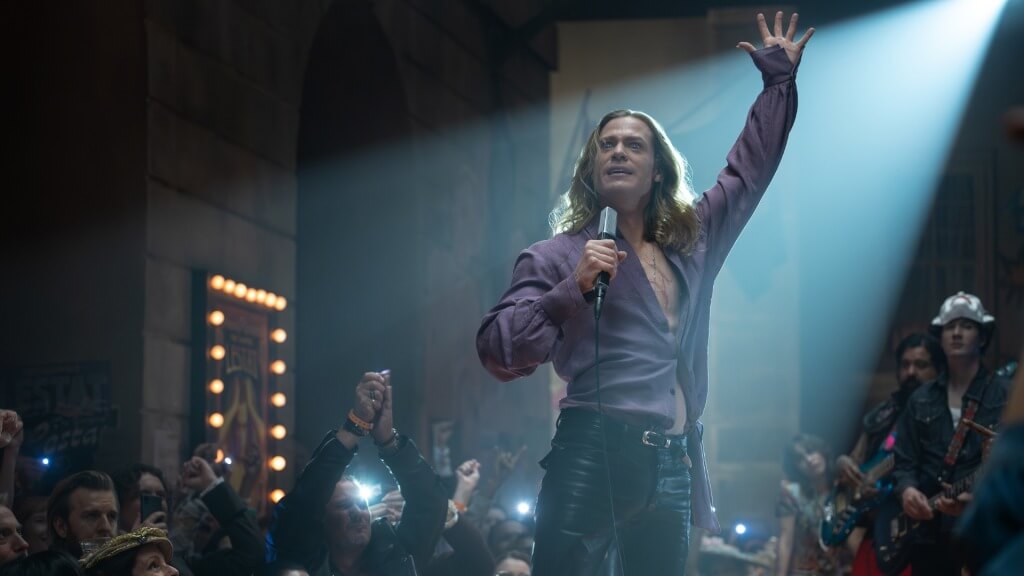
“In the end, I was pretty fucking great,” Lestat de Lioncourt proclaims in The Vampire Lestat‘s frenetic finale. His realization comes at the end of an arduous trial he cooks up in his head, while his actual head is trapped inside a bowling bag, separated from a body that lies in a butcher’s shop somewhere in Montreal. It’s during this imaginary ordeal—one where those closest to him gather around a long table to determine if he’s a failure—that Lestat’s life flashes before his eyes often, delivering him to a deceptively simple realization: “If I failed, then that means I actually attempted something.”
Season three’s entire purpose is to emphasize that Lestat has endured despite the hand he was dealt: A manipulative mother, a father and brothers who bullied him, forcefully being turned into a vampire and a villain, his 20 years caring for Akasha, devastating romantic relationships, being a part of Claudia’s death, lengthy periods of isolation, sudden fame as a rock god. He’s stronger and stranger for all of it, even though he commits and frequently despises the sins that come naturally to his immortal kind, as seen by the presence of his various human victims during the “trial” concert.
Written by Hannah Moscovitch, “Failures” shares a manic energy with the six episodes that preceded it. But it’s confident in its conclusion of the season’s story—not just with Lestat’s arc but also with Louis and, to a smaller extent, Armand. Would a couple more outings fortify The Vampire Lestat, allowing it to revel in deeper flashbacks, more time with Armand and Daniel, and more Loustat together? Yes. But what the show accomplishes with what it has—much like it did with season two—is exceptional. Interview With The Vampire‘s sophomore run traversed Louis’ interiority: how he views himself, his loved ones, the world. TVL does the same with Lestat, now making the series a complete story of two flawed lovers intertwined forever. Except we now know Louis and Lestat better, and it’s all the more satisfying to continue rooting for both of them because of it.
However, the two of them are physically apart for most of the episode, considering their heads were lopped off their bodies at the end of “Montreal.” While he’s slowly dying, Lestat hallucinates a judgment of sorts, with an assortment of folks deciding just how much he’s flopped over centuries. Gathered around the table are Louis, Gabriella, Nicholas, Magnus, T.C., and Antoinette, each one wildly debating the state of Lestat’s soul (often by literally screaming “THE SOUL” out loud in unison!). “Where’s Claudia?” Lestat immediately asks with some hope in his eyes, forgetting that his fledgling daughter already said what she had to during the heartbreaking seance.
Among other things, like venting about his maker Magnus’ self-immolation or the utterly complicated romance with Nicky, Lestat’s takeaway from this trial is seeing how Gabriella controlled, influenced, and harmed him. Lestat probably knew this deep down but was never able to accept it head-on. As seen by how he angrily confronts his mother after waking up for real back on the tour bus, his eyes have opened up. It’s a goddamn relief. Jennifer Ehle’s portrayal has its merits (the accent notwithstanding), and she gradually grasped the show’s tone. But I hope this is the end of Gabriella, solely because of Lestat’s realizations; I don’t need more incest with this particular show, either, if we’re being honest.
After bearing these conversations, Lestat does what he does best: Turning the table into a stage in his mind, stepping up on it, and laying his own heart out on the mic. It’s here that he conjures up his human victims in the audience, reflects on the details he remembers about them, and even apologizes for his actions. The point of this exercise seems to be about self-compassion and growth, which isn’t a feeling that a lot of fictional vampires experience. I appreciate how Anne Rice wrote Lestat’s evolution in the novel, and how the writers’ room interprets it in a manner that fits their version of the character. That’s why it’s impactful when, of all people, it’s a vision of Louis’ brother, Paul, who explains to Lestat that Louis does love him, even if he is unable to express it.
“Failures” puts Louis through a wrenching trial, too; his arc also ties neatly into the themes of recognizing your mistakes and asking for forgiveness. Louis’ experiences—packaged as genuine body horror instead of a trippy performance—are just as pivotal. It sheds new light on Louis, but also on his captor, Armand. After decapitating Loustat in the park, Armand takes Louis to the butcher shop and props his head up with wires so that Fareed (Gopal Divan) can monitor his vitals. Armand offers up his amends—er, “Armends,” as he calls them—apologizing for the Paris trials and the lies he’s told Louis in its wake.
 Keep scrolling for more great stories.