What Almost Famous can still teach us about music criticism

Cameron Crowe’s Oscar-winning, semi-autobiographical music drama plays as an entertaining, poignant testament to the value of criticism that still endures a quarter of a century later.

What Almost Famous can still teach us about music criticism

Anyone who knows me knows I’m a hater. Ever since I was a kid, I’d constantly notice and complain about the smallest things that others had no problem with. My autistic hypersensitivities likely motivated a lot of this innate preternatural discomfort, but, on the flip side, it informed how seriously I took the things I loved. I’d consume, study, and ramble constantly about pop culture, but to help cohere and anchor my scrambled thoughts, I developed an intense, scholarly interest in writing about them. Even though I’m still sometimes skeptical about expressing a strong opinion on a film or an album, especially around friends or strangers who seem much more inclined to be generous and flattering, I’ve come to embrace hating as a valuable, alternative form of enthusiasm. To me, there’s actually a lot of joy in having an outlet to shit-talk and properly process, contextualize, articulate, and document my feelings about whatever I’m watching or listening to. Even if I don’t necessarily like or agree with the execution, critique helps me stay more present with a work of art by considering all the elements that went into making it.

That’s something I feel most people misunderstand about criticism. While some critics are certainly capable of indulging in contrarian viewpoints, most aren’t simply trying to dismiss or lambast for the sake of it. They just care so deeply and are so passionate about the mediums they love that they’re willing to hold them to a higher standard. This is also precisely why I love Cameron Crowe’s Almost Famous, which was nominated for three Oscars and rightfully won Best Original Screenplay. In basing the film’s plot on his experience as a teen reporter for Rolling Stone in the ‘70s, Crowe recognized the importance of the artist-critic relationship and how one can’t exist without the other, despite their clashing ideologies. Having worked as both a critic and filmmaker over the past several years, I’ve found Almost Famous to be particularly effective in the way it captures the complexity of writing about people who fear scrutiny due to how much their success rests on the way their work is perceived.

Such an experience feels especially relevant to the time we’re living in, in which people have become increasingly hostile and incurious towards criticism. Stan culture has completely dominated and distorted how we consume and discuss entertainment now. In the music world specifically, stans have gone so far as to harass and dox critics for not writing effusive enough reviews for albums by their faves (I encountered the former first-hand after panning Kesha’s Period last year). And with greater access to interact with their followers, musicians and artists have more leeway than ever to hound critics for not loving their work, to corral their fans to dogpile on them, and to even question the need for criticism altogether. It was especially maddening seeing Alaina Moore from Tennis, a band whose work I’ve enjoyed and whose final album I reviewed for Paste (positively, mind you), post on Instagram about her confusion as to why I said it wasn’t as good as a previous album of theirs that Paste had given a lower rating, despite the fact that a different writer wrote that review.

In addition to stan culture, this wave of depressingly common, exasperatingly narrow-minded antagonism toward criticism can be chalked up to declining media literacy, a preciousness around the arts as our industries conglomerate and our government defund creative institutions, and a defensive response to the Blog Era’s punching down. Consequently, critics have gone softer in their reviews and outlets like the very one Almost Famous depicts have become guilty of catering to the egos of the artists they write about. It’s a shame, considering that music critics have been largely and crucially responsible for helping me discover albums I hadn’t considered, deepen my admiration for ones I already loved, and validate my ire around ones I loathed. This is why Almost Famous remains such an important text: it is an earnest, loving ode to both the intellectual and emotional appreciation of music, which Crowe brings to vivid life with an equally entertaining and moving narrative.

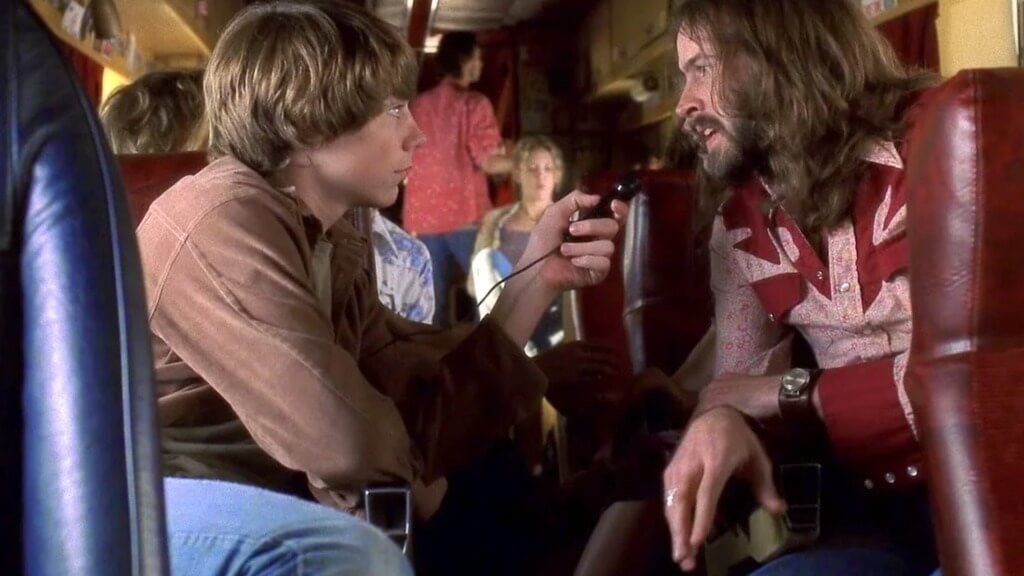
Crowe unfolds the tension of that narrative so well by humanizing both the critic and the artist. The film’s budding rock journalist protagonist William (Patrick Fugit ably holding his own in his feature debut) gets the gig of a lifetime covering the rising rock group Stillwater for Rolling Stone, but yearns to connect with the band too, especially with their bohemian “band-aid” Penny Lane (Kate Hudson in her finest performance). Meanwhile, Stillwater lead singer Jeff (a great Jason Lee) and guitarist Russell (Billy Crudup at his hottest) butt heads as Russell becomes the more popular member, but the two attempt to show William a good time, hoping to get a positive write-up that’ll point them toward stardom. 

In essence, each character’s desire to be desired and seen as “cool” actually keeps them from being fully vulnerable with each other. For William in particular, being uncool is something he can’t help but be: he’s much younger than everyone else around him, he is the son of a rock-hating college professor, and his chosen vocation is dedicated to opening up about his feelings. But although Jeff initially dismisses him as “the enemy,” William’s uncoolness is the very thing that ends up getting him accepted into the group, as he names each band member and gives them a specific, genuine compliment about their work. His attentiveness positions him as both the film’s hero and its moral compass, especially when he quietly observes how Russell exploits Penny’s love for Stillwater and later chastises him and the rest of the group for neglecting her. 

And much like William writing and speaking on what he observes, Crowe embeds innumerable personal, textured details in the film that showcase his affection for people who are healed by music as much as those who wrestle with it. When William’s rock-loving older sister Anita (Zooey Deschanel) leaves town after feeling stifled at home, she leaves William with her record collection and sets him on the path towards his purpose. Virtually every character looks and feels like a full-bodied person, even William’s finger-wagging mom Elaine (Frances McDormand, mothering hard as usual) and the rabid fans (a baby-faced Jay Baruchel and a blink-and-you’ll-miss-him Nick Swardson) who follow other popular artists at the time like Led Zeppelin and David Bowie. Similarly lived-in is the film’s Grammy-winning soundtrack, a well-curated blend of ‘60s and ‘70s prog, folk, pop, and arena-rock that features tracks like Elton John’s “Tiny Dancer,” which plays during the film’s thrilling emotional high point, and Crowe’s favorite Beach Boys song “Feel Flows.” 

But perhaps the most salient part of Almost Famous comes toward its end, when William’s mentor Lester Bangs (a brief but memorable Philip Seymour Hoffman) gives him tough love about the hollowness of Stillwater buttering him up. “The only true currency in this bankrupt world is what you share with someone else who’s uncool,” Lester says. “If you want to be a true friend to them, be honest and unmerciful.” Beyond their pithy profundity, these lines get at why critique matters when it comes to our relationship to art. Having a fawning, adulatory opinion could help you make headway with the in-crowd, but it can just as easily inhibit you from developing an actual point of view and cultivating deep, meaningful bonds with other people. Conversely, having a harsh or inflammatory opinion could make you more likely to alienate others, but as long as it comes from a real, studied respect for the art form, it’ll attract those who grasp and relate to the necessity of engaged discernment, especially in our current cultural moment of toothlessness, sanitization, and exaltation of mediocrity.

Following Lester Bangs’ advice, of course, does have its consequences. At first, the uncompromising truth William puts in his article costs him when Russell, fearing what it’ll do to Stillwater’s reputation, calls Rolling Stone to discredit the piece, but William’s authenticity is ultimately rewarded in the end once Russell acknowledges his betrayal and finally sits down to be interviewed. The film’s resolution is a rare instance in which criticism is actually celebrated rather than denigrated, because it understands that telling the truth is really just an investment in the spiritual and creative potential of a person and the work they produce. Because without honesty, we get less interesting art, and without interesting art, we become less connected to it. Hopefully, the wisdom that Cameron Crowe imparts in Almost Famous can still resonate for those who are really listening. 

Sam Rosenberg is a filmmaker and freelance entertainment writer from Los Angeles with bylines in The Daily Beast, Consequence, AltPress and Metacritic. You can find him on Twitter @samiamrosenberg.

 
Join the discussion...
Keep scrolling for more great stories.