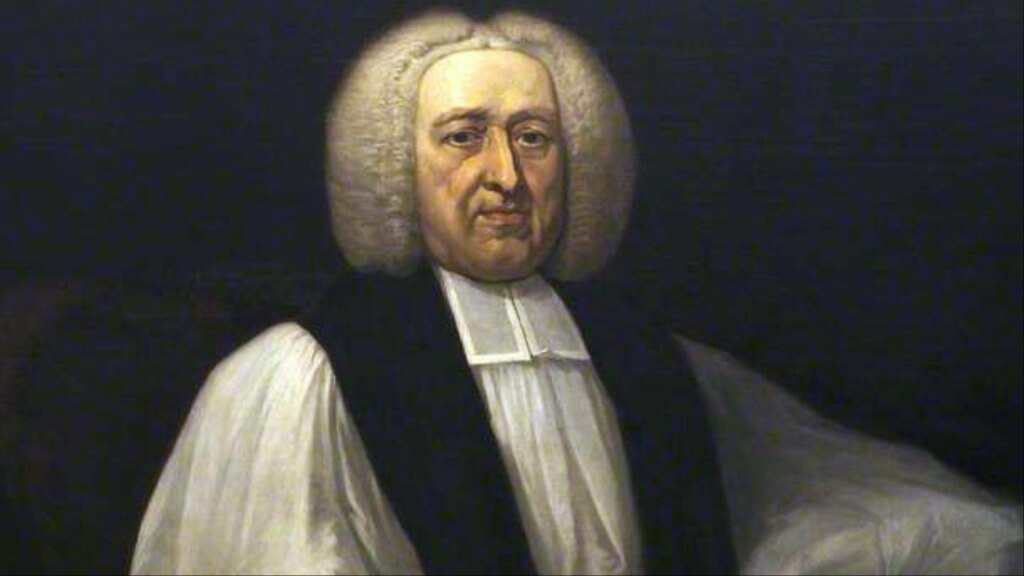
Strangest fact: While plenty of people assumed Blackburne was a pirate, no one seemed to know for sure. After graduating from Oxford’s divinity school in 1681, he moved to Nevis in the Caribbean (which was in the midst of the “Golden Age Of Piracy”), and returned to England in 1684, amid rumors that he had spent those intervening years as the chaplain on a pirate ship, if not as a buccaneer himself. The only hard evidence of his swashbuckling is a record of a £20 payment (roughly £4,000 today) from previous king Charles II for “secret services” just before leaving for Nevis. (And in that era, plenty of pirates were secretly working for the British crown to upset rival nations’ shipping without causing a diplomatic incident.)
Blackburne was also described by contemporary Horace Walpole as having “all the manners of a man of quality, though he had been a buccaneer.”
Thing we were happiest to learn: There’s even more scandal beyond the piracy and secret royal marriage. After his alleged stint on the high seas, 24-year-old Blackburne married 38-year-old Catherine Talbot, sister of a fellow clergyman. But he seems to have pretty openly carried on affairs of his own, given Walpole also describes frequently dining with Blackburne, a Mrs. Conwys, and Thomas Hayter, the son they had together. (He and Catherine had no children). Blackburne didn’t openly acknowledge Hayter as his child, but left money to him in his will, which is as close to an acknowledgement as we’re going to get.
Thing we were unhappiest to learn: Whatever success he had as a pirate, Blackburne was a pretty lousy bishop. He rarely held confirmations, and stopped bothering to ordain new priests after 10 years on the job. He was also once thrown out of a confirmation for interrupting to ask for his pipe and some ale. Blackburne was far more interested in sucking up to those in power than saving souls, keeping apartments on Downing St. in London and enjoying his position on the Privy Council, while neglecting his flock back in York.
Best link to elsewhere on Wikipedia: One more unconfirmed rumor about Blackburne: there were claims that his butler was in fact infamous highwayman Dick Turpin. Turpin started off as a poacher and burglar, before escalating to highway robbery. The rest of his gang were arrested in 1735, but Turpin escaped, resurfacing in Yorkshire two years later under the name of John Palmer. “Palmer” was arrested on suspicion of being a horse thief, and his identity was discovered when he wrote letters to his brother-in-law from prison, which the authorities were happy to read. He was hanged for horse theft in 1739; Blackburne died of natural causes in 1743. So the dates do line up, although if Turpin was in the bishop’s employ, it couldn’t have been for very long.
Further down the Wormhole: If you really want to spend time going further down the wormhole, there’s no more entertaining subject to read up on than piracy. No matter how much history tells us pirates were murderous, slave-trading criminals, the romantic image of the swashbuckling seafarer is too appealing to ever let go of completely. However, all the romance falls away very quickly when you move past piracy and onto its modern equivalents—hostage-taking, terrorism, and aircraft hijacking. There aren’t any particularly fun plane hijack stories, and hijackings from 9/11 on down have made air travel a lot less fun, between long lines at x-ray machines and 25 years of shoe removal in a pointless attempt at explosive detection. Of course, practical, results-driven explosive detection is a vital safety measure, which is why law enforcement is always willing to go in on explosive detection, even when it’s very obviously a scam. We’ll look at the fraudulent Quadro tracker, and why police departments continued to use it even after it was exposed as a hoax, next month.


 Keep scrolling for more great stories.