The best living action choreographer is still crunching bones at 80

Blades Of The Guardians sees Hong Kong stunt legend Yuen Woo-ping continue to reign supreme.

The best living action choreographer is still crunching bones at 80

Drunken Master; The Matrix; Crouching Tiger, Hidden Dragon; Kung Fu Hustle; Kill Bill; The Grandmaster—they all share one man in common: Yuen Woo-ping. The action choreographer and director has been defining what martial arts look like on camera since he transitioned from acting to stunt coordination in the ’70s. The key behind-the-scenes figure who helped Hong Kong style infiltrate, then dominate, the way the West filmed action, Yuen was wooed to Hollywood by the Wachowskis after they saw his work with Jet Li in Fist Of Legend. Now, at 80 years old, his signature flow is discernible everywhere, from the John Wick franchise to this year’s The Furious. But like so many surviving filmmaking masters, he’s still working, adjusting his long-developed aesthetic into something new with this year’s Blades Of The Guardians, a late-period blend of modern Chinese maximalism and classic HK action. And it’s still got Jet Li kicking people in the face.

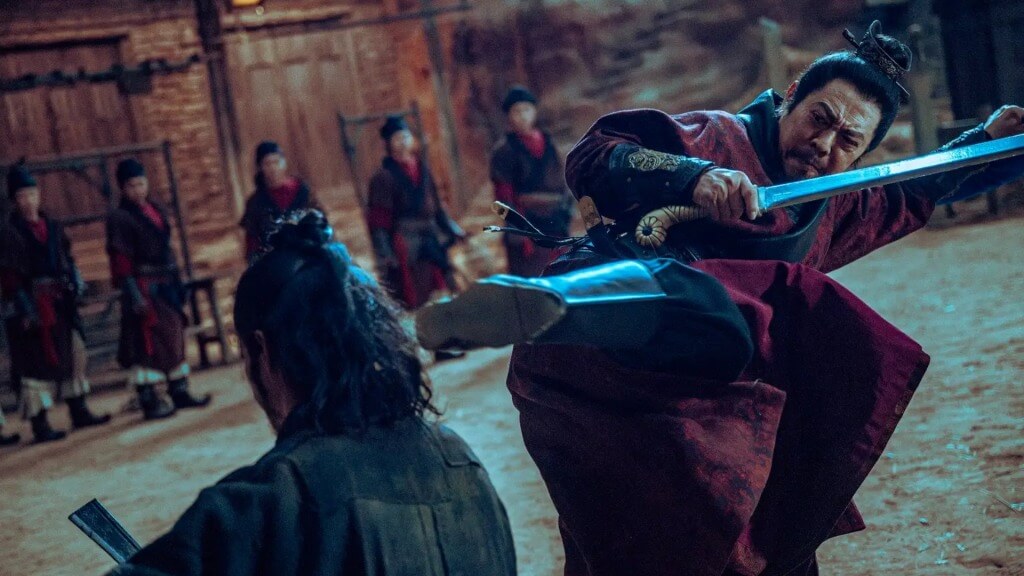
A big boisterous wuxia adapting the comic Biao Ren into a sprawling epic of bounty hunters and revolutionaries, Blades Of The Guardians allows Yuen to define kooky characters by their movements and weapons, as well as seamlessly conduct ensemble throwdowns in various entertaining environments. The former is something Yuen has done since the beginning of his career, when he helped define Jackie Chan’s slapstick kung fu in his 1978 one-two punch of a double feature: Snake In The Eagle’s Shadow and Drunken Master. These two films established Chan as a loose-limbed star, set Yuen’s take on the martial arts comedy subgenre as the dominant template, and made “drunken” fight films into an easily copied fad. (One of these mimics, Drunken Tai Chi, which Yuen would helm himself, gave Donnie Yen his acting debut.)

None of the fighters are sauced in Blades Of The Guardians, but its lead—an unassuming scruffy badass played by Wu Jing, star of hits like Wolf Warrior and The Wandering Earth—does fit that traditional mold. He plays Dao Ma, a bounty hunter who’s also a fugitive in his own right, riding through the deserts of western China during the Sui dynasty on the hunt for his next cash cow. There’s a familiarity to this hero for Yuen, just as there is to the Lone Wolf And Cub thing Dao Ma has going on with his young ward (sorry, The Mandalorian And Grogu, you’ve been outclassed). But it’s less that it’s rote and more that it’s squarely in a classical comfort zone, including the presence of Jet Li as a villainous, scenery-devouring Governor.

Considering that this is a spectacle-laden drama, with zany set piece fights taking place in sandstorms and drenched in desert oil, that sense of easy expertise is really the only sign that the film is being directed by an octogenarian. There’s more large-scale VFX work than in Yuen’s best-known films (apart from the likes of The Matrix), with CGI usage familiar to anyone who’s seen the kind of blockbusters topping the modern Chinese box office. There’s also more grisly violence, with heads and legs separated from their owners and combatants taking arrows to the face. But these are simply bells and whistles added onto a reliable standby; at its core, Blades Of The Guardians is typical of its genre: A small party of oddballs assembles—including a masked ideologue, a sassy sex worker, a serious pretty boy, and a couple tough female warriors—and they scurry across the landscape on horseback getting into scraps. The ways these fighters’ stories play out, in character-driven moments of action unique to the personality of each (whether that means cowardly, virtuosic, carefree, or seductive), is Yuen applying the same arsenal-as-identity ideology he’s been using since Jackie Chan’s early days.

That makes the quick brawls of introduction just as exciting as the climactic showdown between the emotionally entangled leads. Each encounter means learning something new about the characters, watching them change, and discovering their personal approach to the kind of barfight that’s opened up countless fables, films, and Dungeons & Dragons campaigns. The guys with the big maces whack the snot out of people, the swordsmen prize grace, the oft-underestimated archers rain death, and even the comic relief characters end up saving the day. Plenty of action movies follow the same beats, but nobody’s been doing it as long or as well as Yuen, whose fight scenes still shift between characters and locations with an energetic grace, maintaining their physicality even as blockbusters have gotten more ephemeral.

Yuen doesn’t direct nearly as often as he did during his most prolific period, the heyday of HK action. Over the last decade, he’s only made five films rather than twelve. His previous project was the anthology Septet: The Story Of Hong Kong, where he directed a segment alongside legendary industry peers like Sammo Hung, Ringo Lam, Hark Tsui, Ann Hui, and Johnnie To. That still-working group is a good place to start when figuring out a Hong Kong cinema Mt. Rushmore, and despite his lower-key presence compared to his actor-filmmaker contemporaries, his crossover impact might make him the most influential of the bunch.

 
Join the discussion...
Keep scrolling for more great stories.