
Heartbreak feels good in an Andrew Scott movie
Scott takes center stage in Elsinore and gets his long overdue standing ovation.
Photo: Focus Features
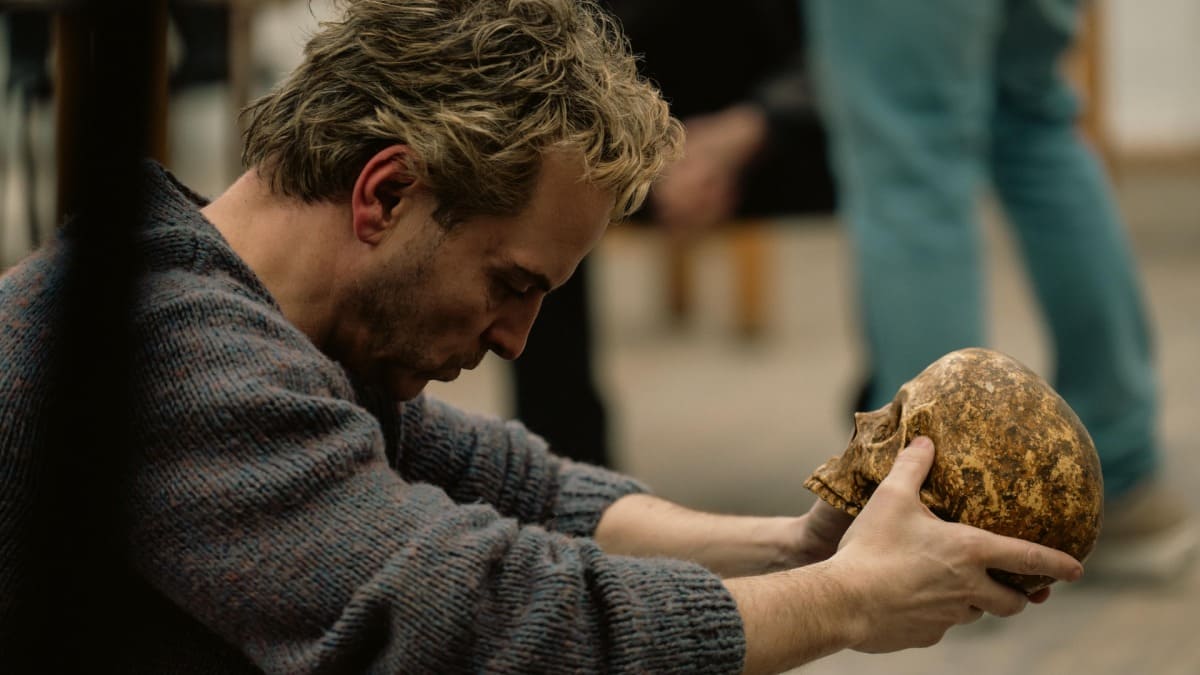
If all the world’s a stage, then actors get to live the most lives on it. Their task is to make other lives believable, to immerse the audience in their story, make them root for or against them. Although Andrew Scott is just now enjoying overdue time in the spotlight, for his triumphant turn in the Hamlet-adjacent festival film Elsinore, he’s been commanding attention for decades on stage and screen. For many in the U.S., Scott broke out opposite Benedict Cumberbatch as the Moriarty to the latter’s Sherlock, giving an intensely uncomfortable wide-eyed performance that hinted at danger anytime he walked on screen. Not long after, he crushed viewers as the Hot Priest in Fleabag, giving a coquettish performance that led to one of TV’s favorite will-they/won’t-they moments and ended with Scott’s pained soft smile: “It’ll pass.” It would not be the last time he would deliver such a devastating line, nor would it be the last time he would break viewers’ hearts.
Since then, he’s played a range of roles across the villain-hero spectrum, like the disillusioned writer Lee Ross in Wake Up Dead Man, Patricia Highsmith’s alluring eponymous figure in Ripley, and composer Richard Rodgers opposite Ethan Hawke’s Lorenz Hart in Blue Moon. Even in his brief appearances, he is not one to blend into a crowd; his intense presence stands out in an ensemble piece, but he’s just as capable of withholding a character’s true emotions under his coat, revealing only a placid surface and an inscrutable expression. It was in Andrew Haigh’s All Of Us Strangers where Scott opened up in a leading role and tapped into a kind of vulnerability he hadn’t yet had the chance to show to a wide audience. He played a screenwriter grappling with the loss of his parents years before, when a hot young stranger (Paul Mescal) shows up on his doorstep and talks with him like no one ever had. Scott’s performance swings between extreme grief and falling in love, the duality allowing his character to get physically and emotionally intimate after years of repression. It’s a lovely, complex performance, one that flew under the awards radar for being too nuanced (or perhaps too gay).
 Keep scrolling for more great stories.