Beggar Weeds are doing their own thing in their own time
In the 1980s, Beggar Weeds were Jacksonville punks sleeping under trucks, opening for X, recording with Michael Stipe, and skinny-dipping with David Berman. In a new, career-defining reissue, they’re the long-missing link between R.E.M. and Uncle Tupelo.
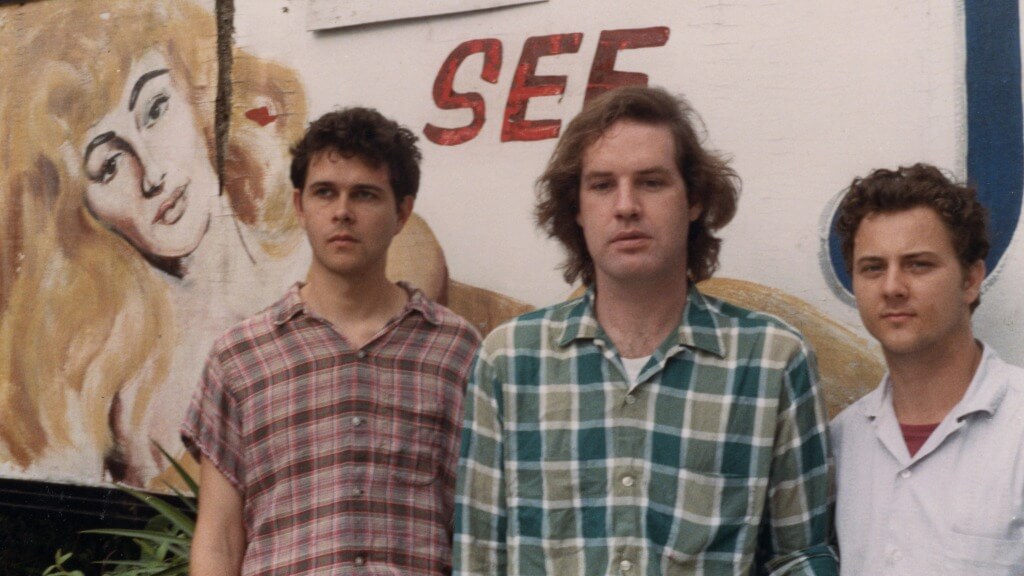
In the late 1980s, the whole of the Southern alternative scene knew Beggar Weeds as the up-and-coming speed-folk outfit co-signed by Michael Stipe of R.E.M. fame and destined for an imminent break into the big time. They were a trio of mid-twenties guys who spent most of their time shredding at the legendary venue Einstein A Go-Go, scouring junkyards for the weirdest tossed-out signs they could find, and hightailing it from the near-constant fights in Jacksonville’s “blighted area” as fast as their Stacy Adams wingtips could take them. But by the 2000s, few people knew Beggar Weeds at all; I myself knew Adam Watson, but not as the guitarist and co-lead-vocalist of the cult punk act, but as Maggie’s dad—as the guy who made me breakfast while I sat on his daughter’s bed and played “Riptide” by Vance Joy on the ukulele. It’s 2026 now though, and against all odds, something weedy is brewing once more beneath the current. Nearly 40 years after the release of their first and only EP, Sure Pants Alot, Beggar Weeds has somehow found themselves poised to take back the spotlight that so cruelly evaded them by barely an inch the first time around.
Mostly, it was a case of shit timing. Watson tells me as much over a video call, a beer in his hand and bassist/vocalist Scott Leuthold by his side. “We kind of missed our—” he pauses, searching for the right word. “We were pre‑alt‑country, I think, in a way.” He’s not wrong. Watson, alongside drummer/vocalist Alan Cowart (who has alternately gone by everything from Lumpy to Monterey Jack Cheese to Cowbell) and Leuthold, had the wild misfortune of somehow being both a hair too late to capitalize on the R.E.M.-infused underground post-punk scene of the ’80s and a hair too early to help usher in the Uncle Tupelo era of the ’90s—but now, in hindsight, that just means their music slots effortlessly into place like the final piece of a long-unfinished puzzle, finally plucked from its hiding place under that damn couch cushion. It’s rather remarkable, really; the press release calls them “the missing link” between those two beloved stalwarts in the timeline of alternative music, and after hearing Tragedy in U.S. History—the first-ever compilation of both Sure Pants Alot (which previously couldn’t be found on streaming) and the six tracks they recorded under Stipe’s guidance (which previously couldn’t be found at all)—I am genuinely inclined to agree.
The original EP has the idiosyncratic, wailing-voice rush of R.E.M. and the almost‑falling‑apart charge of the Replacements and Hüsker Dü. The reissue’s Stipe‑produced side just extends that arc: landfill hoedowns (“Sunbeam Mountain”), roadside‑stand daydreams (“Picolata”), hoarder portraits, cousins and death cars and racist dads, all rendered with the same jangly grace—it’s proto-alt‑country; all rural storytelling, pedal‑steel sighs, and hardscrabble Southern detail. They tried to play like their ’80s inspirations at first, but their Panhandle-born Americana instincts permeated every note, and in the end, what came out was something entirely new: as Watson puts it, “At least for us, we set out to do something specific, but we weren’t the Replacements. We weren’t R.E.M. So it came out differently, just because of who we are, who this group is together. What we liked and what our influences were individually formed this sort of weird melding of speed folk, punk rock, and country. So I guess what ended up happening was we made a sound that became something completely our own, and we didn’t even really try.”
Then Cowart chuckles, having thought of something: “Oh, it’s that quote from Easy Rider.” Watson and Leuthold immediately laugh in recognition; I, sadly ignorant to the glory of the 1969 road drama, just squint. “It was one of our favorite movies,” Watson explains. “And like, we’re just doing our own thing in our own time, man.” So if you’ve ever wondered what it would sound like if the Everly Brothers got really into Taco Bell parking‑lot punk, small‑town Florida weirdness, and the idea of writing a foot-stomper about a garbage dump, Beggar Weeds churned out answer after answer in 1988 then broke up before the world caught on.
BACK IN THE DAY, though, Beggar Weeds were just three Jacksonville kids trying to find somewhere—anywhere—to be loud. Cowart and Watson met in Horse Child Breakfast, a band named after a Richard Brautigan poem Watson admits he hadn’t actually read when he pitched it. “I just thought it sounded good,” he shrugs—and it does, it’s a sick fucking band name. (So sick, in fact, another band has since claimed it). Cowart was already a lifer in the early Jacksonville punk scene, cycling through bands with names like Boy Next Door, the Splinters, and the Great Invisibles, plus a handful of groups so short-lived they never even settled on a name. When Watson decided he wanted to switch from bass to lead guitar, he called up Leuthold mostly because, as he puts it, “you looked cooler than we did.” Cowart chalks the cool-factor up to Leuthold’s Stacy Adams shoes: “They looked like you’d wear them in the 1890s. It was phenomenal.” Leuthold had bought them at The Movin’ Man, a mostly Black church‑clothes store in Gainesville that, in his telling, would happily sell him the wild ankle‑high boots but drew the line at full leather suits. He wore them, naturally, with cut‑off shorts to his knees. “We called ourselves the long shorts, big boot band,” he says, and you can hear the amused pride in his voice.
The band’s first real joint outing was, essentially, a fight—which sounds just about par for the course when it comes to the ’80s Jacksonville punk scene. In their words, the city’s hair-trigger temper and penchant for fisticuffs is what drew them to artists like Stipe in the first place: as Cowart laughs, “The reason we were so enamored with the [Chickasaw] Mudd Puppies and R.E.M. and the whole Athens thing really might have been because we were attracted to bands that, you know, didn’t end up in a fight?” After all, the band’s first practice session ended up a kind of trial by fire: Horse Child’s guitarist Palmer Wood befriended local legends Stevie Stiletto and the Switchblades and essentially claimed Beggar Weeds’ intended rehearsal room, prompting what Watson dryly calls “a little physical” disagreement (“It got kind of ugly,” Leuthold agrees, claiming Parker then “split the scene”), sending the band-to-be scrambling for a new space. “That’s why we were out in the Taco Bell parking lot,” Watson recalls, referencing the place where they wrote their very first songs. “We didn’t have a practice room.” This was in part because of the fight, in part because the whole building got shut down: to quote Cowart, “Didn’t the security guard guy murder a prostitute or something?”
Jacksonville, as they sketch it, is basically one long string of those details. The building where they used to rehearse, up six flights of an outside fire escape, was also where Leuthold’s mom went roller‑skating in the ’40s; it had a cartoon‑style door that opened straight into a six‑story drop. The stretch of beach that now hosts condos and brunch spots was then the “blighted area,” home to the aptly-named punk club The Blighted Area and, crucially, Einstein A Go‑Go, the famously chaotic all‑ages venue where Beggar Weeds opened for bands like X, 10,000 Maniacs, and the Red Hot Chili Peppers. The set they played at Einstein’s one-year anniversary gig sounds like it should have been written for TV: “We played five songs then they had to shut down,” Leuthold remembers. “They said, ‘Okay, there’s a riot in the street and the Nazi skinheads are doing the goose‑step down First Avenue.’” Bikers, skinheads, and a group of Latino workers all brawled outside the neighboring Ritz Package & Lounge, a bar John Doe of X later dubbed the scariest joint he’d ever set foot in. The Faircloth family, who ran Einstein, locked all the kids inside while Beggar Weeds watched chaos unfold through the windows. “With a start like that,” Cowart deadpans, “how could it not end magnificently?”
Ask them about Jacksonville and they’ll veer from violence to signage in under ten seconds. They are obsessed with signs—and not of the spiritual or omen variety. In the ’80s, they all had little trucks and spent their free time circling Riverside and the surrounding neighborhoods, scavenging trash piles for discarded billboards and metal letters. They briefly talked about opening a “sign ranch,” decorating their dining room with 12‑foot‑tall ad cutouts of red‑headed kids with braces. One Jacksonville bar started life as Panama Reds until, as Cowart tells it, a drunk patron rearranged the movable marquee letters to spell MANAPADERS. “And the guy kept it!” he says, delighted. “That’s the only name I remember. Manapaders.”
Their crowning signage achievement, though, is a fish—which, oddly enough, turned out to be a crucial stepping stone in their journey to becoming Jacksonville punk-scene regulars. On an early junkyard run, they found a six‑foot, double‑sided, neon‑rimmed metal fish sign that said POULTRY MARKET. Years later, at a show in Athens, they sold it to Michael Stipe. “He just liked old signs,” Leuthold shrugs, pointing to the “Strange Currencies” cover photo—an anonymous glowing sign through a rainy windshield—as evidence. Stipe took the fish into a warehouse full of miscellaneous objects, Raiders of the Lost Ark-style, and filed it away.
The junkyard aesthetic wasn’t only visual; it bleeds all over their songs. “Sunbeam Mountain,” one of the bonus tracks tacked onto Tragedy in U.S. History, is literally about a garbage dump in the Sunshine State turned into a man‑made mountain, complete with seagulls, eternal flames, and a smell that “will seep through the pearly gates.” Leuthold tells me Watson “wrote a great song called ‘Good Little Something’ about us just driving around looking for old signs and junk,” then turns to his left and jabs his beer at the man in question: “I’d like to record that. We should record that song.”
That mix of reverence and humor at mundane oddities might also explain why they bonded so hard with another great Southern misfit, David Berman, even if the friendship mostly took place over the course of 24 hours. In the late ’80s at Trax in Charlottesville, a lanky guy and a woman in a blonde wig came up to the merch table and told Leuthold they loved the Beggar Weeds shirt with the little chihuahua on it but had no cash; what he did have, he said, was some Pavement records back at his place. Leuthold, already a Pavement nerd, struck the deal on the spot. Berman disappeared, then reappeared with a 10‑inch of Perfect Sound Forever and a copy of Slay Tracks, which he traded, dead serious, for two dog shirts. “I’m glad he did,” Leuthold says now, still slightly amazed that the cult poet of the Silver Jews once bartered early‑pressed indie rock for their cartoon mutt.
Cowart and Leuthold ended up back at Berman’s place with Lauren Sparrow—the woman in the wig—watching scratchy Evel Knievel tapes and talking junk, highways, and crash footage until it all blurred together. The next day, as casually as if they were going out for coffee, Berman led them on a long walk to some half‑secret swimming hole outside town, where the three of them went skinny‑dipping. Watson, who’d already crashed out by then, only heard about it later, which somehow makes it even more mythic: David Berman, the patron saint of shy, bookish indie rock, wandering off into the Virginia woods with two barefoot Jacksonville punks to swim naked in a creek.
The only thing the trio loved as much as junk was kitsch: “We traveled around with a book called Roadside America,” Watson says, explaining how they kept ending up at places like Connecticut’s Nut Lady (“Her whole house was dedicated to nuts,” Leuthold explains. “She sang songs about nuts!”) or an Abraham Lincoln cabin encased in a giant marble shell in Kentucky. That’s what they spent most of their touring days doing: they’d drive hours out of the way on five‑bucks‑a‑day budgets just to see some oddball attraction, then get some shut-eye while bundled in sleeping bags underneath massive semis at random truck stops. It feels natural, then, that the bizarre museum giving the compilation its name—the Tragedy in U.S. History Museum in St. Augustine—became a sort of spiritual home.
They talk about the museum the way other bands talk about CBGB or the Beatles. It was in a regular guy’s house, right by the old jail and the Fountain of Youth, its main attractions a recreation of the Texas School Book Depository window, complete with cardboard boxes and a mannequin of Lee Harvey Oswald holding a gun, although it also boasted, supposedly, Jayne Mansfield’s “death car.” Truly, it’s the kind of shit you can only find in Florida. “People are like, Why don’t you guys move to a bigger city where there’s a bigger scene and more chances?” Leuthold says later. “And we’re like, well, we couldn’t write songs about that. We live here, and that’s what we want to write about.”
If you hang out with them long enough, the connective tissue between all of this becomes pretty clear: Beggar Weeds are, to their bones, punk‑rock fundamentalists, just not in the way people now use that word. Sonically, they’re anything but purists. They like Duran Duran and Haircut One Hundred and Depeche Mode; Ethel Cain and Waxahatchee and Palberta. What matters to them is the ethos. “The whole idea of what punk rock was was, like, anybody could do it, you know—DIY sort of thing,” Watson adds, baffled by the idea of meeting in a conservatory instead of a parking lot. That’s not to say Beggar Weeds aren’t good musicians—they are, though both Watson and Leuthold demur and claim Cowart’s the only one with real talent, as he’s been scouted for studio drumming gigs time and time again—but that being a “good musician” is beside the point.
“You don’t have to be a genius,” Watson insists. You just have to make something new and fresh and real, something that’s not just “watered down stuff that’s already been done.” That can be hard to do when so many bands go to music school and learn all their skills from the same curriculums. Leuthold takes the thought to its bratty, logical end. “We thought people that took music lessons were jerks.” Watson says “dumb” simultaneously, and they both crack up. They’re joking, of course, but not entirely: “How can you make a new sound if you’ve already learned about it?” Leuthold asks. “You just do it yourself. You create your own thing. You don’t have to know how to play.”
THERE’S A REAL TRAGEDY HERE, and not just in U.S. history: in the early 1990s, the future of Beggar Weeds seemed all but certain. Watson remembers getting a writeup in The New Yorker while touring in the Big Apple: “I remember going to Barnes and Noble to get that New Yorker and looking at it and thinking, ‘That’s it. I’m going to be in a band the rest of my life.’” Obviously, that didn’t exactly come to pass, but no one would fault him for assuming otherwise. All the stars seemed to be aligning in Beggar Weeds’ favor: Stipe himself was such a fan that, in a 1991 blurb, he raved about their “keening voices” and “authentic lyrics” that carried all the extremes of the Deep South in six songs. He liked the band so much, in fact, that he offered to produce some songs for them—alongside now-director Jim McKay, even—and he was so certain that labels would soon be champing at the bit to sign them that he did it free of charge, confident that Beggar Weeds’ next release would enable them to pay him back and then some. I mean, this was to be a Stipe-produced EP right at the tail end of R.E.M.’s peak; how could it not succeed?
But then Nirvana got signed to Geffen, and all that hope slowly fizzled out. The birth of mainstream grunge was the silver bullet that sent Beggar Weeds to its untimely death. “Even though we were big Nirvana and Mudhoney fans and all that,” Watson tells me, “once grunge hit, we stopped hearing from record labels at all.” Leuthold groans that their manager even “put a Smashing Pumpkins CD on the desk and said, ‘This is what you need to sound like.’” That, of course, was the beginning of the end. Their case certainly wasn’t helped by their admittedly terrible approach to label discussions: “We got taken to dinner by this guy from Sire Records way back,” Cowart says, then shakes his head. “We kind of blew it.” Watson cuts in with a clarification: “We always blew it.”
It all came to a head at a 1993 show at Gainesville’s the Covered Dish, Leuthold recalls: “We, uh, weren’t communicating as much as we had been,” he says, laughing; I comment that it sounds like that might be a bit of an understatement. The band, grinning, neither confirms nor denies. “We got together, we played the show,” Leuthold continues, “and on the way down, Alan and I were like ‘Wow. I think maybe it’s a time to give it a rest.’”
It wasn’t out of nowhere, though. “We had traveled so much and we were a little sick of each other at that point,” Watson says. “After the whole grunge thing happened, we were kind of not in the picture at all. We weren’t hearing back from any labels. We were all 29 years old, roughly, and it just started feeling like, ‘Okay, we’ve got to actually get jobs and—” “Start a life,” Leuthold cuts in. (The three regularly finish each other’s sentences throughout our two-hour call; they might’ve been sick of each other in 1992, but that couldn’t be further from the truth in 2026). Watson nods. “Yeah, like, ‘we have to start living.’”
“I remember being in the back of the truck one time in Wisconsin, and it was snowing,” Watson continues. “I looked out, and there were all these little houses at night. I was in a sleeping bag in the back of a pickup truck with a topper on it. And I was looking out, and there were these little houses all warm with fires going. I’m like, ‘Oh…’” Leuthold nods, knowingly: “You wanted to be in there.” Watson sighs, “I wanted to be in there so badly. I mean, I love touring, but it was… It was hard. It was no money, no stability. And it didn’t seem like we were going anywhere, at that point. We just felt like we needed a life.”
So: Beggar Weeds broke up, and the trio got lives. (Stipe was “totally generous” about the studio costs and told them not to worry about any of it; “He always was the sweetest guy,” Watson gushes.) Cowart “got into the film business, somehow”; he and his wife both work in it to this day, although Cowart’s played with a variety of bands across the years—Big Jeff Special, the Wild Tones, the Chickasaw Mudd Puppies, even something called the Ukulaliens, an Orlando thing where “30 people that don’t know how to play ukulele get together, and it’s horrible. It’s great.” (Leuthold, bemused: “It’s gotta be the only ukulele band with a drummer, right?”) Leuthold did residential architecture with his brother for a few years, then moved to New York, then back to Jacksonville again where he continued working with his brother “for another 10, 15 years.” Watson works at the Florida archives, though he moonlights as a bassist in the Tallahassee surf band The Intoxicators!. They all found real jobs, got married, had kids—and they still managed to get together for a reunion show here and there, although it wasn’t until very recently that they started actually kicking the band back into gear wholesale. In hindsight, Leuthold says, it ended up being “the best of both worlds.”
“We had so much fun in the ’80s and early ’90s,” Leuthold tells me. “And then we all had families. We each had two kids apiece—and the kids are great, but now they’re off.” Being an empty nester is hard. Parents dread it for a reason; what do you even do once your kids head off for college? I know the question’s been plaguing my folks, at least, but it didn’t take long for Watson, Leuthold, and Cowart to come up with their own answer: “Hey. Let’s do this again.” They might be in their early sixties now—Cowart lets slip their ages at one point, prompting Watson to jokingly hiss back, “Don’t tell her that! She thinks we’re 25!”—but the only difference in their approach this time around is Cowart’s newfound insistence on sleeping in “at least a La Quinta” each night instead of roughing it in or under a truck. “You know, if one of us had fallen off the back of that truck coming back from Miami, no one would have ever known,” Watson muses. But they have kids now, so they probably shouldn’t risk certain death like they used to.
Because, on some level, that is what they were doing—as Watson says in a quiet moment, “I think I would have died if we had stayed together and kept on the road. I predicted that I would be dead at 34 years old. And then I got married at 34 instead.” After a beat, both of his bandmates concur: Leuthold admits that “if we had stayed together 35 years ago, I would have died under an azalea in the rain with too much champagne and whiskey”; Cowart jumps in to say, “I would have either spontaneously combusted or choked on my own vomit.” (“Or somebody else’s vomit,” Watson cracks; the three then go off on a Spinal Tap-induced tangent.) It’s not just a joke, though. “The true miracle is that the three of us are still alive,” Watson says. “We’re all still alive,” Leuthold confirms, “And we still love each other.” Watson echoes that last sentence back: “We always loved each other.”
A moment passes, then Leuthold posits a theory: “I think maybe we would have been more successful if we hadn’t enjoyed each other’s company so much. We just liked hanging out together and going to diners and traveling around. If we had practiced more and played more, then we would have made it more quickly… Maybe.” Cowart laughs and proudly proclaims Beggar Weeds to be “the world’s most inefficient band.”
I’m not so sure inefficient is the right word. In the (apparently famous) words of Peter Fonda’s Wyatt in Easy Rider: “You do your own thing in your own time. You should be proud.” And because that’s exactly what Beggar Weeds did, it seems that the timing has worked out on its own. The band says as much: “I think we were meant for 2026,” Leuthold declares, then laughs: “Maybe we were planning for a resurgence in 2026 all along.” They’re not wrong; with the alt-country renaissance of the 2020s and the thriving DIY scenes across the country, now might just be Beggar Weeds’ moment. And between the phenomenal Tragedy in U.S. History and their plans for an upcoming record of all-new material for the first time since the early ’90s, it sounds like they’re more than ready to capitalize on it. As Watson says, “All our kids are grown ups now and we’ve got more time. If we had just done it—if we had broken up or disintegrated in a different way—we probably would have hated each other. But this is like a second coming for us.” Leuthold picks up the thread where Watson leaves off. “Yeah, who gets a second chance? Who gets a chance with a record deal when they’re in their sixties?” Watson answers easily: nobody, that’s who.
Listen to the Tragedy in U.S. History reissue in full below.
Casey Epstein-Gross is Associate Editor at Paste and is based in New York City. Follow her on X (@epsteingross) or email her at [email protected].


 Keep scrolling for more great stories.