Truly, Jane Austen never goes out of style. In the same year that brought us the cultural juggernaut that is Heated Rivalry, an Austen-based TV adaptation also had everyone watching at home swooning. Based on the novel of the same name by Janice Hadlow, BritBox drama The Other Bennet Sister is a sparkling, witty reimagining of Pride And Prejudice through the eyes of awkward middle sibling Mary that turns out to be as much about learning to love yourself as it is about falling in love with someone else.
It’s an excellent reimagining that actually makes the source material feel richer and more expansive, but Hadlow’s novel is hardly the only one of its kind on publishing shelves. Our books expert Lacy Baugher Milas has put together some more recommendations for the retellings, reimaginings, and continuations of Austen’s classics that are worth your time.
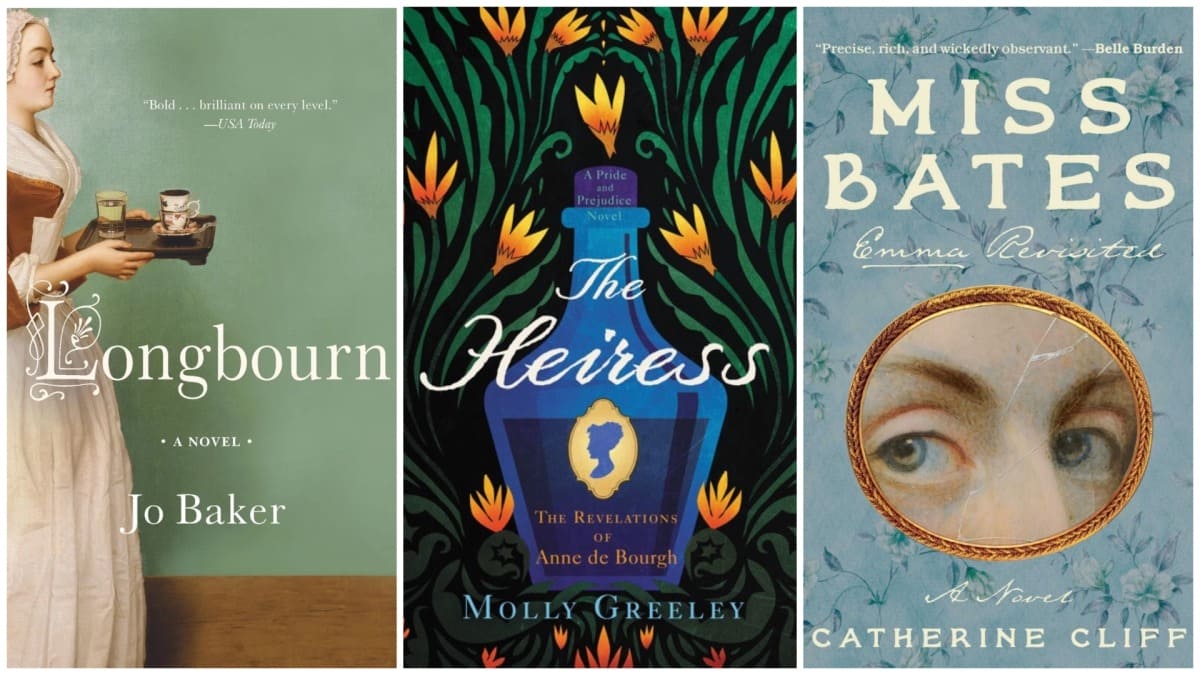
Longbourn by Jo Baker
Many readers may not have even noticed that servants exist in the world of Pride And Prejudice. They’re only mentioned a handful of times, most of them aren’t named, and they largely stick to the margins of the story. Jo Baker’s Longbourn flips all of that on its head, turning the Bennet family’s servants into the main characters, primarily through the story of a pretty housemaid named Sarah. While Sarah and her compatriots have stories of their own within this book, Austen fans will love its sly commentary on the events of Pride And Prejudice, which offers new perspectives on familiar favorites. (Mr. Collins, for example, gets a much more sympathetic portrayal here.) Historical fiction enthusiasts will enjoy the book’s honesty about the ways that the lives of families like the Darcys and Bennets were only possible because of the hard (and often unseen) work of others.
Miss Austen by Gill Hornby
Not so much an Austen retelling as a reimagining of the life of Jane Austen, this popular novel was turned into a PBS Masterpiece series in 2025 and offers an intriguing what-if about one of literature’s greatest unsolved mysteries: Why did Cassandra Austen burn many of her sisters’ letters following Jane’s death? Conventional wisdom says that Cassandra felt responsible for managing Jane’s legacy and acted to protect her sister’s reputation by keeping embarrassing personal details from being revealed to the public. What such information could have been is a question whose answers are lost to time, but certainly not to fiction. Told across dual timelines, Hornby’s novel follows a sixtysomething Cassandra as she searches for any letters from Jane that may remain behind at the house of a family friend. Flashbacks detail many scenes from Jane and Cassandra’s youth, including financial struggles and romantic disappointments that will feel familiar to those well-versed in Austen’s novels.
Death Comes To Pemberley by P.D. James
What if Jane Austen was also a cozy murder mystery? That’s basically the premise behind Death Comes To Pemberley, which is both a Pride And Prejudice sequel and a crime novel from the author of The Children Of Men. (Yes, really.) The story picks up six years after Lizzie and Darcy’s wedding. They have two sons, are still deliriously happy, and are busy planning a ball. But their carefully laid party plans are thrown into chaos when Lizzie’s younger sister Lydia shows up screaming about how her husband, George Wickham, has been murdered. What follows is a briskly paced but not terribly bloody whodunit that also offers us a glimpse into what happened to this group of beloved characters after the events of Austen’s original novel. The book was made into a three-part PBS Masterpiece series in 2014.
Presumption: An Entertainment: A Sequel to Pride And Prejudice by Julia Barrett
Georgiana Darcy is a popular topic in Austen-adjacent and related fiction. Despite the fact that the character doesn’t actually speak in Pride And Prejudice, Georgiana is vividly imagined, with the kind of tragic history that easily lends itself to speculation about what sort of young woman she might one day grow up to become. Barrett (the joint pseudonym of Julia Braun Kessler and Gabrielle Donnelley) ably tackles the question in this continuation of Pride And Prejudice that shifts its attention to Mr. Darcy’s younger sister, just as she’s come out into society. Having had her heart so memorably broken by Wickham, she’s vowed never to love again, but this is a Regency romance, and we all know how that goes. Georgiana’s story is bolstered by satisfying appearances by many familiar faces from Austen’s original, including Lizzie, Jane, Darcy, Caroline Bingley, Anne de Bourgh, and even Wickham himself. For those who enjoy stories of often forgotten Austen younger sisters, Barrett also penned The Third Sister, a continuation of Sense And Sensibility focused on Margaret Dashwood.
The Other Bennet Sister by Janice Hadlow
While there are several significant differences between Janice Hadlow’s The Other Bennet Sister and the critically acclaimed BritBox adaptation, if you liked the romantic drama, you should definitely give the book it’s based on a shot. Hadlow’s debut novel puts an introspective spotlight on the bookish, awkward Mary, the often-overlooked middle daughter of the Bennet family, as she witnesses the events of Pride And Prejudice and transforms from a self-doubting wallflower to a self-assured heroine ready for a happy ending all her own (Spoiler alert: Tom Hayward is as dreamy on the page as he is onscreen.) The book offers a bit more context for Mary’s life after her sisters’ weddings, gives the smarmy Mr. Collins something of a genuine redemption arc, and brings London (never visited in the Austen canon) to vivid and sparkling life.
The Murder Of Mr. Wickham by Claudia Gray
It is a truth universally acknowledged that George Wickham is kind of a dirtbag. Don’t believe me? Just consider how many Jane Austen sequels, pastiches, and other stories are focused on killing him off. The Murder Of Mr. Wickham is pretty much exactly what the title implies: a mystery novel that revolves around Wickham’s death. But the fun of this particular story lies not in its primary premise but in its characters. Wickham turns up dead after a house party thrown by one Emma Woodhouse Knightley, to which she has invited Elizabeth and Fitzwilliam Darcy, their son, Jonathan, and Juliet Tilney, the 17-year-old daughter of Catherine Tilney from Northanger Abbey. The younger generation hits it off as they hatch a plan to solve the mystery of Wickham’s death, in which almost every adult is a suspect.
The Heiress: The Revelations Of Anne De Bourgh by Molly Greeley
There are plenty of Austen retellings and sequels that revolve around the lives of her most famous fictional creations: Elizabeth Bennet, Emma Knightley, Fitzwilliam Darcy, etc. But some of the most interesting are those that focus on the author’s less popular or less well-known characters. McGreeley’s debut, The Clergyman’s Wife, put a spotlight on the pragmatic Charlotte Lucas, the young woman who married Mr. Collins in Pride And Prejudice. Her second is even more ambitious and follows the story of Anne de Bourgh, the sickly daughter of Lady Catherine, who was originally intended to be the wife of Mr. Darcy. Greeley’s take on her story is atmospheric and immersive as Anne attempts to break free of both her mother’s overbearing influence and the effects of the laudanum she’s been regularly dosed with since she was a child. The inclusion of a queer romance for Anne is deftly handled, as are the unfortunate realities of many of the societal restrictions placed on women in the 19th century.
Miss Bates: Emma Revisitedby Catherine Cliff
A retelling of Emma from the perspective of the loquacious spinster that everyone tolerates but no one really likes, Miss Bates works so well that it’s a wonder no one appears to have thought to write one before now. Plain, impoverished, and unmarried, Henrietta Bates’ life is vastly different from anyone else’s in Emma—and from most characters in the Austen canon. Cliff’s book offers an origin story that fills in the gaps of Miss Bates’ history before she became the butt of everyone in Highbury’s jokes and allows her some well-deserved rage in the meantime. Miss Bates also provides a unique perspective on what life would have truly been like for a woman of genuinely limited means in 19th-century England and the sacrifices and economies they must employ to survive. (There’s a very real difference between Miss Bates’ actual poverty and the genteel version of it Austen heroines tend to find themselves in until they wed a well-off man.)




 Keep scrolling for more great stories.