C

Unlike its stars, Brothers is only half-baked

Woody Harrelson and Matthew McConaughey play “themselves” in an Apple TV comedy that feels like a hazy memory before it’s even over.

Unlike its stars, Brothers is only half-baked

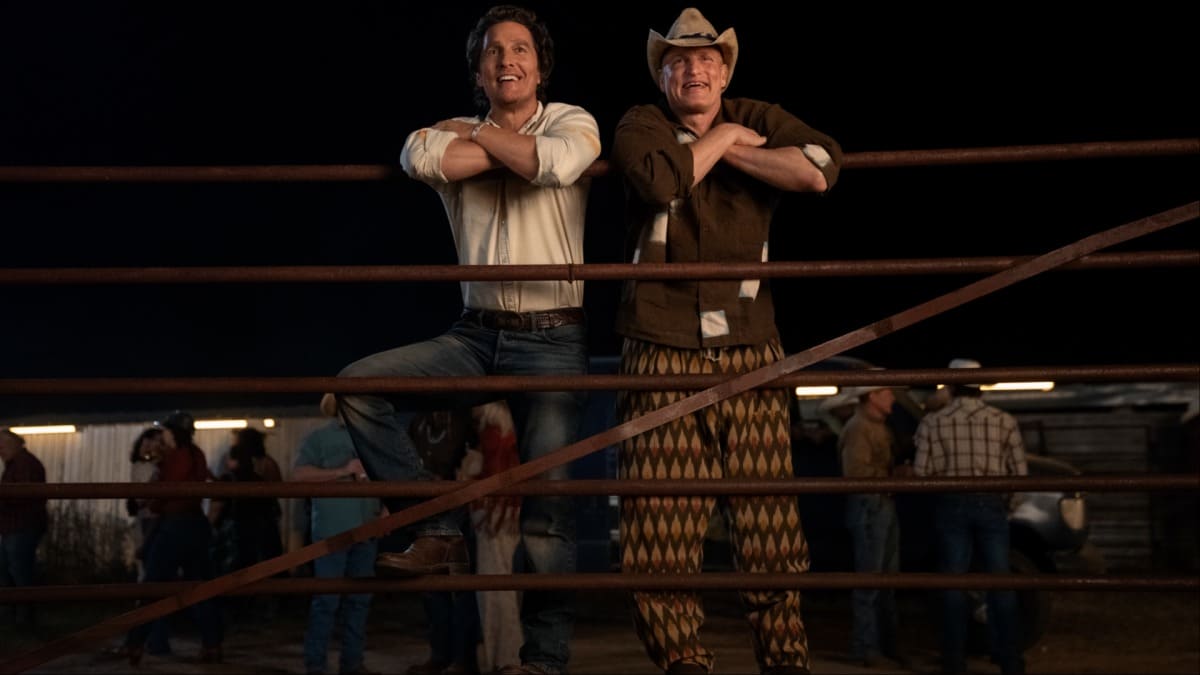
If streaming-TV originals have a final form, it may be this: Woody Harrelson and Matthew McConaughey playing fictionalized versions of themselves in what has to be the most expensive version of a 2010s ABC family sitcom ever made. An amusing-enough method of keeping Apple TV subscribers around between seasons of Ted Lasso and Stick, Brothers re-teams the-real life buds and True Detective stars in an alternately wholesome and profane Apple TV series that’s built around a tabloid anecdote and drafts off public personae the headlining talent previously plied in service of AI enterprise software

Brothers’ laidback approach to telling the story of the Harrelson clan crashing at the McConaughey family ranch is held together by valiant efforts by some of the producers, writers, and directors behind the American Office, Modern Family, and New Girl. And yet when the sporadic laughter subsides, it’s hard not to see this celebrity-driven trifle as an indicator of the current state of TV that’s more accurate than any of the many awards Apple picked up during the night when the (possibly biological?) brothers of Brothers tried to get a rushed Emmys ceremony to the end of its timeslot through the sheer force of their combined charisma. And that’s all before self-anointed new king of Hollywood David Ellison’s name shows up in the credits.

Brothers is—per a title card that gets less cute and necessary (because who jumps into a streaming show midseason?) by the episode— “based on a true rumor” of a sexual encounter between Harrelson’s ne’er-do-well father and McConaughey’s mother (played here with plenty of southern-fried pluck by Holland Taylor). But the mystery of the Oscar winner’s paternity is mere logline window dressing for a show that’s more about the colliding worlds of two families and how those collisions prove that the bond of co-starring in Surfer, Dude is thicker than blood. It’s also, to varying degrees, a show about eldest Harrelson daughter Olive (Highdee Kuan) getting over a called-off engagement, her dad paying for the sins of his old man, and McConaughey making good on his idle thoughts of running for political office. The third of those plot lines is the most forced and farthest fetched, but it at least makes room for Lisa Gilroy to sprinkle a little Comedy Bang! Bang! weirdness into the proceedings as a high-strung campaign manager who upbraids Harrison and McConaughey in terms that, fortunately for Brothers, only kinda sorta encapsulate the show: “an endless barrage of egomaniacal and borderline sociopathic behavior from both of you.”

This is no vanity project. The leads allow themselves to look plenty foolish—particularly Harrelson, whose just slightly exaggerated personal beliefs and hippie-dippy flakiness make him a thorn in everyone on the ranch’s side. This also gives him a chance to tap into the comedic spirit of the last TV character he played who shared his first name; the golden retriever Woody Boyd energy that so frequently bolsters his performance here is a nice reminder that before Harrelson played hard-asses, deadbeats, and loose cannons on the big screen, he was one of the funniest supporting sitcom players of the ’80s. If nothing else Brothers is a fresh display of those particular talents.

Playing relatively straight man to the nomadic vegan bestie living out of the psychedelic bus in his driveway, McConaughey gets less color to play here. That’s in keeping with the poet-philosopher guise he’s donned since TV audiences first fell under the sway of Rust Cohle and his Big Hug Mug (a prop that’s too prominently displayed throughout Brothers to count as an Easter egg). But McConaughey’s corner of Brothers is more muted as a result, creating added strain for the campaign storyline, which, despite its Texas-size scale, lacks the more captivating personal stakes of what’s happening among the Harrelsons. McConaughey gets to cut loose in a few episodes with the Woodman, but of the two of them, he’s the one whose commitment to playing “himself” comes across as coasting.

Brothers lives in a hazy no-man’s land between “working vacation for movie stars” and “bingeable crowd-pleaser.” This is no slapdash production. The visuals capitalize on the natural splendor of the show’s Texas Hill Country setting; showrunner Lee Eisenberg hired plenty of names that will ring a bell for anyone who kept up with the vintage of network sitcom that Brothers most closely resembles. Between directors Trent O’Donnell, Erin O’Malley, and Jason Winer and writers Brett Baer, Dave Finkel, Alex Cuthbertson, and Matt Fusfeld, it feels like Eisenberg called his way down a New Girl alumni phone tree. (KPop Demon Hunters screenwriters Danya Jimenez and Hannah McMechan are aboard here too—for the most music-heavy episodes, naturally.) Every once in awhile, the experience in that writer’s room comes through loud and clear, as when Harrelson exchanges rat-a-tat with two old-timers trying to collect on a debt owed to them by his dad, or in a visual gag that reveals McConaughey’s incredibly involved grooming routines. Unfortunately, such material was placed in some run-of-the-mill scripts, with stock plots like Harrelson and McConaughey forgetting Valentine’s Day and paying a steep price for it.

Despite recalling comedies of days gone by, Brothers winds up feeling extremely contemporary—in mostly unflattering ways. It’s queue-filler of the highest order—TV-like product with megastar wattage. The half-hour episodes go down as easy as the craft brews McConaughey holds so conspicuously label-to-camera, but they lead to neither drunken comedic euphoria or regrettable “I can’t believe I watched the whole thing” hangover. There are some earnest attempts at fleshing out various family members and relationships—Harrelson and Kuan strike up a real tender dynamic while the scuttlebutt about Olive’s granddad and Ma Mac provides welcome distraction from her romantic woes. But there’s little sense of whether all that’s being developed there might continue to develop, or be worth developing, past this single season.

It’s not always funny, but Brothers is never not a curious artifact of an uneasy period in TV history, when one show can contain abundant f-bombs, some of the biggest bong rips ever put on television, and an adorable moppet putting her confidence to the test as she follows in her father’s footsteps and goes out for the school play. Yet as momentous as such events may be, there’s little sense of any of it impacting the characters in meaningful, long-lasting ways. To paraphrase the tagline for a movie whose iconography Brothers raids without shame or real thought (nobody raised an eyebrow at the sixth-episode school-dance invitation conducted in Wooderson cosplay?): We’re watching a time the fake Harrelsons and fake McConaugheys will never forget. If only we could remember anything about the show two or three months from now.

Erik Adams is The A.V. Club’s senior TV editor.

 
Join the discussion...
Keep scrolling for more great stories.