
Mike Flanagan’s darker, riskier Carrie adaptation takes a few too many detours
Summer H. Howell and Samantha Sloyan lead an unsettling horror series that soars—until its dubious end.
Photo: Robert Falconer/Prime Video
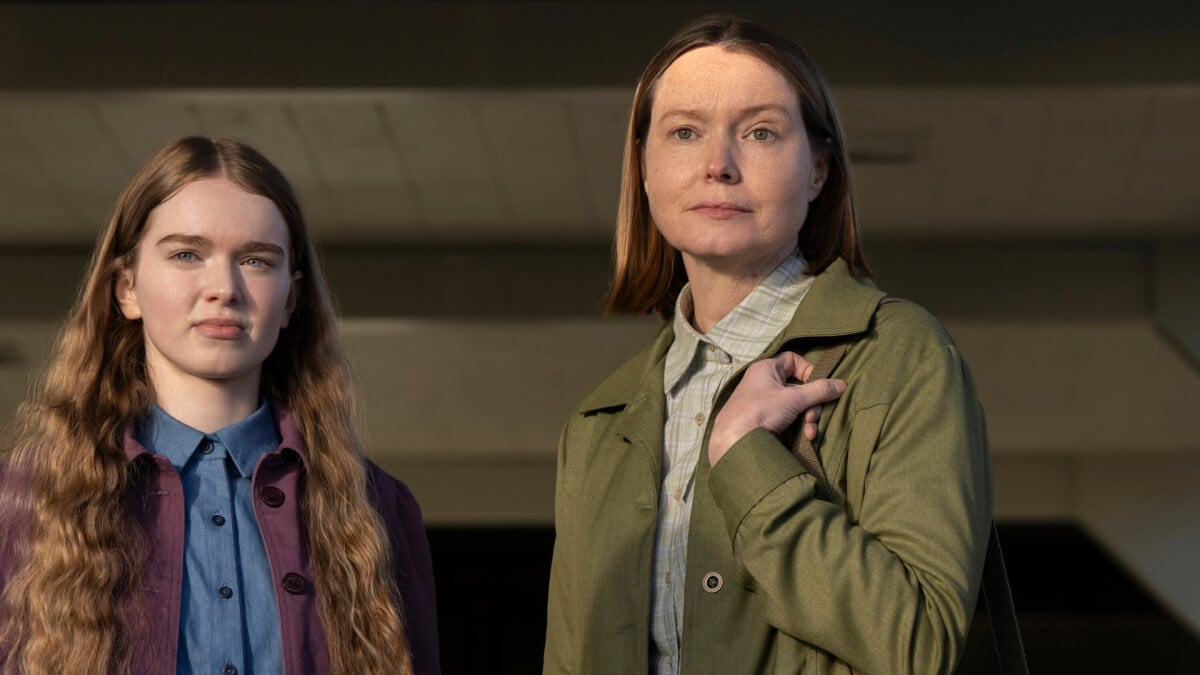
The teen protagonist of Prime Video’s Carrie is quite different from that of its source material. Creator Mike Flanagan still envisions Carietta “Carrie” White as an oddball outsider—but unlike in Stephen King’s seminal 1974 novel or Brian De Palma’s 1976 film adaptation, this doesn’t stem from Carrie being bullied at school or emotionally abused at home. In Flanagan’s telling, she’s a doe-eyed, earnest, candid girl yearning to become her own person. After being stuck inside her Chamberlain, ME, home for her entire life, Carrie attends Ewen High, makes friends and enemies, develops hobbies (she loves computers!), attends a party, gets high, and learns about the pitfalls of Instagram. It’s an early sign that Flanagan isn’t remaking a classic, but rather giving Carrie a modern makeover befitting our digital age and proving the enduring themes of King’s book.
Flanagan successfully brings his signature flair—moving soliloquies, slow-building psychological dread, vivid imagery, a few jump scares, additional literary inspirations—to this series, his third project based on a King story after Gerald’s Game, Doctor Sleep, and The Life Of Chuck. Carrie relentlessly portrays teenage anxieties, bullying, and institutional oppression (consider this a trigger warning) because they remain as relevant to today’s kids as they did to those of half a century ago—perhaps more so due to the internet. Naturally, one of the biggest horrors for this Carrie the corrosive influence of social media. Think of the series as Gossip Girl meets X-Men, with hints of other King works like The Institute and Firestarter that could help extend the series’ run to multiple seasons—a move that robs Carrie of its singular coming-of-ages motifs to become something else entirely.
Still, in season one, Carrie is wisely given more dimensions—and she’s not alone in this. Her fanatically religious mother, Margaret (Samantha Sloyan, close to reaching her Midnight Mass levels of excellence here), gets a rich arc that allows the writers to dig into why she behaves so venomously at times. Margaret actually shares a surprisingly close bond with Carrie; in the show, their kinship is both strengthened and threatened after White family patriarch Ralph (Tahmoh Penikett) dies in the opening minutes of the first episode. Left without income or life insurance, Margaret and Carrie are forced to venture outside for the first time in 15 years—Margaret gets a job she loathes at a supermarket, while Carrie enrolls in a school that she approaches with a totally open heart.
Carrie’s affection for new pals like Sue Snell (Siena Agudong) and Emaline West (Thalia Dudek), and helpful teachers like Rita Desjardin (Amber Midthunder) derails her complicated, tight-knit bond with Margaret, who can’t fathom why her teen must learn about school shootings, sex education, or menstruation—Flanagan and team make a lot of changes, but they keep the traumatizing event of an uninformed Carrie getting her first period in the girls’ locker room. It partly leads to frequently entertaining clashes between a stone-faced, determined Margaret (who also turns to social media to boost her agenda) and a wisecracking high-school principal (played by Matthew Lillard). At the same time, Carrie is exposed to more cruelty in the form of targeted harassment from incensed classmate Christine “Chris” Hargensen (Alison Thornton) and a gossipy Deuxmoi-esque account posting under Carrie’s name that leads to disastrous consequences even before an ill-fated prom night.
 Keep scrolling for more great stories.