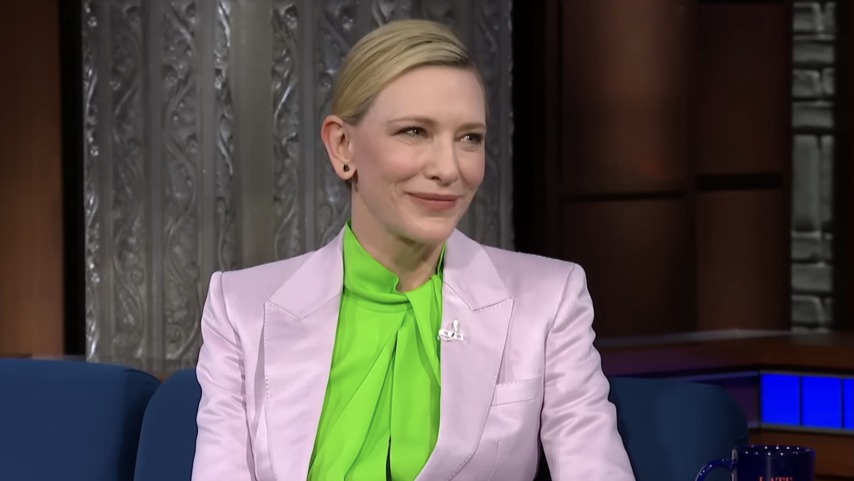
Cate Blanchett mourns the quick death of #MeToo

Speaking at Cannes, the actor discussed the "systemic layer of abuse" that she still sees in the industry.

Cate Blanchett mourns the quick death of #MeToo

In 2018, as the #MeToo movement was at the peak of visibility, Cate Blanchett was Cannes Film Festival jury president and took part in a protest to call attention to the lack of female directors whose work had been shown at the festival. Joined by other artists like Kristen Stewart, Léa Seydoux, Ava DuVernay, and Agnès Varda, 82 women symbolically marched to represent the number of female directors in the festival’s history. Now, returning to Cannes eight years later, Blanchett feels that little has changed and that #MeToo left work still to be done.

“It got killed very quickly, which I think is interesting,” said Blanchett of #MeToo over the weekend, per The Guardian. “There are a lot of people with platforms who are able to speak up with relative safety and say this has happened to me. And the so-called average woman on the street, person on the street, is saying me too. Why does that get shut down?” 

“I’m still on film sets and I do the headcount every day. There’s 10 women and there’s 75 men every morning,” she continued. “I love men, but what happens is the jokes become the same. You just have to brace yourself slightly, and I’m used to that, but it just gets boring for everybody when you walk into a homogeneous workplace. I think it has an effect on the work.” 

Since 2018, Blanchett has worked mostly with male directors, with exceptions coming from the FX series Mrs. America, Netflix series Stateless, and the forthcoming film Sweetsick from director Alice Birch. Of course, there are plenty of other jobs in a film besides director, and Blanchett has rarely made more than two films in a year since 2018. (If she has, it’s generally because one is a voice role.) But at least one other actor of Blanchett’s stature, Nicole Kidman, vowed in 2017 to work with more female directors; as of the 2025 Cannes, Kidman said she had worked with 27. It’s an oversimplification to say that Kidman’s strategy is a one-size-fits-all solution, but it does seem like an actionable way to get more female directors to film festivals.

 
Join the discussion...
Keep scrolling for more great stories.