
In the battle of art versus AI, Cupertino takes a stand to fight the slop
"Yungwood" spotlights an industry-wide problem of, ugh, AI-generated songs.
Photo: Elizabeth Fischer/CBS
Earlier this year, Spotify removed 50 million AI tracks from its platform. 50 million. Let that number sink in because that’s how many songs an AI model trained to scrape parts of other artists’ original work cobbled together. And most music platforms aren’t doing much more to combat this, other than visible labeling of AI songs. So the bigger question is who stands to benefit financially from putting so much slop out there? It’s certainly not the human creatives who lose both potential listeners and income. (Not that the majority of them were making much from Spotify to begin with.) No, it’s usually the corporation that profits off of AI-generated slop. With “Yungwood,” Cupertino takes this industry-wide problem and delivers yet another timely, effective, and entertaining episode that explains the issue without being preachy.
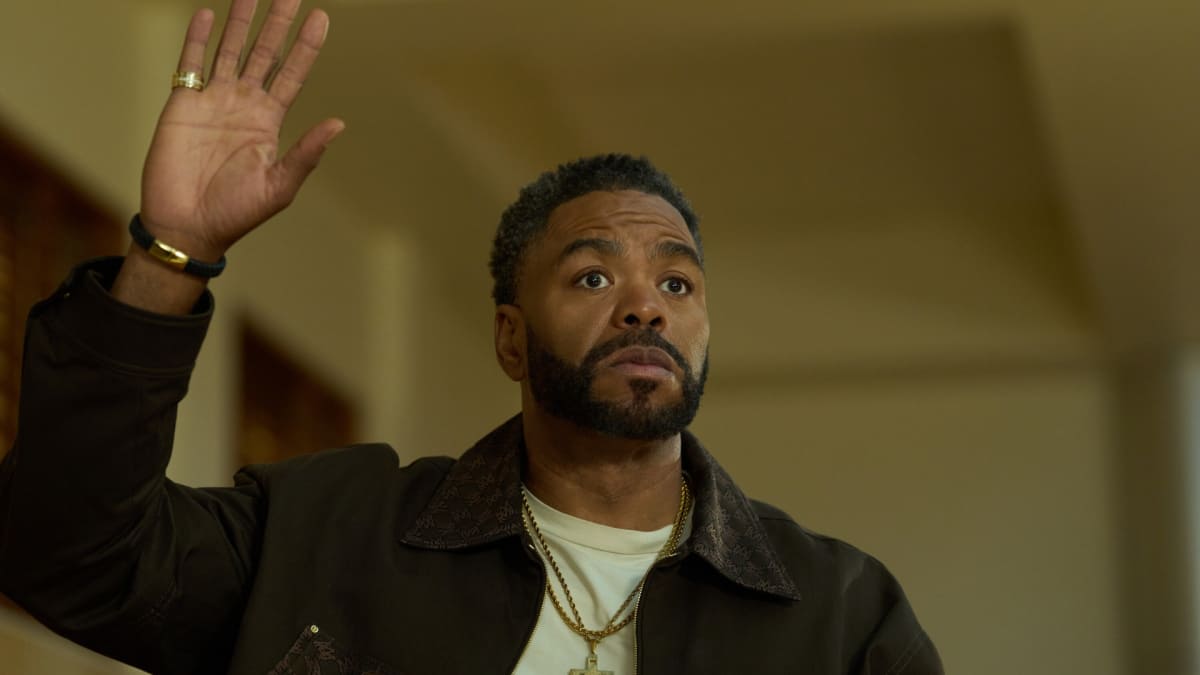
Written by Good Fight and Evil alum Aurin Squire, “Yungwood” sees Price, Siffre & Associates take the case of the titular rapper (played by Method Man) whose recordings were auctioned off by his agency, Gold Artist Studios (GAS), to the music website Noisement. Noisement wasted no time in churning out ripped-off, AI versions of 35 Yungwood tracks; the soundalikes have since gained 10 million streams, affecting the musician’s own business. The man wants to sue, but his lawyers warn that the case could take years to resolve. Instead, Michael comes up with a quicker solution: They try to get one song—”Base Booty,” based on Yungwood’s “Booty Base,” taken down and use that as leverage for a hefty settlement.
The catch is that Michael has to face off against GAS’ ruthless attorney: his dad, Bayard (Joe Morton). It’s a tug-of-war that has been weeks in the making, and Cupertino doesn’t disappoint as father and son face off against each other with all their might. In the process, the show offers more insight into the Price family. Michael reveals to Olivia that his younger sister, Anna, died by suicide because she couldn’t take the pressure that Bayard constantly put on her to follow in his footsteps. So one day, without informing anyone, she went to a hotel and jumped off the balcony. No wonder the relationship between Michael and Bayard has soured, especially because Bayard doesn’t seem to care that Yungwood is/was an icon for both his kids—Michael and Anna went to his concerts together, and they’ve got pictures and everything. All that pent-up frustration pours out in an engaging battle inside the courtroom.
For starters, Bayard keeps referring to Michael as “son” to make his opponent look weaker in front of the judge—it’s a trick that thankfully doesn’t work in his favor. In court, Bayard argues that GAS uses thousands of songs to train its AI model, not just Yungwood’s, and it also learns different chord progressions to predict and generate music. He also frustratingly claims that “all art is derivative because it’s built on what has come before it,” comparing Yungwood’s “Booty Base” melodies to a 1950s folk song and a 1930s spiritual track. The difference, of course, is that even if the music sounds somewhat similar, Yungwood was inspired by real humans to create a new and distinct work. The difference may seem semantic, but sampling or interpolating music—a common practice—isn’t equivalent to letting AI steal work and any earnings the artist is bound to make with it.
 Keep scrolling for more great stories.