
A potent Cupertino unpacks the exploitative human cost of AI
With a fun twist in "Celeste," the series harkens back to vintage CBS techno-thriller Person Of Interest.
Photo: Elizabeth Fischer/CBS
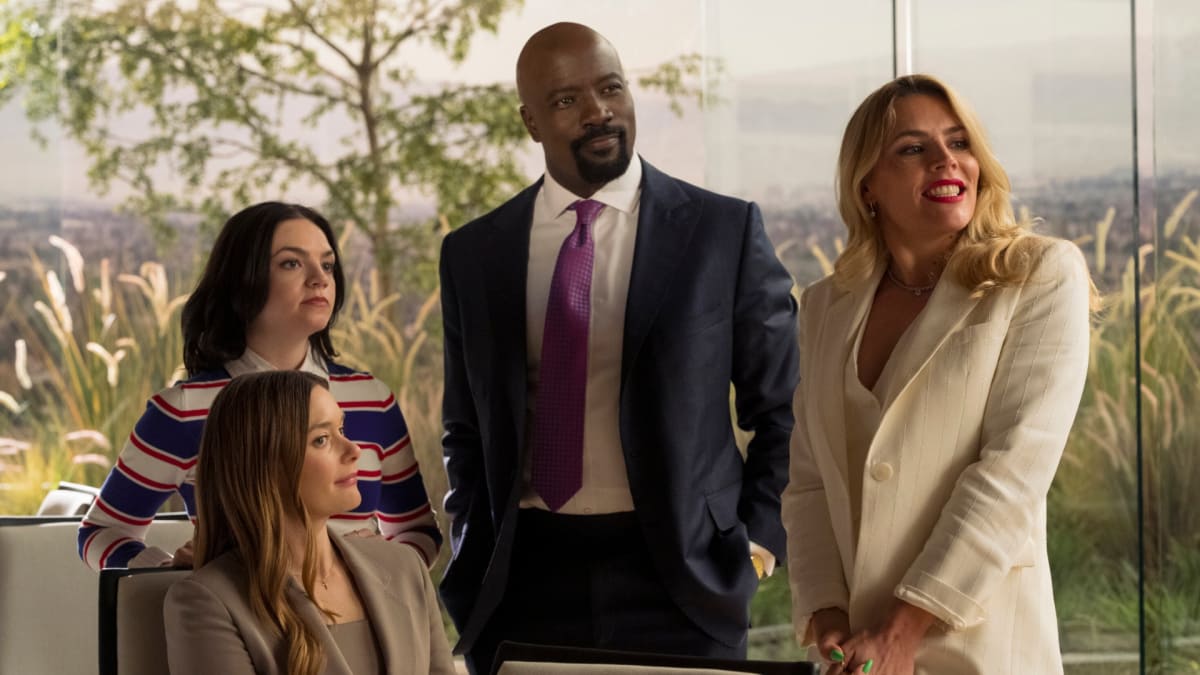
Anyone with basic knowledge of artificial intelligence knows it operates on already existing data, hoovered up from the internet or other analog sources of information and then spit back out by tools like ChatGPT, Claude, and Gemini. Another way companies give their AI models their “know-how” is by letting literal humans train them. In a bleak job market, a lot of people have no option but to turn to these gigs that don’t often pay very much, and the result, unfortunately, is a vicious cycle that boosts profits for the AI companies while eating away at jobs in other sectors (whose former employees then have little choice but to work in AI, and so on). This phenomenon comes under the spotlight in Cupertino‘s fifth episode, which examines the toll of this modern-day form of soul-crushing labor.
In “Celeste,” Price, Siffre, & Associates are hired by a larger law firm from the East Coast to help them find a plaintiff to be the face of a class action lawsuit against an AI company, WorkSource, whose CEO—one of the youngest billionaires in the world—boasts in interviews about his wealth and the fact that his employees are overworked and underpaid. Of course, he needs to be brought down. Luckily, Olivia knows the right person to go to. One of her friends, Celeste (Kennedy McCann), has started working as an independent contractor for WorkSource. The job entails teaching WorkSource’s AI inane things like what a thumb or a moving vehicle looks like, how to describe the taste of an apple, etc., as if it’s a toddler. An unemployed single mom, Celeste had no choice but to turn to this remote AI training job to make a living, even if she hates doing it.
But is she making a decent living? Celeste tells Olivia that she does 980 trainings to make $500, and that she gets penalized for making mistakes by 1 cent per task. In other words, the job sucks and enables AI that, in Celeste’s words, “nobody even asked for.” Still, Celeste doesn’t want to help Olivia out by joining the lawsuit, lest WorkSource take action against her. She recommends 10 co-workers who were recently fired for trying to unionize. But none of those people are up to the task of facing off against a jury—one of them gets so nervous during the mock deposition that he keeps farting. Back to square one, Olivia convinces her pal to step up at a great personal cost. Celeste eventually agrees because she wants fair wages and rights, though her fear is warranted: WorkSource fires her.
In this episode, the writers routinely and unabashedly lean on monologues—like Celeste’s during a mock trial—to address how easy it is to take advantage of people who work in these conditions. Celeste says she knows she was targeted for this job because she has to keep her kids fed somehow. A different pal of hers tells Olivia that, as a female programmer of color, she found it tough to get hired anywhere else and had to turn to WorkSource as a result. This is just a tiny snapshot of what people across the world are experiencing. As if gig workers weren’t already being exploited, the AI angle seems to only have made it worse. It may not seem that way because, superficially, who wouldn’t want to get paid to sit and point out what images are rectangular in shape? But not only is it a waste of your time and resources, but this also benefits a chosen few—it’s only enriching the already-wealthy.
For Celeste, she’s left with no income yet again, but WorkSource can easily replace her with any number of candidates because Celeste wasn’t a staffed employee with benefits. Still, she says she knows what she signed up for and risked for the chance of the greater good. Olivia feels guilty about putting her friend through the wringer. And to make matters worse, Olivia’s decision to bring a sick Celeste some NyQuil allows WorkSource’s lawyer to claim that Celeste was bribed. It’s a load of crap that leads to Price, Siffre, & Associates being fired.
Olivia convinces Celeste to file an individual suit against WorkSource for wrongful termination, separate from the class action lawsuit. And their case gets stronger once they realize the company has been spying on its workers through their laptop cameras. In a final stab to the gut, though, WorkSource offers Celeste $1.4 million to sign an NDA, which she does because she needs the money for her kids. But WorkSource will then use this to somehow destroy the lawsuit, so Celeste’s decision—while beneficial to her—does not bode well for everyone else who is suing WorkSource. It’s a slightly surprising outcome, but I’m glad that Cupertino keeps things realistic throughout.
 Keep scrolling for more great stories.