Mungiu is no stranger to hot-button issues. His breakout feature debut 4 Months, 3 Weeks And 2 Days follows the saga of a Romanian woman trying to get an illegal abortion in the 1980s. In his previous film, R.M.N., he explored the topic of immigration in Europe through the uproar that greets newcomers to a small village. Fjord kicks the door open when it comes to nanny states and whether or not, in trying to do the right thing, they overreach and hurt the people they’re trying to protect. Mungiu purposefully doesn’t entirely show the physical punishment in question, so the audience is just as in the dark as the teachers. When other issues arise, they’re also kept out of sight, putting everyone in the same boat, working off of speculation rather than experience: Would they do something even if it means taking the children away from their parents?
Winner of this year’s Palme d’Or, Fjord is a procedural slow burn about child services, following the emotional effect they have on children, parents, and their neighbors. Like many of Mungiu’s previous films, it’s expertly crafted, exploring the different sides of the conflict and the shifts in attitude over the course of the trial. Yet, there’s a sense that Mungiu is thumbing his nose at the overbearing system and what it can do to families that don’t fit with Norwegian ideals. In pointing out the culture clash over something like physical reprimands or excessive religious expectations of children, Fjord paints the government like fools or victims of their own tolerant policies. The movie takes the side of the family, often painting the Norwegian authorities and teachers as the enemy. When teachers don’t approve of one of the children insulting a queer classmate, because they’re taught to be intolerant of queerness at home, it’s shown as if the teachers are gathering evidence against the family. But when the religious right rallies around the central family, Fjord loses its focus, and we lose sight of the characters until the trial (in what must be the most gorgeous, well-lit courtrooms in the world) dies down.
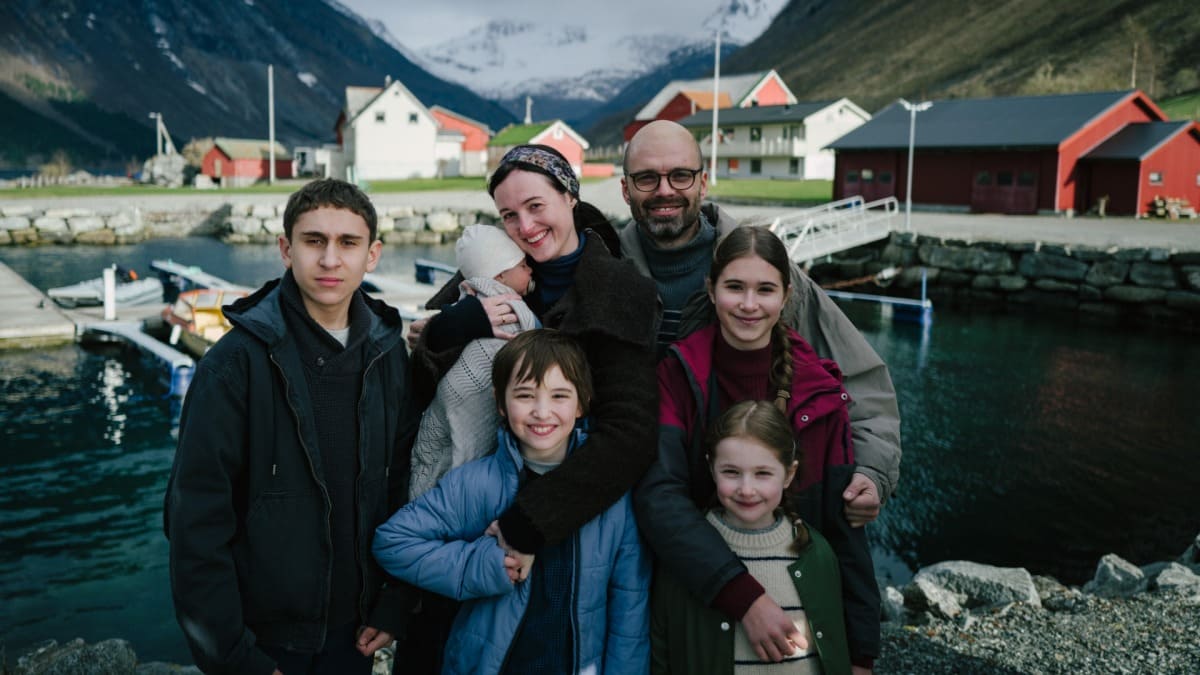
As parents under pressure, both Stan and Reinsve make for excellent scene partners. They say so much just by leaning on one another or standing apart, trading glares. Even in their relationship, something feels unknowable. The pair carries a quiet intensity that can feel unsettling, leaving the audience to question if the big happy family is happy after all. This is exacerbated by the characters continuing to reveal themselves right up to the film’s end, furthering the mystery. The young actors, for their part, come across as innocent and awkward, effectively conveying what it’s like to be caught up in a big system that has disrupted life as you know it.
Mungiu plays with both the sacred and the mundane in Fjord. Even in his compositions with cinematographer Tudor Vladimir Panduru, there’s a painterly quality to how the family sets up around the living room for evening prayer or how briskly cold the blue gloomy cold feels when the children are being taken from their home. Mungiu uses natural elements as stand-ins for divine interventions or signs from above; an avalanche rushing towards the school is a metaphor for the challenge threatening the family, while a character walks on water because of the conviction of her beliefs. Even if Fjord arrives at a non-answer, or worse, at the conclusion that these religious or cultural differences are too insurmountable to live alongside one another, Mungiu’s film leaves behind a haunting picture of the happiness that could have been if everyone could have simply coexisted.
Director: Cristian Mungiu
Writer: Cristian Mungiu
Starring: Sebastian Stan, Renate Reinsve, Lisa Carlehed, Markus Tønseth, Vanessa Ceban, Jonathan Ciprian Breazu
Release date: October 9, 2026


 Keep scrolling for more great stories.