Forestrike demonstrates how practice can make perfect failure

Video games are never realer than when they hand-deliver you an opportunity to choke.

Forestrike demonstrates how practice can make perfect failure

No artistic medium is better suited to discussing humanity’s natural inclination to fail than video games. Sure, you can watch shows or movies about failure, cringe along as some ostensibly identifiable character blows their grand romantic ambitions or financial dreams. (Hell, the entire game show/reality dating show industrial-complex exists in part to confront and filter this sensation by proxy.) But when it comes to actually shitting the bed and/or screwing the pooch? When it comes to the sublime and monstrous feeling of stepping up in a moment of crisis, reaching deep down inside yourself, and then just straight-up choking at the critical moment? You simply can’t beat the ethos of do-it-yourself.

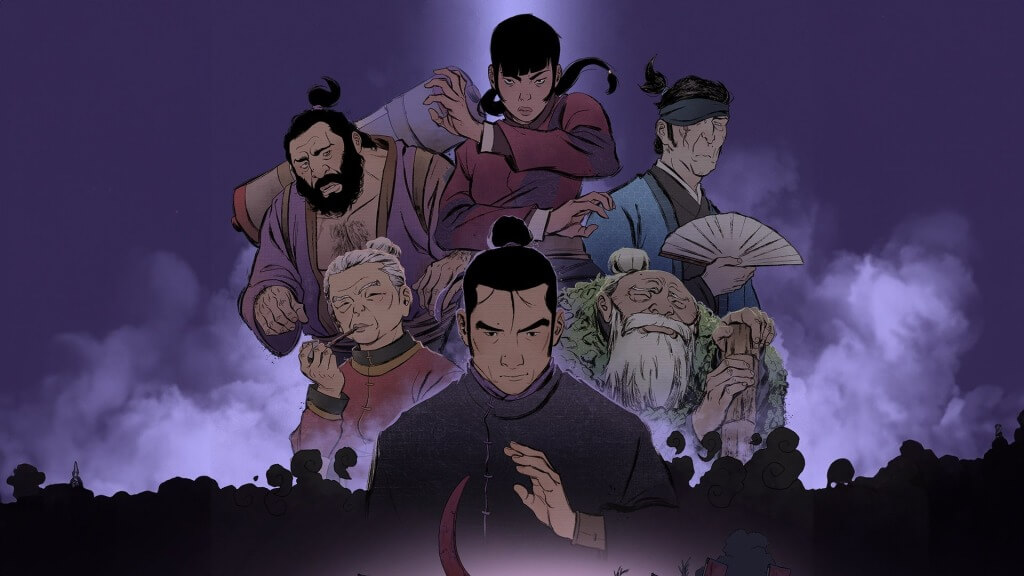
These thoughts brought to you by several fascinating, occasionally humiliating hours spent with Skeleton Crew Studio’s recent martial arts game Forestrike. The premise of the side-scrolling action game is pretty simple: You’re Yu, a martial arts guy from one of those secretive monastic orders that pass down mysterious and powerful techniques for handing people their asses, and are sent on a quest by various mentors of dubious character to go rescue the Emperor. Your greatest asset/most crippling anxiety in this quest to relieve the imperiled imperator is the titular Forestrike, which allows Yu to imagine all of his fights in perfect fidelity as many times as he wants, before ultimately committing to the one that counts.
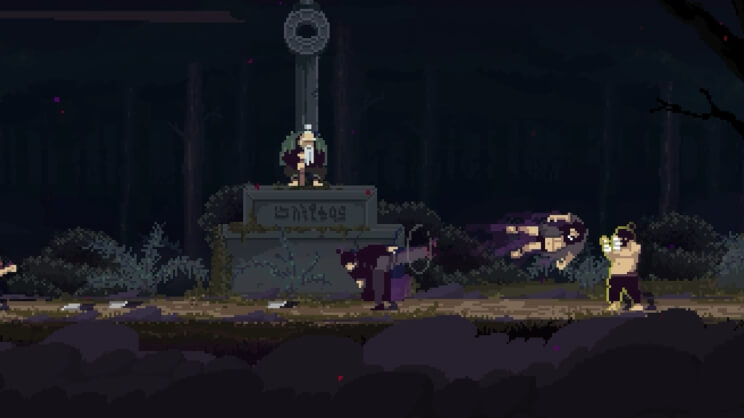

You can already, presumably, see how this would be a formula for letting yourself down in massive, perma-death-y fashion. But Forestrike is actually quite a bit more clever than you might expect in this regard: Although the game requires some mechanical dexterity, part of the importance of the Forestrike as a technique is that all of the various drunks, monks, and militia members who make up the game’s roster of enemies behave predictably in any given circumstance. Attack, and they’ll counterattack; turn your back, and they’ll advance; dodge through them while they’re attacking, and they’ll obligingly smack their buddies in the face. That predictability can be both a serious advantage for thoughtful players, and a major hindrance for the careless: Yes, you can rehearse to your heart’s content, but if you roll into a fight with an inadequately built character (having assembled your set of techniques from random selections made as you kick, punch, block, and chop your way through the game’s various levels) then there’s no amount of reflexes that can save you.

And that’s all before you get to the moment of truth—the point in every fight when you decide you’ve rehearsed enough and it’s time to actually, well, fight. The decision to shut the Foresight down and commit—with the knowledge that you’ll get exactly one shot to successfully execute—is a genuinely fascinating one, every single time it arrives. The fight is exactly the same as the one you’ve just done a dozen times on paper, even as the music swells to amp up the tension, and the dreamy screen effects fall away. And yet, on multiple occasions while running through the game, I’ve found that patterns I’ve relentlessly drilled into my hands suddenly fell apart in the moment when it counted, a single whiff sending my whole carefully laid out plan of “dodge through that guy, steal his spear, hurl it at his buddy, block that boss, roll again” straight into the crapper, to be replaced by the far more improvisational “flail, panic, get punched three times, and die.”

It is—and I say this with the firm understanding that it makes me sound like a crazy masochist—one of the most enjoyable sensations I’ve experienced in a game of late. That feeling of letting go of the safety line is genuinely thrilling, and the fact that you know that everything that’s happening—every smack you’re taking to the face, every punishment for blindly button-mashing instead of just executing the goddamned plan—is deterministic makes the whole thing achieve a blend of fairness and un- that can be intoxicating. It can be difficult, especially in the deliberately repetitive roguelike space, for single-player games to create moments of gameplay that feel like they genuinely matter. But every time I held down the “Fight” button in my time with Forestrike, I felt my heartrate pick up by a few beats. My palms twitched a bit. It was now, or never—and, in its own way, “never” was going to feel just as interesting as success.

Forestrike

 
Join the discussion...
Keep scrolling for more great stories.