
Hulu's taut thriller Furious is also a dark, disturbing character study
Engrossing turns from Emmy Rossum, Lola Petticrew, and Quincy Tyler Bernstine anchor the killer new drama.
Photo: Sarah Shatz/Disney
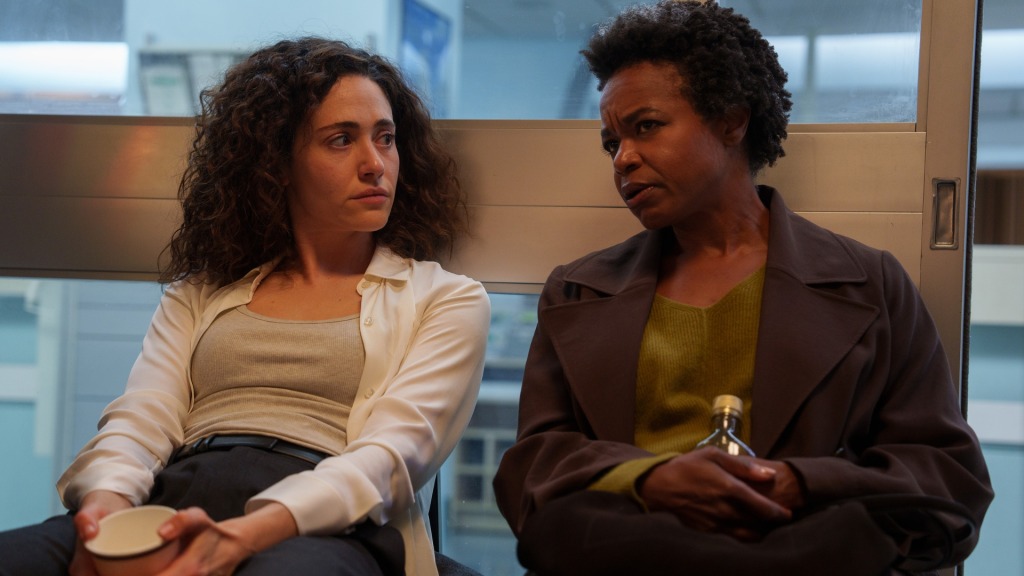
By happenstance, Furious‘ series premiere—airing just over a week after The Odyssey‘s release—features a pivotal conversation about Poseidon, Athena, and Medusa. Two exhausted FBI agents, huddled together in a hospital room late at night, use the Greek mythological tale to dissect how a desire for vengeance and justice tends to drive women to commit acts of brutality, particularly if they’ve been hurt themselves. This neatly sets up the themes and premise of the slick Hulu thriller, which weaves its evergreen ideas into an enthralling cat-and-mouse chase between a tenacious agent, Alice Black (Emmy Rossum), and a nimble serial killer, Catherine Grace (Lola Petticrew).
Furious brings to life the concept of “hell hath no fury like a woman scorned,” offering an incisive and empathetic look at female rage and the many ways in which women are wronged or set up to fail before taking matters into their own bloody hands. For Alice, a confession that her longtime cop boyfriend, Marshall (Jake Lacy), used to beat her wreaks havoc only in her life, not his. Catherine’s terrifying upbringing as a sex trafficking victim turns her into a ruthless mercenary on a quest. There’s also Alice’s new mentor, Nora (Quincy Tyler Bernstine), who runs the FBI’s sex crimes division, but earns little respect from her mostly male, mostly white colleagues. These women act as a conduit for Furious to tell a gripping, often despairing story of fighting for survival.
Loosely based on the 1987 neo-noir Black Widow, the show doesn’t subvert expectations or stray from predictable outcomes. But that doesn’t distract from Furious‘ strengths as a well-written, tightly wound thriller that consistently challenges its characters and their agendas—all of which occurs against a pumped-up instrumental score. Series creator Liz Meriwether—of New Girl, The Dropout, and Dying For Sex fame—challenges herself as well. She holds on to familiar elements from her body of work (caustic humor, moral ambiguity, psychological distress) to craft another provocative tale. There’s even a slow-burn romance thrown in for good measure. While Furious has an enticing mystery, it’s even better as a character study anchored by remarkable leads.
Rossum and Petticrew don’t share a lot of screen time over eight episodes, but they manage to capture a weird throughline between two protagonists on opposite sides of the law. Alice and Catherine have shockingly similar personalities: They’ll stop at nothing to get what they want, no matter how much they’re tested, abandoned, or hurt along the way. There’s an unyielding conviction that plays out on both the actors’ faces—a single expressive look often conveys their characters’ motivations and/or their severe PTSD. At first, Petticrew might appear miscast—can someone this young and petite have the strength to murder multiple people? But that’s precisely the point. As Furious progresses, Petticrew proves to be an ace choice to play a dangerous manslayer struggling to overcome her past.
 Keep scrolling for more great stories.