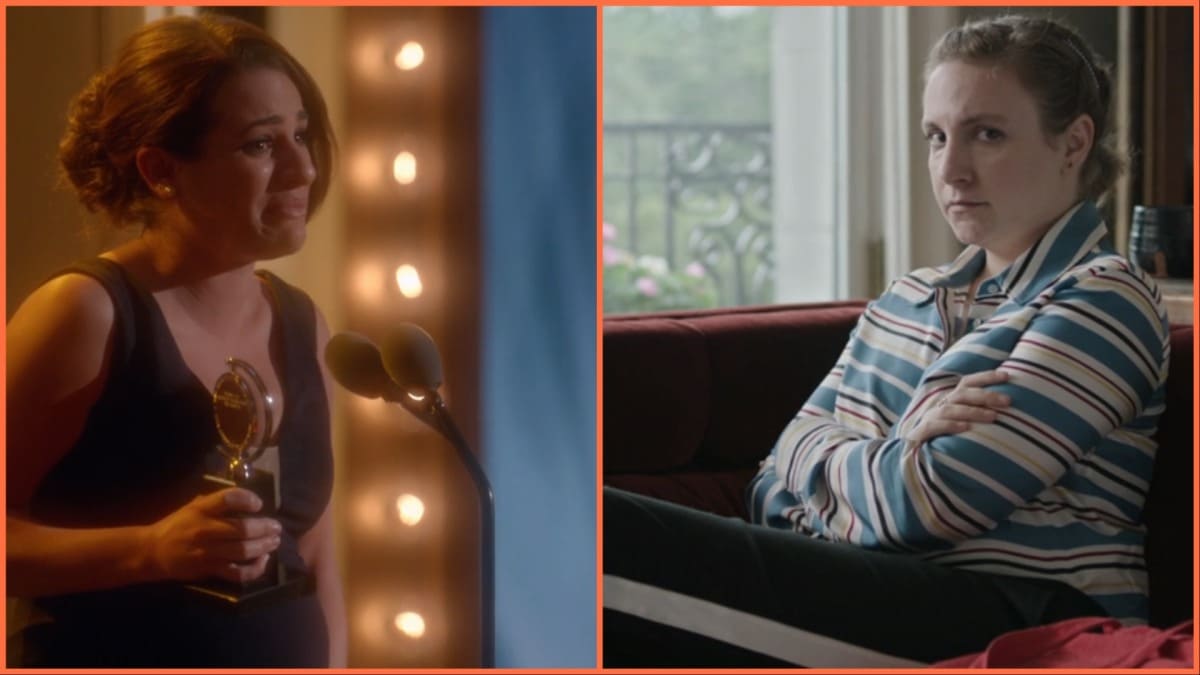
Glee ends with a bunch of flashforward sequences depicting the musical dramedy’s characters getting everything they ever wanted. It didn’t take long for these wishful forecasts to age poorly. Chief among them: Rachel Berry (Lea Michele), age 26, winning a Tony Award in 2020. No one could’ve known it in March 2015 , but this was an impossible future. Not only because Glee is a work of fiction, but because there were no Tony Awards in 2020, and hardly any live theater to honor at all, due to the COVID-19 pandemic.
Most of the future that Glee believed in didn’t come to pass. The series is perhaps the most air-tight time capsule of the Obama era, debuting a few months after the inauguration of the United States’ first Black president, and concluding just before his bigoted, tyrannical successor descended a golden escalator and ushered in a future of bald-faced fascism. It was an era, as it’s dubbed now, of “Millennial optimism,” when it felt like progress would continue apace forever. (See also: Hamilton, The Help, or Lady Gaga’s “Born This Way.) It only makes sense that Disney, having inherited the show as part of its merger with 20th Century Fox (to cite another event that occurred in the years between “Dreams Come True” and now) would want to return to this period of boundless promise by ordering a Glee revival, with Michele in tow.
Of course, it’s reductive to view the years 2009-2015 exclusively through the lens of “yes, we can” and “it gets better”—but those were the message of Glee. The series followed (at least, at first) a high school glee club in Lima, Ohio, composed of both social outcasts and popular athletes. It was a show where Spanish teacher-turned-choir director Mr. Schuster (Matthew Morrison) could, without a hint of irony, tell his students, “You’re all minorities. You’re in the glee club.” Week in and week out, the show drove this point home: People, no matter how different they may seem, no matter how many snarky zingers they have in their pocket, can come together through their shared love of pop culture and art. Of course, this notion had its doubters at William McKinley High, but for Glee as a whole, its truth was never up for debate.
That people continue to return to this series, and that a younger generation has since discovered it, should come as no surprise. For all its shock humor and all its broad characters verging on caricature (both key ingredient’s in co-creator Ryan Murphy’s form of satire), for all the plotlines centered on in-school pill popping or school shootings or “Vapo-rape”, Glee is a show that’s fun to revisit. Every episode features multiple, often ornately produced and highly choreographed musical numbers featuring a young cast of up-and-comers. There was nothing like it then, and though other, subsequent musical TV series attempted to ride its coattails, there’s really been nothing like it since. But none of this is about the artistic or critical merits of the show—it’s about when Glee was on the air. The revival could exceed and/or subvert these expectations, but from the current vantage point, it’s hard to imagine that making more of it now will do much beyond reinforcing the differences between now and then.
This stands in stark contrast to the other major coming-of-age TV series from the 2010s whose revival was announced in the past two weeks. Girls, like Glee, is nothing if not a product of its time—albeit one with a different perspective. Set in Brooklyn and airing on HBO from 2012 until 2017, Girls is about a group of (sometimes) friends figuring life out in their mid-20s. But unlike Glee, the characters don’t just get everything they ever want in the end. They’re forced to grapple with failure and disappointment. Getting hooked on drugs does not yield an incredible mashup of “Halo” and “Walking On Sunshine”; it yields a trip to rehab. This is not a knock against Glee—it’s a musical comedy, and it should be a bit heightened and unrealistic—but Girls is at least rooted in something that occasionally resembles the real world.
Another crucial difference: Girls was still in production during the vibe shift that happened between 2015 and 2017. In its final season, the episode “American Bitch”—one of the series’ best—sees now-working writer Hannah Horvath (Lena Dunham) grapple with an author (Matthew Rhys) accused of coercing college students into sex. It would be a mistake to call the episode, which anticipated the #MeToo movement’s mainstream moment the following fall, prescient; it was simply addressing an unfortunately evergreen issue, in a way that grounds its characters’ humanity. It’s an episode that leaves Hannah shaken and with more questions than she had going into it. The entire final season of Girls was not afraid to take this tone, doling out genuine letdowns for its characters. Hannah and Adam (Adam Driver) come to the conclusion that their romance is not an adult one; Shoshanna (Zosia Mamet) realizes that she actually can’t be friends with these people forever. The characters confront reality, and thus grow.
And that growth makes the prospect of checking in on them all the more appealing. In part because we don’t already know some of the answers to “where are they now?,” and in part because it feels like there’s more purpose to the reunion beyond simple nostalgia. Hannah rekindling her codependent friendship with Marnie (Allison Williams) and Elijah (Andrew Rannells) feels like something that could happen; Tony winner Rachel Berry working with the glee club from her Midwestern alma mater is a massive stretch.
It’s too soon to totally count Glee out— there haven’t been any casting announcements beyond Michele’s, and we don’t know what the logline is, or even where the revival will take place. And Glee wasn’t always so untethered from reality. The series’ still-excellent opening stretch focuses on Will Schuster, a man who abandoned his Broadway ambitions and finds himself stuck in his hometown, working at his old high school. Mr. Schu and his fellow teachers are presented as somewhat cautionary tales, but that’s not all they are. In these early episodes, he and guidance counselor Emma Pilsbury (Jayma Mays)—and, to a certain extent, cheerleading coach Sue Sylvester (Jane Lynch)—pushed the message that performing, even at an amateur level, brings people together. That a high school auditorium in Northwestern Ohio can be as big and important a stage as one in Midtown Manhattan. That your dreams might not work out the way you want them to, but you are still vital to other people. That would be a Glee worth watching in 2026.


 Keep scrolling for more great stories.