
Heated Rivalry raises the bar for queer sex on TV
HBO Max's sensation is a love story built from the bed up.
Photo: Sabrina Lantos/HBO Max
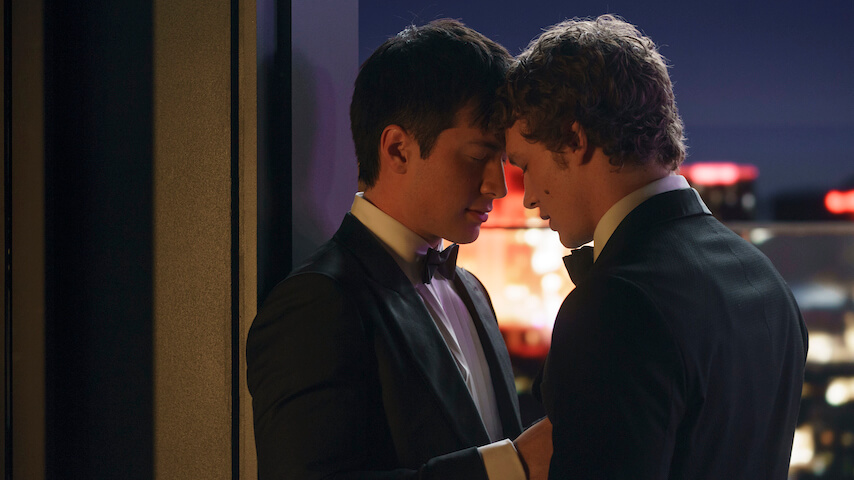
The internet has had absolutely zero chill about Crave and HBO Max’s Heated Rivalry. The tweets have been on a level of horny not seen since the first season of Bridgerton. The watch parties with friends to see their reactions to the sex scenes call to mind Game Of Thrones‘ run. Even the memes have been top-notch in that very special way that makes social media tolerable for a fleeting moment.
In less than two weeks, “the gay hockey show,” as so many have generalized it, has become an out-of-nowhere phenomenon at the end of a year in need of one. But Heated Rivalry is doing something even more important for the culture than just turning it on. The story of rival hockey players turned lovers Shane Hollander (Hudson Williams) and Ilya Rosanov (Connor Storrie), in its first two episodes, is a patchwork of one sex scene after another. Shane and Ilya aren’t out to anyone, so their physical relationship is something they only indulge in behind closed doors, every six months or so, when their teams happen to be in the same town. They are sustaining themselves on singular nights of passion, even though their feelings deepen each time they give themselves over to the other. It is a love story built from the bed up. For audiences who are used to series fading to black when queer sex starts to get steamy onscreen, the uninhibited and intentional embrace of explicit sex between these two men has grabbed headlines faster than Shane and Ilya grab each other in their bi-annual meetups.
It’s freaking hot. There’s no other way to put it. Seeing these two men crash into each other with an insatiable hunger makes you want more—and that is the beauty of what is happening here. We want more shows like this. The sex in Heated Rivalry isn’t only for the shock value, although that has certainly brought in viewers, and it is straight out of author Rachel Reid’s books. It makes you yearn for more, just like Shane and Ilya are. When you get something you didn’t even know you wanted, or didn’t want to admit you needed, it is intoxicating. And it’s why audiences are falling for this show right out of the gate.
Heated Rivalry also happens to be a very good series, and it works for a few reasons. Williams and Storrie have some of the most intense chemistry on TV in recent memory. The ease with which they touch each other compulsively and instinctively, even outside of the sex scenes, is captivating. But those scenes also work because writer-director Jacob Tierney understands that sex is the building blocks of this relationship. There is nothing wrong with that—and frankly, it is true to life for some in the gay community. So letting the camera linger on the soft and hard kisses, the moaning and the grunting, the fumbling of legs, the thrusts and hand holding, is vital to understand how these two men are finding themselves through each other on their terms. It’s not often that TV is willing to admit that sex can be as impactful as a meet-cute to a relationship, but it is nevertheless heartening and, again, hot to see Heated Rivalry not shy away from it. And wanting more isn’t confined to the bedroom. As Shane and Illya become more inseparable, even at a distance, you start craving more than just sex from them too.
 Keep scrolling for more great stories.