
C

On luck... or something, Hilary Duff’s grown-up reflections coast by on childhood nostalgia

The Disney star’s first album in over a decade resurrects the buoyant pop of 2003’s Metamorphosis, pushing it forward for a new generation. Still, the album’s “mature comeback” offerings never fully deliver.

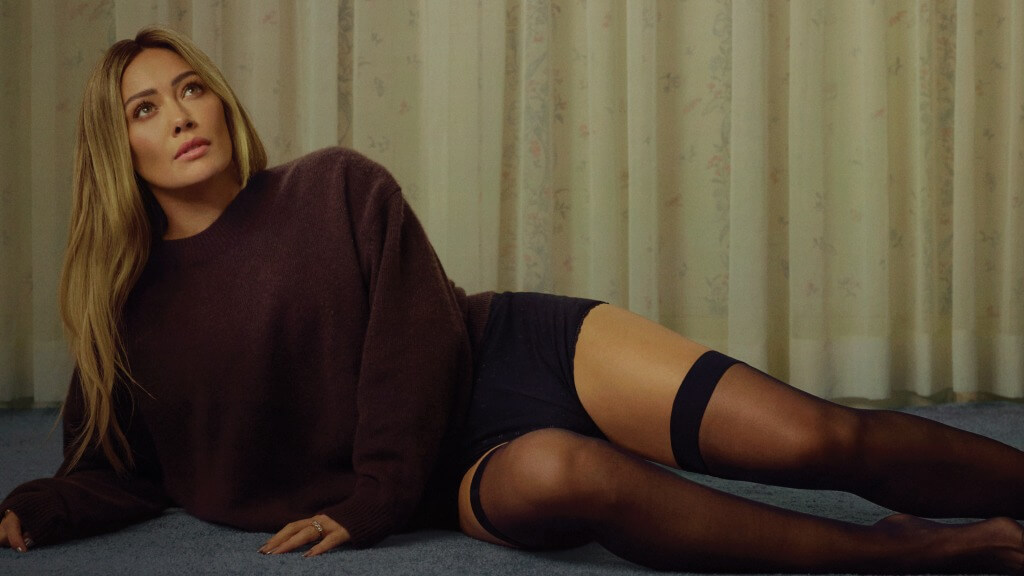
On luck... or something, Hilary Duff’s grown-up reflections coast by on childhood nostalgia

The millennials are winning. Haven’t you heard? Here’s Miley Cyrus spearheading the 20th anniversary special of Hannah Montana; there’s a Jonas Brothers tour; did you go watch Freakier Friday? Every millennial touchstone is finding—in some cases forcing—its way back into the culture, and amidst this frenzy of comebacks and spinoffs and reboots arrives Hilary Duff, beloved Disney star of millennial after-school staple Lizzie McGuire. Duff hasn’t released a new album since 2015’s Breathe In. Breathe Out., though the 38-year-old pop star has kept busy over the years: she married songwriter and producer Matthew Koma, starred on How I Met Your Father (yet another spinoff, this time of How I Met Your Mother), she even became a mother to four. (In a wonderfully unserious bit of white woman drama, Duff was indirectly implicated in fellow Disney star Ashley Tisdale’s viral “toxic mom group” essay earlier this year.) Needless to say, Duff has grown up quite a bit in the past decade and change. luck… or something, then, is the inevitable comeback album arriving to broadcast its pop star’s newfound maturity… or something.

The album, primarily co-produced by Duff and Koma (who previously worked on Carly Rae Jepsen’s Kiss), operates in the type of bright, buoyant pop instantly reminiscent of Duff’s 2003 debut Metamorphosis. The album’s most shamelessly sugary moments are also its highlights: “Weather for Tennis” finds Duff singing about complicated relationships and arguments, yet its cheery pop would fit perfectly in a Wes Anderson-esque 2012 millennial hipster MV full of color-blocked outfits and goofy choreography set on a tennis court. “Future Tripping” is pretty much a crash-out anthem, yet it’s light enough that you could skip down the street to its bounce, as unimpeded as a rom-com heroine. (Plus, the “Bon Ivar” line is so nonsensical but charming as to feel instantly delightful. Who even mistakenly pronounces Bon Iver like that?)

Still, while many of luck… or something’s tracks are good, on a sort of baseline level—Koma’s production has that Jack Antonoffian maximalist excellence, and the soundscapes are rich and lush throughout—you’re often trapped with the nagging suspicion that they might’ve worked even better without Duff. Duff’s vocals have always been her greatest Achille’s heel—even diehard fans admit that Duff’s songs are great precisely because they’re so easy to karaoke to—but this supposed flaw actually worked in Duff’s favor when she was younger. Here was, after all, a clear, spring-bright voice that tween listeners could recognize as their own, a voice upon which they could map all their young challenges, heartbreaks, and dreams.

But tweens these are not anymore, and where luck… or something falters most is in its attempts at the comeback album’s requisite “mature” tracks. On “The Optimist,” which describes Duff’s fraught relationship with her father, the woodsy, hushed atmosphere of acoustic guitars and wailing lap steel instantly signal that we are heading into Serious Territory. It’s just that Duff’s voice, even subdued, is still perky at its core. And though this could’ve loosely worked—she is the optimist, after all—when the big mic-drop twist of “But it’s hard to exist as the optimist” arrives, you realize Duff’s voice lacks the weathered, exhausted edge needed for you to buy the story of betrayal she’s selling here. The same problem exists on “Tell Me That Won’t Happen,” where you almost have to do a double-take at such a bubbly, youthful voice declaring “I’m worried that I’ve felt everything I’ll ever feel.” It’s not that sunshine-y pop or even a sweet voice can’t sell conflicted, heartfelt emotion—Natalie Imbruglia would like a word—but the strongest pop artists are able to dig for the crevices in their voices that contain pockets of strangeness and emotion; Duff never quite achieves this feat.

The songwriting here, too, can be a mixed bag. Certified millennial moments abound, ranging from the painfully corny (“But life is lifing / And pressure is pressuring me” feels straight from a 2013 BuzzFeed GIF-laden listicle) to the amusingly dorky (“I know how you hate the vegan shit and the tarot cards / Tell me some words that are dirty in French”). And the album’s frequent nods to the past never feel quite real or lived-in: Duff sings about having no money while being young and free (Hilary Duff? Broke? I don’t think so!), the mere existence and physical reality of tampons (?) and booty calls, and giving head at the back of the dive bar. They’re generic, and they don’t feel specific to Duff; they mostly end up sounding like wild-and-free vignettes cribbed from a Chainsmokers music video, already itself a secondhand memento of times gone by.

There are highlights elsewhere on luck… or something—“Mature” sounds like Paramore by way of “Teenage Dream”, and “You, From The Honeymoon” is the type of lilting, romantic-melancholic song that takes perfect advantage of Duff’s light voice—but at the end of the day, nostalgia is its chief selling point. The album ruminates endlessly on those halcyon days of youth, before marriage and motherhood and what-have-you kicked in, before everything felt settled and duller and more predictable than when you first began. Nostalgia, too, is what will keep fans returning again and again to this album: it’s a trippy mind-fuck to hear the voice you associate with butterfly clips and crimped hair and watching TV after school singing about parenthood, marriage, sex, and the challenges you’re going through now; the sheer gulf in expectations makes you realize just how much time has passed without you noticing and how much you’ve grown. I suspect that, for the OG super-fans, this quality will make luck… or something a fantastic comeback album. For the rest of us, it feels a bit like watching someone else’s home videos: you can see flashes of nostalgia here and there, but you realize ultimately that these memories were never meant to be yours.

Lydia Wei is a writer based in DC. Her work has appeared in The Guardian, Pitchfork, Washingtonian, Washington City Paper, and elsewhere. Find her online at lydia-wei.com.

 
Join the discussion...
Keep scrolling for more great stories.