
How could a tragedy animated as beautifully as In Waves feel so empty?
Adapting a graphic memoir without carrying over its emotion, the film is breathtaking as the ocean and as deep as its shallows.
Photo: Netflix
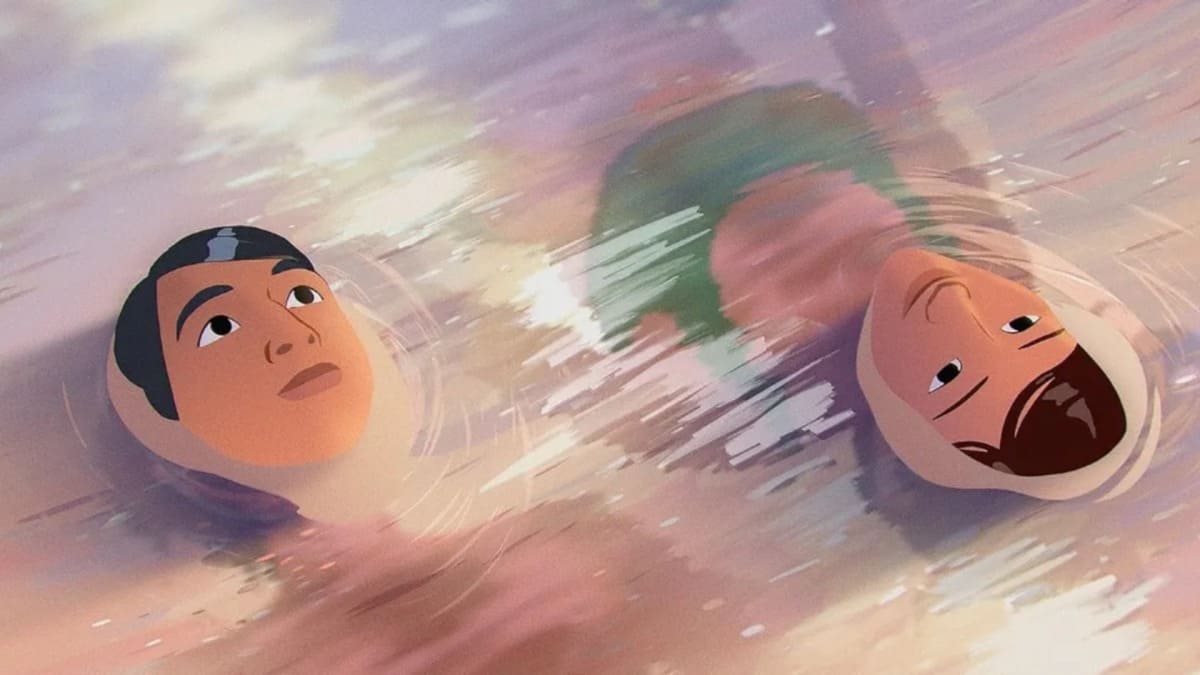
Few films look like In Waves, but countless resemble it. Regardless of its proximity to real-life events, the tragic arc of a young man falling head-over-heels for a young woman defined mainly by her impending death carries with it a familiar and irritating indie-film angst. Even though In Waves is based on AJ Dungo’s graphic memoir—which perhaps made its surfing-based connection between one man’s personal grief and the exploitation of Hawaiians more clearly—its animated reckoning with loss isn’t even unique this year; Tangles, which adapts Sarah Leavitt’s graphic memoir about her mother’s Alzheimer’s, contains many of the same narrative beats for its artist protagonist, down the the lure of a lucrative job in New York. This doesn’t preclude In Waves from working through its own pain, but it does mean that its rote sentimentality is fully swept away by its visual beauty.
This might seem counterintuitive, but Dungo’s spare source material allowed readers more space to bring themselves to its Point Break poetry. Director Phuong Mai Nguyen adds ample depth and slews of color to the original work, which is economical in both line and hue, painting a fuller world to compensate for any emotional emptiness. In Waves‘ Blender-based animation isn’t photorealistic, but pays such close attention to details like ocean foam—which evokes the fizzy kinetic energy of the waves—and sunlight—which transforms the sea into rolling hills of pink—that it transports you to laidback Los Angeles more effectively than the most scrupulous live-action recreation. It’s when you’re settling into the sand, feeling the freezing water tug you out towards the horizon, that you realize that it’s the people populating this beach that are taking you out of the fiction.
 Keep scrolling for more great stories.