“He should direct someone else’s screenplay.” That “he” can refer to M. Night Shyamalan, Wes Anderson, or George Lucas—and hopefully soon there will be enough well-known women writer-directors for more of them to be subjected to this nuisance of a directive—but the basic advice periodically doled out by various career-watchers remains the same. It refers to a filmmaker who is way too into their own bespoke craft and sensibility, blind to their own flaws, and a perfect candidate to take someone else’s well-formed screenplay—presumably shorn of various quirks of structure, dialogue, or storytelling—and apply their distinctive style to it in a more tasteful, limited way. This faux one-size-fits-all instruction is often misguided, but anyone who has read discussions of movies on the internet in the past 20 years has heard it before.
Some filmmakers have actually done this well, from Steven Soderbergh (who wrote some of his early films before largely abandoning it) to Steven Spielberg (who still averages about one screenplay credit per decade). Less usual, though, is a writer-director who does the opposite, writing a movie for someone else to direct. Yes, there are a few Coen brothers screenplays that others have directed to little acclaim (though Spielberg did a pretty great job with one), and plenty of writer-directors have contributed uncredited punch-ups, or collaborated with their friends or spouses—like Noah Baumbach, who has written with Anderson and Greta Gerwig. But most writer-directors save their officially credited work for themselves. Which makes it all the stranger that there are three movies with a screenplay credited to self-styled super-auteur Quentin Tarantino—and four if you count Natural Born Killers, which Tarantino emphatically does not.
For that matter, Tarantino doesn’t seem to really count True Romance, From Dusk Till Dawn, or the new David Fincher-directed film The Further Mis-Adventures Of Cliff Booth, either—not as a part of his official, QT-approved filmography, at least. For a decade, Tarantino has been insistent that he will make just 10 movies as a writer-director, counting the entirety of Kill Bill as one film and the Death Proof half of Grindhouse as a standalone. This has seemed to lead to some cold feet around deciding on a follow-up to Once Upon A Time…In Hollywood, which he counts as movie number nine (and which has the misfortune of feeling like a perfect 10th-and-final film). For now, he’s landed on the compromise of allowing Fincher to direct a sorta-sequel to OUATIH in the form of Cliff Booth.
This throws back to an earlier phase of Tarantino’s career, before he was a brand-name filmmaker and when bringing in cash was a bigger part of the equation. (Then again, maybe Cliff Booth isn’t that out of place, given how much Pitt, Fincher, and Tarantino all reportedly received for making it.) The usual reason for suggesting that more established writer-directors take others’ scripts is to make movies that are just a little less them—a little more open to other tones of voice or maybe even, for committed fantasists, real life. But the screenplays Tarantino has sent out into the world accomplish the same thing with the process reversed.
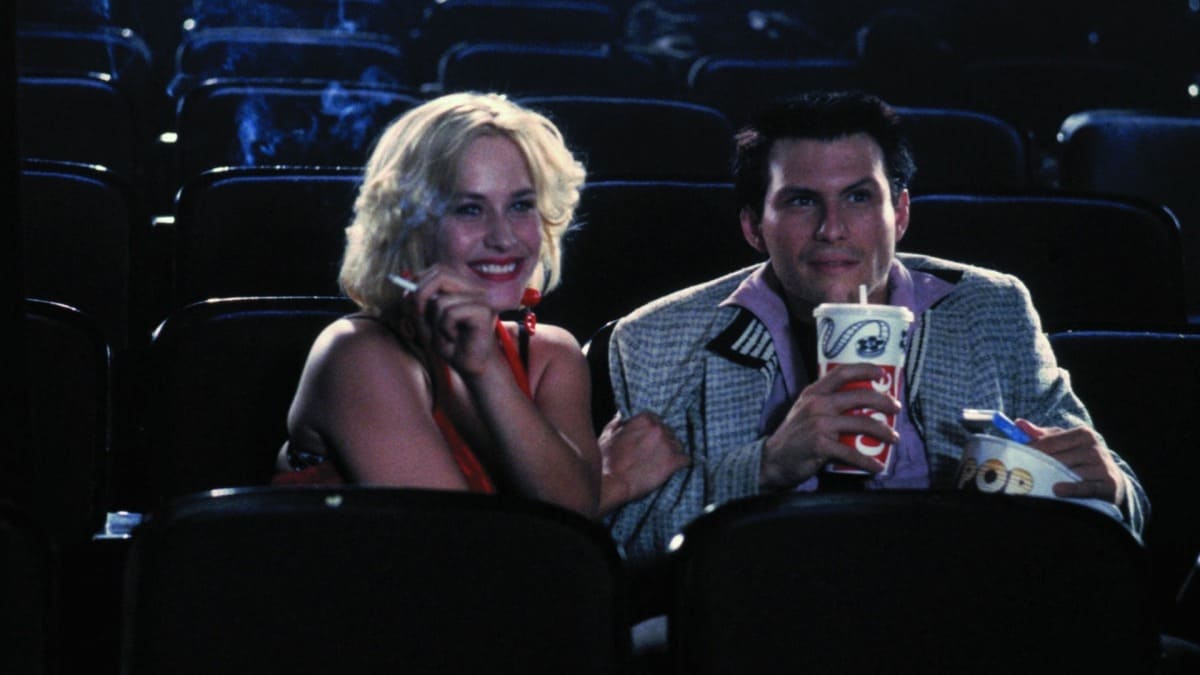
On the level of a recognizably Quentin Tarantino screenplay for a recognizably non-Tarantino director, it’s difficult to top True Romance, which has the gloss of ’90s Tony Scott prettifying a Tarantino story that might otherwise look a little ugly: Goofy but cocksure Clarence (Christian Slater) falling in love with charming sex worker Alabama (Patricia Arquette), killing her pimp (Gary Oldman), and (accidentally) absconding with a bunch of drugs they attempt to sell, so they might finance their happily-ever-after before gangsters catch up with them. Sold before Tarantino made Reservoir Dogs, Scott obviously saw potential in it—while ignoring its equal potential to be a boilerplate movie-brat thriller that’s nowhere near as secretly ruminative as some of Tarantino’s later work, nor as stylishly elusive of an obvious reading as Pulp Fiction. By interpreting this seedy crime picture as a mischievously violent fairy tale with some great monologues, Scott didn’t ground Tarantino (which often seems to be the goal in recommending that a writer-director work with someone else). Instead, he elevated the brash young-guy noodling in a movie that’s greater than the sum of its influences.
Tarantino had more input on From Dusk Till Dawn, an old script that he wound up making with his buddy Robert Rodriguez directing. The pair then cast Tarantino, with oblivious bravado, as half of a brotherly bank-robbing team with his natural lookalike, George Clooney. (To be fair, Tarantino’s Richie is also an unstable and sometimes dimwitted sexual predator, so it’s not entirely self-flattery.) After taking a family hostage to cross the border into Mexico, the brothers and their unwilling partners hole up at a biker bar that turns out to be a vampire-infested trap. Rodriguez does a credible impression of Tarantino’s developing directorial style in the crime-movie first half, with patient and dialogue-attentive pacing, and then makes himself at home in a cartoon-gore dive-bar for the second, which at the time mostly caused critics to complain about what a letdown “his” part of the movie was. But Rodriguez’s Tarantino impression isn’t entirely one-sided. There are goof-off advantages to a fast-paced horror-siege picture with Tarantino dialogue: With so many well-wrought Tarantino slow-burns that build to violent confrontations, isn’t it a thrill to see Rodriguez simply grab the wheel and force the issue halfway through?
The Further Mis-Adventures Of Cliff Booth is a far stranger match than those two creative soulmates. Fincher and Tarantino did come up around the same time, with their respective feature debuts both released in 1992, and they share an obvious affection for Brad Pitt. But many of Fincher’s movies send their characters down rabbit holes of procedure, whether technical (Zodiac; The Social Network), existential (The Game; Fight Club), or an unnerving fusion of the two (Seven). In that sense, Cliff Booth makes a suitable companion to Fincher’s underrated The Killer, despite the obvious difference in tone and writing style. Cliff Booth isn’t nearly as meticulous as the rise-and-grind assassin played by Michael Fassbender, but he’s similarly limited to his personal skill set and subject to the whims of fate.
Fincher doesn’t exactly turn the Los Angeles of Once Upon A Time into a nightmare hangover for our man Cliff, who remains as affable and confident as ever, his chill façade comfortably concealing Tarantino’s writing-telegraphed belief that this is simply the single coolest and most attractive man who has ever lived. Likewise, Fincher is probably too endeared toward Pitt to tease out truly dark undercurrents to Cliff’s character; he and Tarantino seem simpatico in wanting to present a little nastiness for our movie-loving approval, rather than outright disturbance over the casualness of Cliff’s occasional but memorable violence. The movie stays dutifully faithful to the usual Tarantino text; there are cutaway bits of backstory narrated by Tarantino himself, long scenes that only inch the plot forward if at all, and references galore.
At the same time, Fincher’s loving way with murky shadows renders Cliff Booth the obvious nighttime counterpart to the earlier movie’s sunnier daytime. Cliff has gone from Hollywood stuntman to a marginal liaison between actual stars (like Scott Caan’s Charlie Peters, who wants to hire him to fix his massive gangster-related screw-up) and the underworld he hasn’t quite descended into. While the movie’s violence may not go full Fincher with the doominess of his serial killer movies, the production as a whole does give the impression of time moving inexorably forward, preparing to leave Cliff Booth behind.
Fincher doesn’t quite have the room to frame The Further Mis-Adventures Of Cliff Booth as a struggle for this guy’s soul, and maybe he wasn’t inclined to, anyway. Like the assassin in The Killer but far less visibly frustrated at setbacks, his chosen existence lends itself to sticky situations. But his built-in lack of sentimentality toward this character or this world makes the movie more striking as a OUATIH follow-up, and able to explore more dispassionate points of view. It’s difficult to imagine a Tarantino-directed movie resulting in the precise performance of Elizabeth Debicki as Karen Crosby, a Hollywood agent with seemingly little romance to spare over the art or magic of the movies. (Because she’s a Tarantino character, she isn’t born with cinema antipathy; she’s a former movie critic, worn down by the grind of bad movies.) She may not be a Fincher creation, but she seems perfectly suited for the director who, despite his pervasive gloom, has tackled a variety of romantic relationships in Gone Girl, The Girl With The Dragon Tattoo, and The Curious Case Of Benjamin Button.
Obviously, Tarantino wrote Karen’s flirtation with Cliff, but his interest in romance has been close to nonexistent since Jackie Brown. In fact, True Romance, Cliff Booth, and, in its gruesome way, Natural Born Killers all substantially boost the romantic quotient of his authorship. This signals the other side of Tarantino’s non-directed screenplays: Indulgences that he might be too sheepish to grant his “real” work. That might seem counterintuitive. Tarantino made a four-hour revenge saga, a 70mm roadshow version of The Hateful Eight, and a self-novelized version of Once Upon A Time…In Hollywood; he is the most self-indulgent director of our time. Yet, that’s also made him cautious about what’s worth the indulgence.
That was his perfectly sensible rationale for not wanting to direct Cliff Booth as his last film: He wanted something newer and more challenging for a finale. Sometimes, though, it’s easier for filmmakers to arrive at that challenge with the freedom to repeat themselves. As dissimilar as True Romance and Natural Born Killers turned out, they do play now like Tarantino was noodling on a single idea—an outlaw-lovers-on-the-run movie somewhere in between Bonnie And Clyde and Badlands—without ever cracking it as more than an exercise in memorable dialogue and transgressive mayhem. Instead of realizing his early vision, they became two vastly different movies with half-a-dozen brilliantly memorable performances between them.
In a way, Cliff Booth specifically harkens back to Tarantino’s mid-’90s output. In the wake of Pulp Fiction, the world eagerly anticipated a follow-up. Rather than making immediate plans for another feature, Tarantino wrote and directed a segment of the anthology Four Rooms; wrote and starred in From Dusk Till Dawn; and gave mostly bad onscreen performances in other people’s films. He eventually came back with Jackie Brown—perhaps not coincidentally, an adaptation of Elmore Leonard, whose work he has said loosely inspired Cliff Booth. Something like From Dusk Till Dawn could function as a palate cleanser, a bottom-drawer-cleaner, and a genre exercise, all at once, without carrying the weight of those post-Pulp expectations. It was as if he was anticipating his self-imposed 10-movie limit even then.
That limit is overly precious. It also seems profoundly stuck on an outdated idea, rooted in Tarantino’s adolescence, of what happens to older directors, namely that they retire and/or lose their touch. Like the Gen-Xers he wowed with Pulp Fiction, Tarantino has trouble getting over the touchstones of his youth. Who could look at recent work by Spielberg, Scorsese, Cronenberg, and others, and conclude that ignominy awaits a filmmaker in his later years? But even if Tarantino still feels obligated to abide by it, The Further Mis-Adventures Of Cliff Booth bends his own arbitrary rule in a clever and personal way that he should keep in mind while mulling over that last movie. Tarantino continuing to write Cliff Booth without directing him is a particularly affectionate way of letting him go.


 Keep scrolling for more great stories.