New York City is full of historical sites, cultural institutions, and more good restaurants than swarms of influencers could ever visit. Outside of those go-to visual shorthands for the city—like the Statue Of Liberty, Empire State Building, and Central Park—there’s another world that doesn’t always make it to the big screen. For more than a decade, one of these outer borough neighborhoods became the star of a young director’s burgeoning career. James Gray, a born-and-raised New Yorker with roots in Queens’ Fresh Meadows, gravitated to the dark side of Southern Brooklyn. He found inspiration in the growing Eastern European community of his grandparents, the crumbling warehouses hiding who-knows-what, and the strong men who talked amongst themselves on street corners. Out of the tension of the old world versus the new, and of outsiders versus insiders, movies like Little Odessa, We Own The Night, Two Lovers, and his latest return to the old neighborhood, Paper Tiger, were born.
From the mid-1990s, when Gray released Little Odessa, to Two Lovers in the aughts, New York City experienced a complicated revival and an influx of capital after decades of neglect. However, the outer boroughs still retained a bit of their old-school character: a pre-gentrified sense of stagnation that permeated blocks of 100-year-old buildings with crumbling lead paint, working-class families struggling to get by, and the occasional opportunists trying to take shortcuts to a semblance of financial stability. Gray’s early Brighton Beach movies were a reflection of a gritty New York that ran contrary to the Rudy Giuliani administration’s campaign to clean up the city. Today, as financial pressure mounts and uncertainty is again on the rise, Gray’s scrappy parables about lonely families against the world feel closer to home.
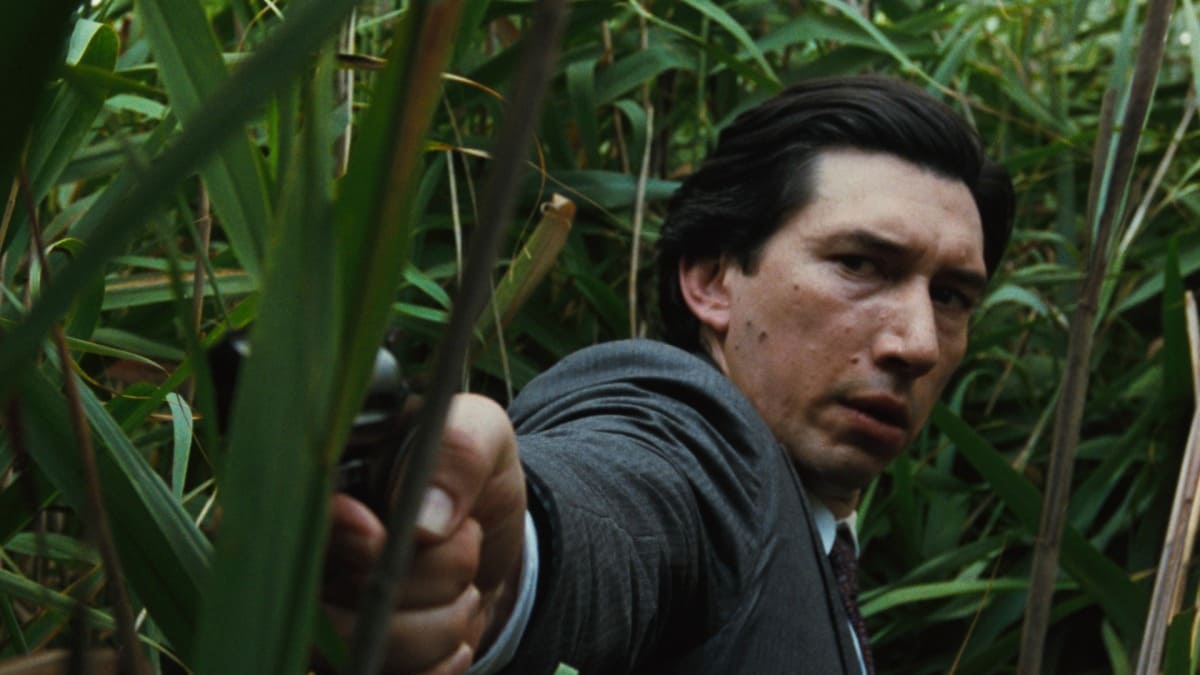
Like many of Gray’s previous films, Paper Tiger is a period piece. Set in the 1980s, Paper Tiger follows a father (Miles Teller), trying to do his best for his family, as he gets mixed up in an illicit business plan cooked up by his shady ex-cop brother (Adam Driver). Their Gowanus Canal project with the Russian mob in Brighton Beach goes south, and the two brothers must figure out a way to undo the damage—at any cost.
The timing of Paper Tiger loosely reflects today’s uneasy New York City, if not through its crime rate, then through the fact that it is once again in the grips of an affordability crisis, where one of the most expensive cities in the world just keeps getting pricier. More and more people wonder if they can afford to stay in the city they work in, and are running out of neighborhoods to find affordable housing. Yet, there’s also hope in the air with Zohran Mamdani’s new administration, just like when Ed Koch took the mayoralship in the depths of the ‘70s crisis or Fiorello La Guardia steered the city through the Great Depression and World War II.
Similarly, the New York of the 1980s—the New York of Paper Tiger—was on the mend, seeing a population rebounding after white flight to the suburbs, and a stock market booming after a debilitating economic slump and astronomical gas prices. All this was happening while simultaneously coping with the aftermath of the city’s abandonment in the 1970s—including federal funding cuts, garbage strikes, protests, and a mid-summer blackout that left the city and its people in the dark and in the sweltering heat. That gloomy feeling of being left to your own devices in a city of 8 million people still resonates decades later, and it’s a sensation Gray has visited many times before.
As the characters of Paper Tiger lose control of their comfortable lives, they have no one to turn to but each other. They find themselves increasingly isolated from the rest of the city, socially cut off from their community and other family members, to the point that they look around their block in fear and suspicion. In times of crisis, even law enforcement falls short in its ability to help the family, and eventually, the family turns on each other. It’s a sense of desperation born from feeling there’s no way out, and if family or loved ones can’t be trusted, then the outside world can’t be trusted either. Despite living in the age of social media and constant communication, isolation remains an everyday problem even when surrounded by people on crowded subways, stores, and sidewalks.
Paper Tiger takes place mostly between the tawny family homes in Queens, like the neighborhood where Gray grew up, out in Brooklyn’s industrial areas like Gowanus, now a developer’s dream dotted with luxury buildings along the once-infamous superfund site, and the Brighton Beach of Gray’s earlier films. Southern Brooklyn is just far away enough from the hub of Manhattan that it seems like another world. These are the Bay Ridge and Bensonhurst neighborhoods where Saturday Night Fever takes place, a setting where its main character finds his groove but also aspires to strike out beyond its provincial borders. It’s also home to The Warriors down in their dystopic version of Coney Island, a reflection of New York City that grew out of 1970s pessimism. Onscreen, the area is both a place to escape to, with its subway-accessible amusement parks and sandy coast, and to escape from.
That tension is writ large in Gray’s dramas, where families are torn apart by loyalty, respect, and rules they don’t necessarily understand. Gray made his feature debut, Little Odessa, just as Giuliani began his tenure as the city’s mayor. He ran on the promise to clean up the town, which he attempted through excessive policing. In contrast, Gray’s vision of New York remained rebelliously lawless, with characters answering only to their own codes and loyalties, where violence remained a palpable threat for those trying to work the system. The city’s clean-up wasn’t going to reach the shores of Brighton Beach, not in Gray’s lens.
Instead of sun and sand, Gray’s version of Brighton Beach is often under a cloud of snow and gray skies, the kind of bleak weather that would keep most New Yorkers from visiting. Against this harsh backdrop, it seems like the entire world is against the movie’s heroes, and even the harsh coastal wind is in on the hit. But even in milder weather, like in We Own The Night, Gray shoots the area’s famous boardwalk not when it’s bustling with beachgoers—older locals tanning on the benches and kids buying ice cream cones from trucks—but when it’s desolate and under the cover of shadows, emphasizing just how alone these characters are in a world where everyone is taught to mind their own business and not respond if they hear screaming.
The characters in Gray’s Brighton Beach memoirs feel trapped by forces beyond their control, channeling the kind of cinema of stagnation of the 1970s. Think The Taking Of Pelham One Two Three, The Panic In Needle Park, and the doomed brotherly friendship of Mikey And Nicky. There’s no clean break possible without some sacrifice in exchange, as if the toll to get out can only be paid with blood. It’s the abandonment Miles Teller’s character feels in Paper Tiger after he’s accidentally intruded on a Russian mob job, the betrayal Joaquin Phoenix shoulders after his character’s family is targeted in We Own The Night, and the sense of frustration Tim Roth embodies as a wayward son whose abusive father keeps him away from his dying mother for his past sins as a hitman. It’s why Gray’s windswept vision of a dark and underlit boardwalk makes for a perfect encapsulation of the city’s gloom, where there’s a spiritual sense that these characters are alone in this big city. They can’t escape tragedy or worse, an early exit.
Gray’s Brighton Beach echoes Scorsese’s version of Little Italy, drawing on childhood memories to envision something darker about the human spirit and our helplessness to stop it. Gray’s city is not the hopeful city of Friends, How I Met Your Mother, or Girls. This is still a gritty place where danger lurks behind every wrong move and no one is in your corner. It’s a high-stakes setting where people call home and fight for their little corner of the city, which for many, is the story of New York. The dangers of living in New York in the ’80s and ’90s may have calmed down, but the struggle to afford day-to-day life has never really abated when rents only go up and paychecks stagnate. Even after venturing out to the Amazon with The Lost City Of Z and to space with Ad Astra, there’s still something about the uncertainty of city living, that fascinates Gray—a preoccupation that isn’t going away anytime soon.


 Keep scrolling for more great stories.