
A child bears witness to crime and punishment in harrowing Sundance winner Josephine
A little girl encounters a sexual assault, then its legal and emotional fallout, in the sobering and mesmerizing drama.
Photo: Sumerian Pictures
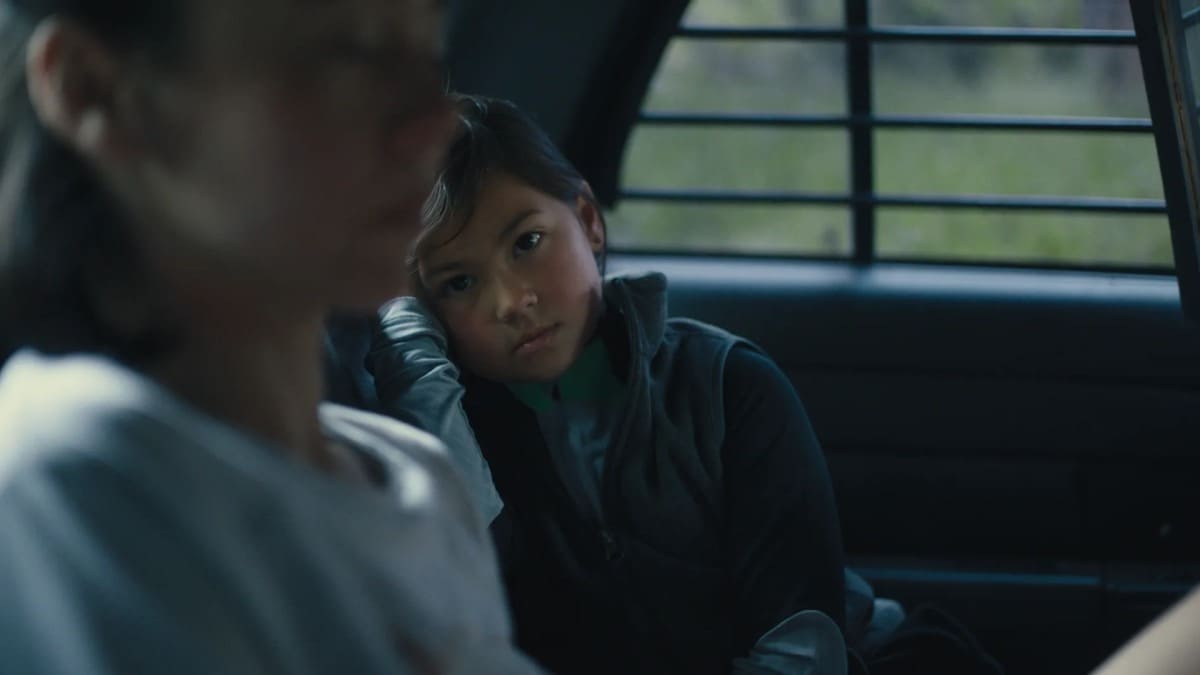
Over its seemingly endless run, Law & Order: Special Victims Unit has helped define what sexual assault and its legal aftermath looks like on-screen. As silly as the series can get, its headline-confronting plots have long toed the line between tantalizingly scandalous and genuinely sobering, using a familiar narrative structure to nudge the primetime public closer to looking uncomfortable truths in the face. Josephine never has the privilege of looking away. When watching Josephine, neither do we. There’s nothing pleasant about the film where an eight-year-old girl (the fantastic Mason Reeves) interrupts a rape while jogging in Golden Gate Park, and is forever changed by the emotional and legal repercussions from witnessing this violent crime. Yet, writer-director Beth de Araújo (Soft & Quiet) makes this devastation into gripping drama—though it works better as a child’s-eye look at trauma and the court system than as a domestic portrait.
Perhaps this is because of the filmmaker’s proximity to the material. The premise is based on an event from de Araújo’s childhood, which might explain why the fallout affecting Josephine is more resonant and nuanced than that plaguing her parents, meathead Damien (Channing Tatum) and the more thoughtful Claire (Gemma Chan). Since the entire film is translated through Josephine’s perspective, from the height of Greta Zozula’s camera to the nightmarish manifestations of fear that pop up during her daily life, the engrossing tale elegantly weaves larger social questions into the fabric of childhood. It also offers an explanation for the sometimes-clunky binary of her parents’ responses: Damien, who was out jogging with Josephine and helped chase down the perpetrator, retreats to macho defensiveness while Claire refuses to let her softer approach paper over the reality that women must deal with. Self-defense classes and violent fantasizing only go so far. You cannot out-prepare the patriarchy.
These two offer their opposing answers to Josephine’s questions, which pertain to everything from her personal safety to her understanding of physical intimacy, but this is something Josephine must process on her own. She does so in a handful of schoolyard vignettes and household fits, held up by two showstopping bookends: The opening attack, and her closing courtroom testimony. The former is as unflinching and painful as the latter, though it swaps the sensory details of an unshakeable memory for the virtuosic camerawork of an endlessly tense single take.
When Josephine prepares for her morning run, it’s captured in sound, darkness, and texture. It’s in the light breaking in from behind her rising garage door, in the damp crisp grapes she hands her dad, in the soft glow of the streetlights in the early morning mist. When she and her father traverse the San Francisco hills, ominously splitting up as they enter the park, it’s all so quietly specific and unremarkable that it immediately feels off. The attack itself is similarly unvarnished and blunt. The survivor (Syra McCarthy) screams and kicks; her attacker (Philip Ettinger), his bright fratty polo conspicuously impudent, wrestles her down, pathetic and brutal. Josephine, from her vantage atop a hill overlooking the park’s brutalist restroom, is stunned. Eventually, dazed, she wanders closer, making eye contact with victim and rapist alike.
 Keep scrolling for more great stories.