
Kanye West shares letter describing bipolar disorder, regret over anti-semitism
In a full-page ad in The Wall Street Journal, the artist now known as Ye writes, "I’m not asking for sympathy, or a free pass, though I aspire to earn your forgiveness."
Photo by Matt Winkelmeyer/Getty Images for The Recording Academy
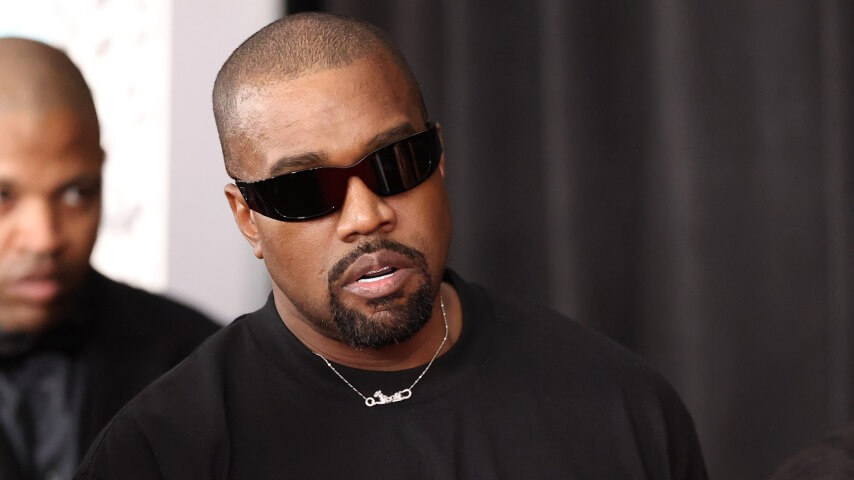
This morning, The Wall Street Journal (via Deadline) published a full-page ad from Kanye “Ye” West, in which the musician attempts to explain and apologize for his antisemitic behavior in 2025. In the letter, West calls back to his significant car accident in 2002, writing that the event caused a frontal-lobe injury that wasn’t diagnosed until 2023. “That medical oversight caused serious damage to my mental health and led to my bipolar type-1 diagnosis,” he writes. “…I lost touch with reality. Things got worse the longer I ignored the problem. I said and did things I deeply regret. Some of the people I love the most, I treated the worst. You endured fear, confusion, humiliation, and the exhaustion of trying to have someone who was, at times, unrecognizable. Looking back, I became detached from my true self.”
“In that fractured state, I gravitated toward the most destructive symbol I could find, the swastika, and even sold T-shirts bearing it,” writes West. Without naming it specifically, West goes on to address the events around the release of his single “Heil Hitler” last year. “In early 2025, I fell into a four-month long manic episode of psychotic, paranoid and impulsive behavior that destroyed my life,” he writes. “I regret and am deeply mortified by my actions in that state, and am committed to accountability, treatment, and meaningful change. It does not excuse what I did though. I am not a Nazi or an antisemite. I love Jewish people.” Elsewhere in the letter, West writes, “To the black community… I am so sorry to have let you down. I love us.”
West’s views about Jewish people have been the subject of attention since at least 2022, when he tweeted that he was going to go “death con 3 on Jewish people.” The outburst led to him being dropped by Adidas, which reportedly had misgivings for several years before that. West’s 2020 comments about how 400 years of slavery “sounds like a choice” were also wildly disappointing.
Ye is scheduled to release his album Bully on Friday. You can read his full letter below.
Twenty-five years ago, I was in a car accident that broke my jaw and caused injury to the right frontal lobe of my brain. At the time, the focus was on the visible damage—the fracture, the swelling, and the immediate physical trauma. The deeper injury, the one inside my skull, went unnoticed.
Comprehensive scans were not done, neurological exams were limited, and the possibility of a frontal-lobe injury was never raised. It wasn’t properly diagnosed until 2023. That medical oversight caused serious damage to my mental health and led to my bipolar type-1 diagnosis.
Bipolar disorder comes with its own defense system. Denial. When you’re manic, you don’t think you’re sick. You think everyone else is overreacting. You feel like you’re seeing the world more clearly than ever, when in reality you’re losing your grip entirely.
Once people label you as “crazy,” you feel as if you cannot contribute anything meaningful to the world. It’s easy for people to joke and laugh it off when in fact this is a very serious debilitating disease you can die from. According to the World Health Organization and Cambridge University, people with bipolar disorder have a life expectancy that is shortened by ten to fifteen years on average, and a 2x-3x higher all-cause mortality rate than the general population. This is on par with severe heart disease, type 1 diabetes, HIV, and cancer – all lethal and fatal if left untreated.
The scariest thing about this disorder is how persuasive it is when it tells you: You don’t need help. It makes you blind, but convinced you have insight. You feel powerful, certain, unstoppable.
 Keep scrolling for more great stories.