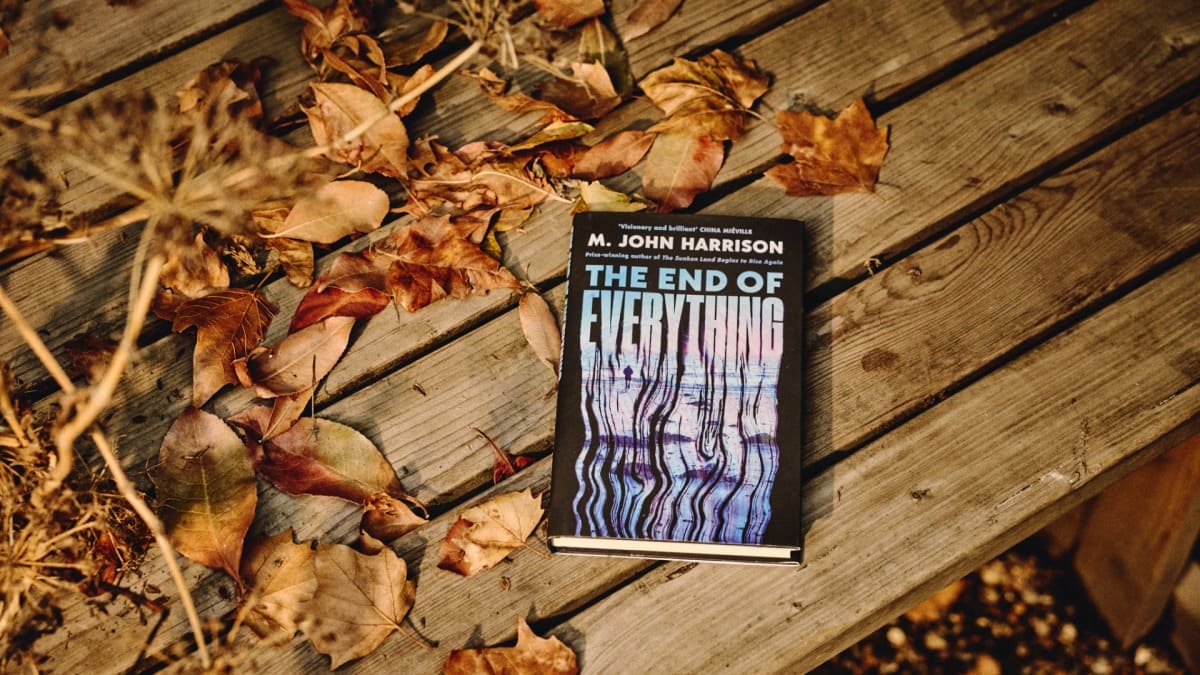
M. John Harrison and sci-fi genre win first Booker Prize for The End Of Everything

Harrison's 2026 post-apocalyptic novel emerged from a shortlist that included former winners Marlon James for The Disappearers and Douglas Stewart for John Of John. 

M. John Harrison and sci-fi genre win first Booker Prize for The End Of Everything

M. John Harrison has won the Booker Prize for The End Of Everything, becoming, at 81, the oldest author and the first sci-fi author to claim the award. “Many past Booker Prize authors have borrowed facets of science fiction in their work, but M. John Harrison is the first Booker winner to have emerged from the bona fide sci-fi world,” said Mary Beard, the judging chair of the 2026 Booker Prize. “He is a genuinely original thinker, a genre-defying writer who takes ideas seriously.” Harrison’s 2026 post-apocalyptic novel is his 13th novel in his 60-year career. It’s also the shortest novel on the shortlist, which included previous winners Marlon James for The Disappearers and Douglas Stewart for John Of John. Other books on the shortlist included The Things We Never Say by Elizabeth Strout, Black Bag by Luke Kennard, and May We Feed The King by Rebecca Perry. For his efforts, Harrison will receive 50,000 pounds or $95,000. 

“I really didn’t expect to be up here this evening,” he said as he accepted the award at a ceremony in London on Monday night. “I honestly didn’t, here at the end of everything. You talk glibly about your life being changed, but it’s weird when it happens. I feel like a proper writer at last, totally lacking in confidence.”

Set a few decades from now, The End Of Everything follows Phillip Tennent, who lives with his aging aunt on the coast of Kent, England, after the iGhetti, a race of mysterious and extremely powerful lifeforms, destroyed the country. Tennent scrapes together a living by collecting iGhetti artifacts that wash ashore until he finds a creature that keeps changing and threatens to change everything again. “It’s a book that turns you upside down, raises a wry smile—and surprisingly, given the subject matter, leaves you with a twinge of optimism,” Beard continued. “One main point of the book is that if, or when, such an apocalypse comes, it will be incomprehensible. And the old rules won’t matter either[…]This is the politics of now seen through the lens of the future.”

Harrison has been publishing since the ’60s and has won an Arthur C. Clarke Award, a Philip K. Dick Award, and the 2020 Goldsmith Prize. Other judges on this year’s panel included Preistdaddy author Patricia Lockwood, critic Rebecca Liu, poet Raymond Antrobus, and Pulp’s Jarvis Cocker.

 
Join the discussion...
Keep scrolling for more great stories.