For this week’s Staff Picks, the Film team of editor Jacob Oller and critic Monica Castillo offer some counterprogramming to the remakes and franchise entries in theaters. These films—new and old, documentary and ridiculous Czech screwball comedy—should sate cinephiles of all shades, at least until The Odyssey comes out.
Jacob Oller: The farces of Oldřich Lipský
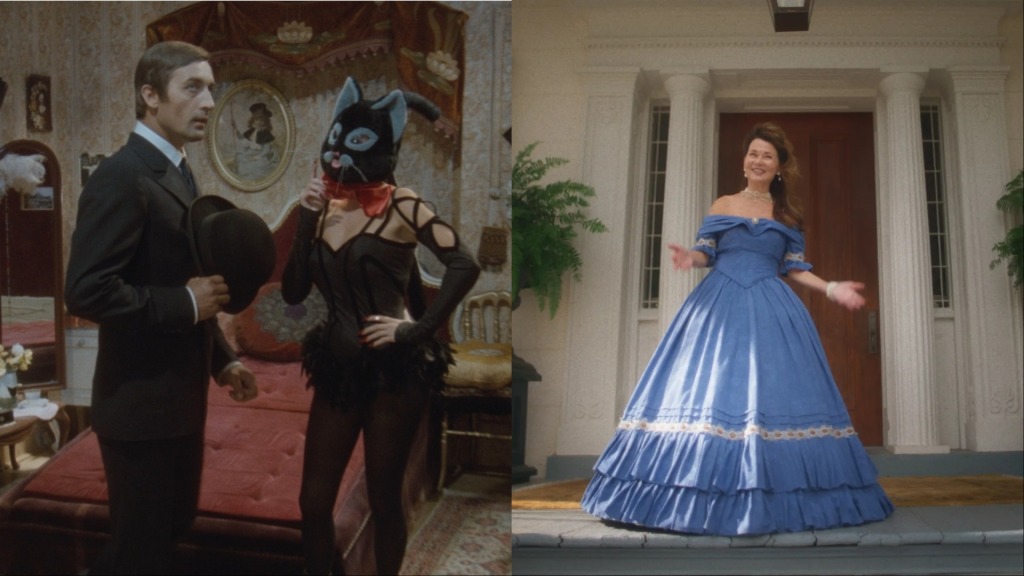
It’s the dead of summer and blockbusters are constantly vying for your attention. That means it’s a perfect time to counterprogram and swim upstream against the endless marketing for tentpole features, perhaps by diving into a collection of comedies from Czech filmmaker Oldřich Lipský. While Lipský made a few dozen films, his most accessible and enjoyable are the loose genre pastiches he wrote with Jiří Brdečka, which feel like an Eastern Mel Brooks looking West. The energetic farces, as silly as they are cutting, range from the Western (Lemonade Joe) to the American paperback detective novel (Adela Has Not Had Supper Yet) to the Gothic work of Jules Verne. But they’re almost all available to stream for free, about an hour and a half each, and utterly unlike anything you’ve seen outside of a Brooks production.
The best and most accessible of this loose trilogy is sadly the hardest to find. Lemonade Joe is getting a release from indie boutique Deaf Crocodile later this year, but for now, you’ll have to get creative to watch the tale of the wandering teetotaler gunslinger who just so happens to also be a lemonade salesman. It’s a goofball singing cowboy film with a classic conflict at its heart: Stetson City, Arizona is home to two dueling taverns, one run by Ezra Goodman and the other by Doug Badman. (Other incredible character names include Gunslinger Grimpo and Hogofogo, Master Criminal Of The Wild West.) Lemonade Joe’s got to solve this conflict, get the girl, and, of course, move some lemonade. The monochromatic film’s madcap energy, cartoon physics, and experimental editing either directly inspired Hundreds Of Beavers or would at least make for a hell of a double feature with that modern classic.
The Mysterious Castle In The Carpathians, riffing on Jules Verne’s novel The Carpathian Castle, is deeply weird, a kind of proto-Dracula tale where the reclusive count at its core is less of a bloodsucker and more a mad scientist. It’s still a delightfully strange comedy, with plenty of ridiculous props, sets, and effects from Czech stop-motion legend Jan Švankmajer, but it’s building on something far more obscure than decades of Western cinema. While Adela Has Not Had Supper Yet is inspired by something equally outdated (though its satire still has shades of Sherlock Holmes), its comedy is as fresh as ever. A cocky American detective comes to Prague and finds that his Moriarty (a guy who happens to grow man-eating, Little Shop Of Horrors-style plants) is once again at large. Unhelpful witnesses, a sausage-obsessed Watson figure, and many more silly obstacles get in the way of this mystery, which bursts with garish ’70s color. Taken as a trilogy, these anarchic genre exercises will solidify Lipský as a cult favorite for a certain kind of cinephile, and might encourage the curious to Czech out a few films off the beaten path as well.
Monica Castillo: Natchez, or Exposing The Myth Of Southern Charm
In my endless hours of doomscrolling, one source of joy (dare I say hope?) has been following PBS on Threads. Not only does the account’s manager have the patience of a saint when responding to numerous rumors of its demise, but many of their responses are to new viewers who’ve discovered a documentary titled Exposing The Myth Of Southern Charm and are now asking where they can find more excellent documentaries. Welcome! Great documentaries have been on PBS for years, and this one, originally released as Natchez, is just the latest one you should check out.
Suzannah Herbert’s documentary has an almost storybook quality to it, shot colorfully with a soft focus, but its topic is quite serious: How does the South reckon with its history? Set in the historic town of Natchez, Mississippi, the movie explores the modern-day tourism industry built on Southern history, as the owners of former plantations open their homes to tourists and struggle with how to talk about their less-than-charming past. Herbert also speaks to Black members of the community—including a pastor who works a second job as a tour guide and one of the first Black women to join Natchez’s famous garden club—who try to correct the record and peel off the varnish of Southern hospitality. Underneath, they hope to help us remember the unspoken truth of the place they call home: this town, its wealth, and its history was all built on slavery.
Documentaries like The Queen Of Versailles often spend enough time with their subjects that their public masks come off, the camera eventually capturing what they say or how they would behave behind closed doors. Natchez takes the same approach, observing the many ways that racism still pervades how people manipulate history. Yes, dressing up in historical costumes is fun and pretending horrible things never happened is easier than accepting reality, but is that really the unthinking legacy we should leave for future generations? Some voices in Herbert’s film are upfront about their objections and opinions, while others slowly lose the initial niceties that greet Herbert and her crew as they slip back into blatant racism. This makes Natchez into a gorgeous look at an ugly open secret, a reminder of how deeply denial runs alongside the Mississippi River.


 Keep scrolling for more great stories.