The information in the documentary isn’t exactly new. Unlike some journalists, who sit on news until it’s time to promote a book, much of the jaw-dropping information in NAZA has already appeared in The Guardian and has been corroborated by other outlets. But by compiling videos of these first-hand testimonies from disillusioned intelligence officers and drone operators, Abraham and Szor draw explicit attention to the human hands behind the war crimes. By turning the cameras on the operators, the filmmakers attempt to understand how such devastation could happen and how people are whipped up into a frenzy to commit these heinous acts. NAZA is both a snapshot of this heated moment as well as a direct rebuttal to the war crimes officials claim they do not commit. While headlines fly by at the speed of news updates, together, NAZA slows down to present a thorough and damning case of culpability for an audience that may still not know this is happening.
As the audience hears from the confessors’ subdued voices, it becomes clear that any number of naza were acceptable if it meant killing someone deemed a threat to the state of Israel. The military would wait for nightfall when people would come home to their families, eavesdrop to find out when children would say “daddy’s home,” and use AI-derived information to obliterate whole blocks. Entire families could be wiped out at the suggestion of bunk AI data, and multistory buildings, like the ones hosting these conversations in Tel Aviv, could be sent down to earth, killing everyone inside. Although we’ve read the news that Israeli forces are using American technology, including generative AI, to murder Palestinians, hearing about how it’s put into practice makes it undeniable—not to mention undeniably terrifying to contemplate that a new future of tech-driven war against dissidents and designated “others” is already underway.
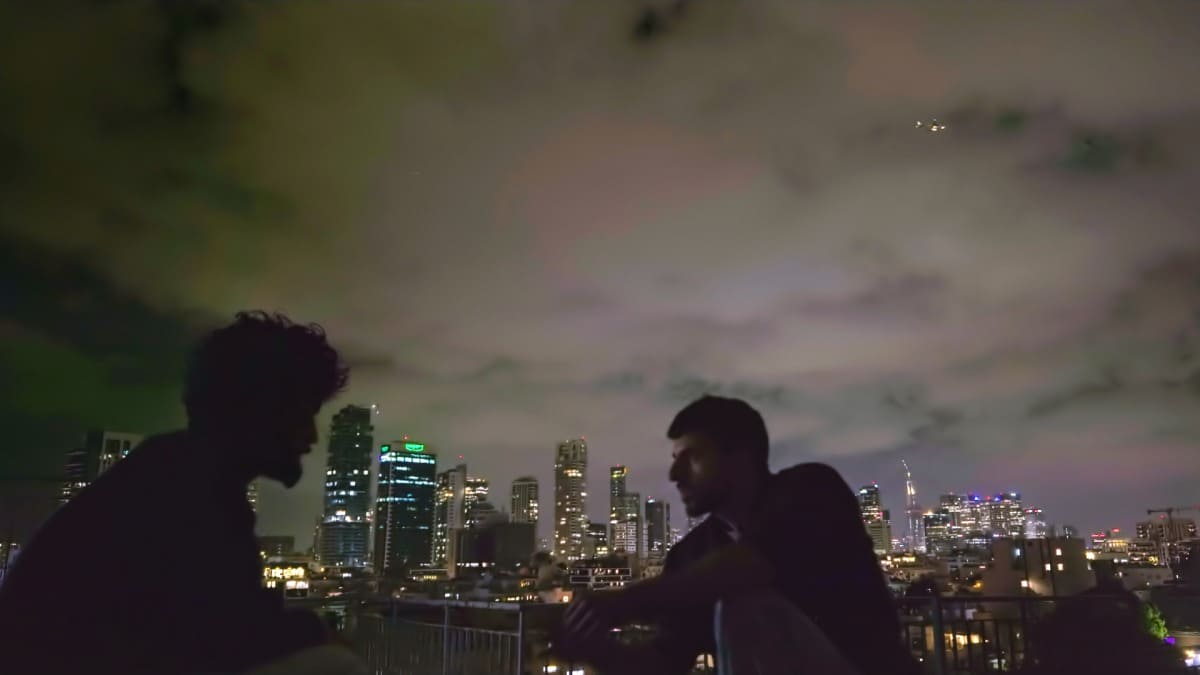
We’ve seen the devastation these actions leave behind. Whole towns erased, families ripped apart, survivors left to deal with injuries, grief, and displacement. That too is calculated, according to NAZA‘s sources, who lay out these gut-wrenching campaigns with the nonchalance of TV listings. Some interviewees show little remorse for “just following orders,” itself a chilling indictment. Others want to set the record straight, and tell the truth without the political spin broadcast on the nightly news. Occasionally, the camera pans from the interviews down into Tel Aviv, observing people in the safety of their high-rise homes sitting down to dinner, curling up on their couches to watch TV—luxuries indiscriminately stolen from naza.
The already-vitriolic response to NAZA speaks to the power of movies as a means of informing the public. Israeli Prime Minister Benjamin Netanyahu condemned Abraham and Szor and threatened to revoke their citizenship, while protestors greeted the New York Film Festival premiere with trucks and bullhorns. AI-slop attack ads against the film play on streaming services like Tubi. Of course, none of these parties behind the rhetoric have actually seen the film, but their preemptive reactions speak to their fear. They’re afraid that this information could put Israel in an even worse light on the international stage. As Netanyahu said of the film, it was akin to “launching dozens of ballistic missiles,” as if they hadn’t dodged accountability for these atrocities for years. The team behind the film responded in turn, moving up its release plans to open this week in New York City, with more theaters to follow until The Guardian will host it in full on their website in November.
NAZA can’t cover everything about this years-long conflict in just 80 minutes, but it is long enough to thoroughly hear how systemic atrocities like this one are conceived, planned, and executed. Many of the documentaries about this conflict focus either on right-wing propagandistic talking points or on the result of decades of systemic oppression, dispossession, and dehumanization. NAZA focuses on the reality of the here-and-now, on the footsoldiers just “carrying out orders” and on the American companies enabling them to do so. History may not remember the participants’ names, and the film hides them for their safety, but their testimony in NAZA is perhaps the closest we’ll see to any indictment of Israel’s systemic plan to erase an entire group of people.


 Keep scrolling for more great stories.