Turning on the TV on any given night in the ’00s and 2010s meant the chance to immerse yourself in a number of cheesy yet compelling worlds: The Vampire Diaries‘ Mystic Falls, Veronica Mars‘ Neptune, or Pretty Little Liars‘ Rosewood, to name a few. These were the glory days of soapy teen and YA dramas, when staples of The WB like Dawson’s Creek, Gilmore Girls, Everwood, and One Tree Hill gave way to Gossip Girl‘s glamorized Upper East Side, a rebooted 90210, and stories of teens who were separated or, over on ABC Family, Switched At Birth.
Yet after ABC Family rebranded as Freeform and its initial wave of millennial-skewing hits like PLL, Good Trouble, and grown-ish crested, the cable channel transformed into a hub for holiday specials and Disney movie reruns. The last remnant of the old CW, All American, wraps up this July, leaving in its wake a primetime lineup of uninspired reality TV, sports programming, and game shows. It’s a shift CW veteran Carina Adly Mackenzie likens to Game Of Thrones’ Red Wedding.
“It felt like in one day, so many shows about teens that were soapy but bold got wiped out,” she tells The A.V. Club.
But none of this channel drift has diminished the demand for character-driven and breezy YA shows. If anything, the hunger for this type of programming has only increased thanks to recent breakouts like The Summer I Turned Pretty, Heated Rivalry, and other spicy and/or outright smutty romance tales whose source material first hooked viewers through their TikTok “For You” page. Like it or not, every generation wants heartfelt, awkward, and relatable stories about growing up.
In The CW and Freeform’s absence, Prime Video has stealthily swooped in. The streamer delivered this summer’s unexpected TV sensation with its adaptation of Elle Kennedy’s hockey romance novels, Off Campus. Creator Louisa Levy has said she hopes her show provides “a warm, cozy escape from the world,”—the kind of thing The CW was pulling away from in the late 2010s, when Levy wrote for the network’s Life Sentence and In The Dark. “My favorite movies and TV shows have that nostalgic, aspirational, living-through-an-iconic-moment quality to them, and I wanted to build a show that pays homage to them,” she told the Women In Entertainment Substack.
You could argue that Off Campus is riding Heated Rivalry’s coattails (although, technically, it was greenlit first), but it also bears a resemblance to the aforementioned One Tree Hill. Like that WB/CW stalwart, Off Campus centers on a girl—intelligent, independent, and an aspiring musician—who agrees to tutor a charming male athlete, only for them to put aside their differences and fall in love. Levy has acknowledged the similarities between ice hockey star Garrett Graham (Belmont Cameli) and ace student Hannah Wells (Ella Bright) and OTH‘s Nathan and Haley, telling Brit + Co, “I love One Tree Hill. They handle music so well, and I wanted to bring that to [Off Campus]. Haley and Nathan are OTP.”
The popular jock/nerdy girl formula fits the romance genre like a glove—just ask A Cinderella Story, or To All The Boys I’ve Loved Before. Clearly, Off Campus was destined for its own TV Tropes page: a little opposites attract here, a little fake dating there. Is it cliché? Yes. Does it work? Absolutely, considering it’s become a social-media-swallowing cultural phenomenon mere weeks after its May debut. And if Amazon’s viewership numbers are to be believed, all those posts are coming from a sizable audience.
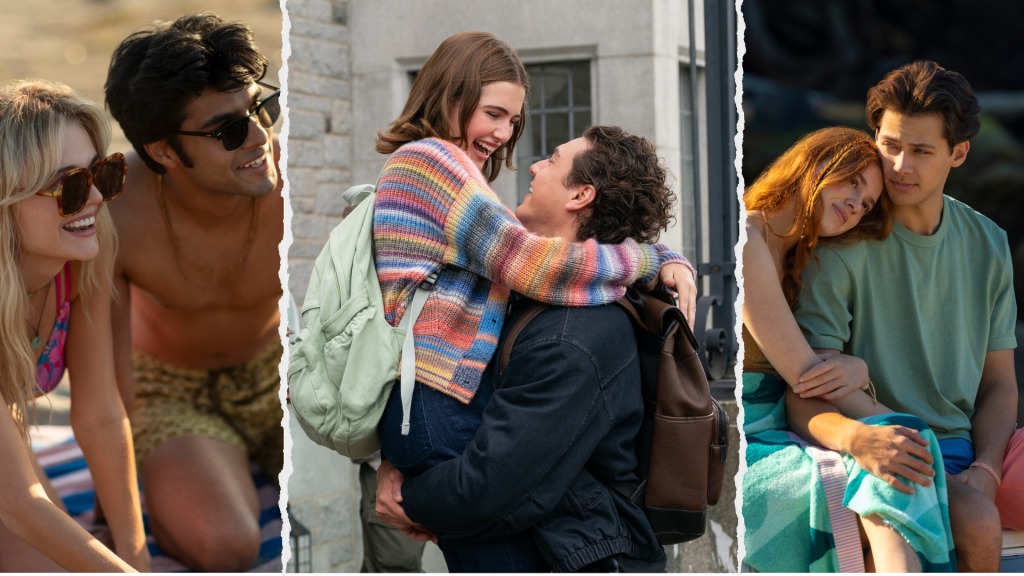
Despite relying on stock stories and calling back to ’ships of yore, Off Campus is effectively contemporary, with gentler male leads and arcs about sex positivity and consent culture—a much-needed antidote to the toxic guys of Tell Me Lies, Euphoria, or even Gossip Girl and Pretty Little Liars. That tone fits comfortably within the niche Prime Video first carved out with The Summer I Turned Pretty, thrillers like The Wilds and last year’s We Were Liars, and the German-language boarding-school drama Maxton Hall. And the slate continues to expand: The questionably necessary, already-renewed-for-a-second season Legally Blonde prequel Elle just debuted, and Megan Park’s teen drama Sterling Point arrives in August. There’s a definite shift in strategy here, further evidenced by the recent Obsessed Fest, a live event bringing together the casts, creators, and authors behind much of Prime Video’s YA lineup for panels, screenings, meet-and-greets, and a surprise performance from Jennifer Lopez, whose 2011 sequel “On The Floor” was boosted back onto the Billboard charts following its inclusion in a steamy Off Campus scene.
Producer and writer Mackenzie, who adapted We Were Liars for Prime Video alongside her former Originals and Roswell, New Mexico colleague Julie Plec, tells The A.V. Club she hopes that Off Campus taking off “opens the door for more lighter shows with wacky hijinks, frankness, and sexuality that are geared toward young women.” She, too, has an affinity for what the old hubs of YA TV achieved at the turn of the 21st century. “The CW wasn’t afraid to be edgy and push boundaries,” she says, nodding toward Gossip Girl‘s controversial threesome episode and the promotional campaign that splashed quotes from negative reviews of the show across photos of its stars in compromising positions. Mackenzie sees Prime Video taking a similar route with We Were Liars and its peers.
Yet for all the nostalgia for unserious dramas satisfied by Off Campus and its fellow 2026 premiere Every Year After (also renewed recently for season two), some elements of the YA heyday simply can’t be replicated in the current TV landscape. When asked why other streamers, networks, and cable channels aren’t going all-in on the genre, Mackenzie points out that it isn’t fully compatible with the TV business’ current standards: only six-to-eight episodes per season, long gaps between seasons, and binge releases.
“The question now is what even constitutes a young or new adult show, and Off Campus toes that line well,” she says. “We Were Liars has darker bones and doesn’t line up exactly with the lighter The Summer I Turned Pretty, but we ultimately found the right tone for it [for the platform].” She notes that while Prime Video is figuring out its embrace of a younger audience on the fly, she’s grateful that the streamer feels like it’s championing TV for young women.
“If the guys want to come and watch, great, but this slate feels very much for the girls, gays, and theys, which is nice because there are enough dude shows out there,” she says.
While other platforms have had a few successes in this area (beyond Heated Rivalry, there’s Netflix’s Heartstopper and Hulu’s Tell Me Lies), only Prime Video has really seized on the number one source for potential future YA hits: BookTok, the passionate TikTok subcommunity for readers that previously bumped titles like Kennedy’s Off Campus series, The Summer I Turned Pretty, and Red, White & Royal Blue to bestseller status. Adapting novels with a built-in and vocal fanbase, especially amongst young viewers, is likely to drive online conversations (and, yes, invite scrutiny). At the very least, BookTok is shaping Gen Z‘s reading habits, especially as they pick up the romance genre, which makes it a fertile ground to look for adaptations for viewers young and old.
It’s an interesting pivot from the dad TV action thrillers (Jack Ryan, Reacher) and IP-driven fantasy and sci-fi (The Wheel Of Time, Fallout, The Rings Of Power) series that dominated the Prime Video lineup in years past. It’s even more eyebrow-raising because this is coming from the streaming arm of a company that’s had a devastating impact on the sort of independent, brick-and-mortar businesses where one might buy both a Jack Reacher novel and the next volume of Off Campus.
The enthusiasm and passion these new shows have generated signal a craving for the type of youth-leaning dramas that have been missing from our screens—the kind that are inherently cringeworthy, affecting, and led by relatively fresh faces. They may not win Emmys or top critics’ year-end lists, but they form an essential part of the TV ecosystem, especially for the key 18-34 demographic. The present-day counterparts of One Tree Hill and Pretty Little Liars aren’t always comfort viewing, and with significantly fewer episodes per season, they have their work cut out for them in terms of endearing their characters and relationships to new and returning viewers. But it’s still somewhat relieving to know, all these years later, that there’s still room for nostalgia to be paired with a mostly modern-day, swoon-worthy lens on YA and new adult stories.
Saloni Gajjar is The A.V. Club‘s TV critic.


 Keep scrolling for more great stories.