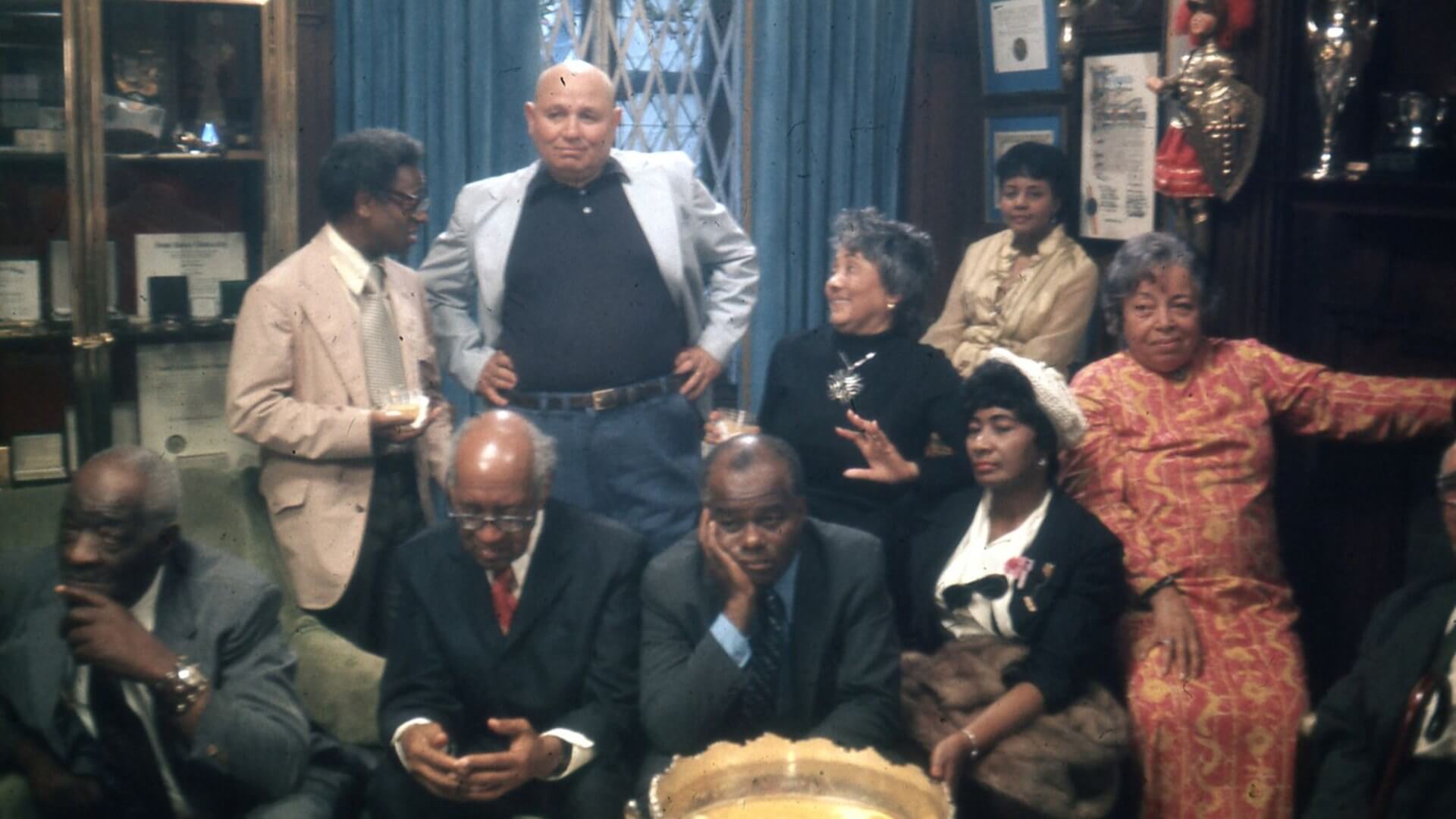
But Once Upon A Time In Harlem is no dry lesson about a forgotten era. Like any party, there are bores and pompous doofuses, wallflowers and the most interesting people you’ve ever met. It begins with an engrossing looseness as the guests arrive and bump into one another, then comes into focus as you realize that the old man noodling on the piano is photographer James Van Der Zee, that the guy holding court with a poetic recitation is 96-year-old Leigh Whipper, founder of the Negro Actors Guild Of America. Personal and professional camaraderie fills the warm halls and cozy den of the get-together, the conversations leading to a rapturous reckoning with a specific movement—and eventually expanding out around the endless movements that make up our continuously shifting culture.
The driving message of the film, extra poignant considering it comes packaged in a posthumous last hurrah, considers how easy it is for the gamechangers and the status-quo-shifters to be forgotten, glossed over by future generations taking their progress for granted. Those who cannot remember the past are not necessarily condemned to repeat it, but encouraged to too easily think that they are somehow superior for having redundant thoughts and ignorantly profiting off of hard-earned strides. Forgetting about your forerunners, imagining inhuman history-book versions of them, or never knowing about them in the first place—these are common problems resulting from how we teach young people, and how inclined we are to self-aggrandize. These issues were cropping up especially at the time of filming, in the ’60s and ’70s, as a new wave of radicals were trying to sever ties with the past. They’re also impossible after watching something like Once Upon A Time In Harlem, where the trailblazers aren’t names on a page or plaques on a wall, but endlessly bickering, drunkenly funny, sweetly proud, profoundly eloquent members of a recognizable social circle. They are not participating in a stagey or stately oral history about the Harlem Renaissance, it just so happens that a greater history than any that’s yet been written emerges from their organic interactions.
As the New Yorker‘s Richard Brody noted, this is partially because the attendees—despite being a group of friends and acquaintances and rivals boozing it up—are also self-conscious of how rare and auspicious this occasion is. You get the sense that these senior citizens would still be trading jokes, singing songs, and spinning epic yarns about the production of the Renaissance-jumpstarting, all-Black Broadway hit Shuffle Along at any given cookout or family holiday, but there’s a reverence in how their listeners respond. They believe in the work, the literature and art, deeply, and that shared ideology permeates the atmosphere of the event.
That atmosphere, as dense as it is with the egos and affections of the living, is also haunted by the dead. This is a party of old men and women, people whose heyday was 50 years ago. The specters of Langston Hughes, Countee Cullen, Zora Neale Hurston, and Paul Laurence Dunbar live on in the film so vividly because they’re still so alive in the minds of the storytellers recounting the Renaissance. Bygone people and places are conjured up, as the 1972 party—assembled into a 2026 film—time-travels once again, to a different New York City on the cusp of a Black art boom in the 1920s. We lucky gatecrashers are simply sucked through the portal with them, the fly-on-the-wall shooting style and archival supplements only adding to the immersion.
On the other side is an endlessly rich experience shedding light on the communal spaces that helped foster these once-young and broke artists, a conversation about the importance of day jobs and a shared social circle and creating art as a community—conversations we’re still having today. When the guests head down the stairs and out onto the sidewalk, returning side-by-side to the streets of Harlem, and we fall, gasping, back into the present, something one of the guests said off the cuff feels all the more moving in the sobering daylight: “A man’s social history is his essence.” We don’t do any of this in a vacuum. History is a group effort, a job of collective memory and collaborative preservation. That’s as true for the artists of the Harlem Renaissance as it is for the filmmakers of Once Upon A Time In Harlem, and for those whose lives it will change in the future.


 Keep scrolling for more great stories.