I think this is related to the many different conversations that I had about highly structured play experiences that get a lot of people talking with each other in a shared space. PAX Unplugged this year offered a smattering of megagames, several of them facilitated by Philadelphia Megagames. These games work by putting players in a social simulation in some kind of fictional world and then asking them to solve big problems—they can be competitive or cooperative, team-based or individualistic, but overall the pitch behind all of them is that the socialization element and the game rules will create interesting friction that everyone can enjoy. From what I can tell based on the vibes I got, these were a success. People were also playing jubensha, which had a presence on the show floor that felt bigger than last year, and every designer I talked to had something to say (offhand or not) about the recent experience of Over/Under, a big wargame or role-playing game or constant festival or something unnamable dreamed up and executed by some combination of Sam Sorensen, Sean McCoy, and a horde of players.
Whether people had played these things or not, they were talking about them, and it makes me think that there’s a very big interest in these rule-mediated social experiences that happen on- and offline. If there’s a future in them, I hope that they are community driven and thoughtfully crafted. I fear we are but a few short weeks from a poorly considered Over/Under clone that produces a lot of bad feelings and worse experiences, but I also think that there is clearly something morphing out of the board game and TTRPG scene that is looking for more freeform, LARPish (or LARPlite) games that draw in wider audiences and produce less predictable outcomes than whether or not you slew the gobbotroll. (For what it’s worth, I hope you slew the gobbotroll.)
In a much less social way, I think the future of tabletop might be, and pardon my language here, a shitload of cards. I was shocked by the number of games that I saw that were, essentially, a neoprene mat with specific places for cards to go and then a bunch of cards that you can play on top of that mat. Sure, they might be monsters and heroes dueling it out, or there might be some resources you’re shuffling into your hands in order to trade them around, but looking past the art on the faces and at the materials they’re printed on, the games come down to one thing: cards. This makes sense to me given the still uncertain status of how the oft-evoked tariffs are going to impact the tabletop gaming space, and the relative cheapness of producing mats and printed cards vs the luxe boardgame experience that we’ve experienced over the past decade or so (looking at you, Gloomhaven and Gloomhavenlikes). This seeming expansion of card-centered games, at least to my eyes, was also bolstered by the number of traditional trading card games with really strong booth presence and popularity. Magic: The Gathering, Lorcana, Star Wars Unlimited, and relative newcomer Riftbound all appeared to be rocking and rolling throughout the weekend, with lots of people sitting around and just playing the games for fun. Cards are good. I think we’ve got a lot more cards coming our way.
Finally, and this is personally delightful to me, but I think there’s an even brighter future for solo or duo tabletop roleplaying games. It might just be the people I talked to, but designers and players were both talking about how there was a lot more choice in the marketplace of what kind of solo game you wanted to play and how you might do it. Spencer Campbell wrote something similar post-convention about selling his own games there, and it tracks with the conversations that I had. If your introduction to tabletop roleplaying is Dungeons & Dragons, and you realize that you want that relationship between stories and rules in a different way, I think solo games (like personal favorite Michigan Dogman) are a great way to branch out into the other things that these books and dice can do to you. So I am not shocked that it seems solo games are increasing in popularity, and I have a strong sense that there were more of them this year (or they were better surfaced) than last year. I think that will continue.
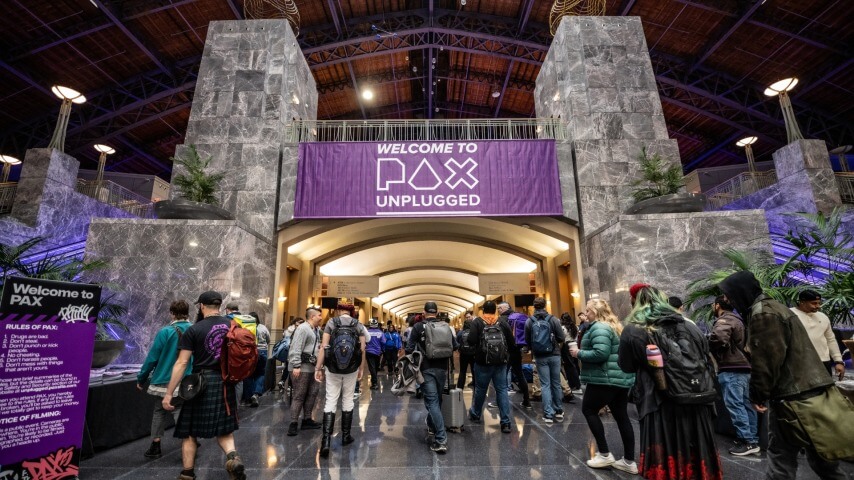
Those are my big predictions about the future of tabletop games after a whirlwind weekend in Philadelphia. I think we’ll have more big, social experiences on one end and a deeper bench of intimate solo games on the other; I think we’ll play with way more cards over the next couple years, and I think we’ll do them at the expense of some of the boxes o’ plastic stuff that we’ve enjoyed in the past. What’s definitely true is that this part of the game industry is expanding, with a lot of design talent and player interest, and I will absolutely be at PAX Unplugged next year.


 Keep scrolling for more great stories.