A Google search will tell you that Pokémon is the most popular media franchise in the world. Even if you can’t trust Google that much anymore, you can’t really argue that Pokémon isn’t massive, with an appeal that crosses generations. And now, in 2026, the year of its 30th anniversary, Pokémon feels bigger than ever, with new games, a new Japanese theme park (and rumors of one coming to America), a new pinball machine, and even a new money-making opportunity for PhD’s connected to ecology. Name another franchise that has dedicated vending machines selling its wares in grocery stores.
As massive as Pokémon is, though, not everybody’s on board with Pikachu and pals. If you were already an adult in 1996, or an older teenager even, you’re maybe too old to have ever developed a taste for the little critters. Or perhaps you were just a contrarian when you were young, the kind of kid who hated whatever everybody else on the school bus loved. It’s also possible that the genre Pokémon video games are most associated with—a beginner’s-level take on the role-playing game, primarily made for younger and less experienced players—leaves you cold. And, as happens with any franchise with a massive following these days, you’ve got the perpetually unsatisfied anti-fans who claim to love Pokémon while criticizing every single decision made about it today. Pokémon might be about as internationally dominant as any piece of entertainment could ever get, but nothing can be loved by truly everybody.
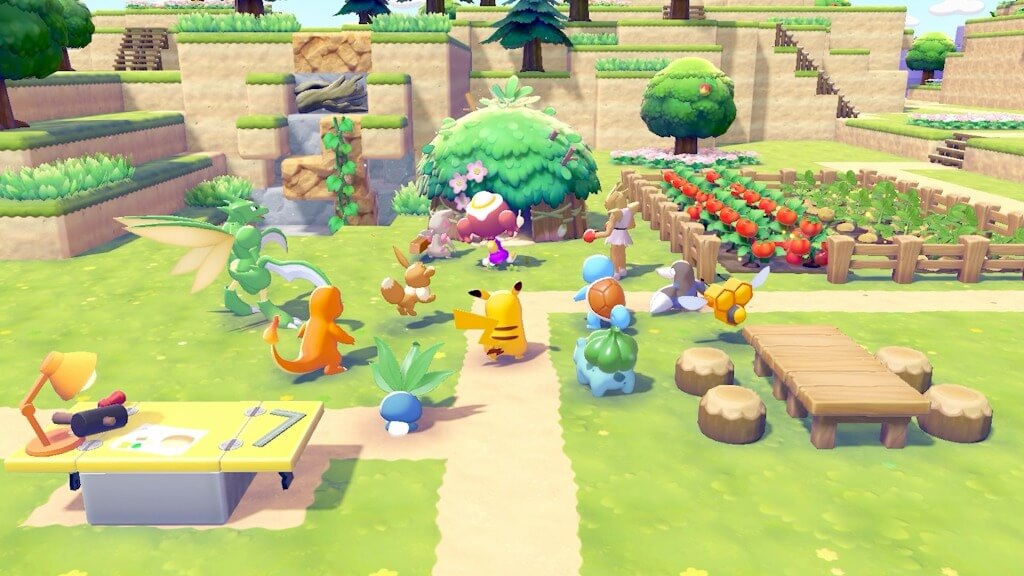
Pokémon Pokopia challenges that assumption. No matter your reason, if you think you dislike Pokémon, this game might change your mind. (Unless you’re one of the anti-fans: chill out, already!) Pokopia, which can accurately be summed up as Animal Crossing with Pokémon (or Pokémon Crossing, if you will), casts aside much of what’s typically expected from a Pokémon game or series. The result is more accessible for the non-converted than Pokémon usually gets, but so deeply steeped in Pokémon legend that the most diehard fans still have a lot to latch onto.
At its core Pokopia channels the cozy spirit of Animal Crossing and embraces the concept of the hangout game. There’s no universally agreed upon definition of a “hangout game” (contrary to popular belief, it does not have to be a game that tries to soothe rather than challenge the player, as the hangout friendly Elden Ring attests) but Animal Crossing undeniably fits any possible one. It’s a game almost entirely about hanging out, talking to friends, doing little favors for them, and just existing in an adorable cartoon refraction of real life. That’s exactly what Pokopia does, only here your new friends are different kinds of Pokémon instead of temperamental animals with the social skills of 12-year-olds. More and more Pokémon will move to your settlement as you clean it up and cultivate it, and although they can get tetchy when they’re hungry or uncomfortable, it’s easy to figure out what they want and make them happy again. That’s the game: keeping your space clean, doing nice things for others, and basically just being a good neighbor.
That focus on social interaction means that Pokopia crucially dispenses with battling. You don’t have to train your Pokémon, and you absolutely won’t be marching them into war with each other. If you’ve ever found it odd—or simply boring—that the media franchise about a thriving ecosystem of cute cartoon animals was primarily concerned with human characters pitting them against each other in organized fights, you’ll appreciate Pokopia’s non-violent approach. (Don’t worry; apparently Pokémon love to fight, like the pigs excitedly beckoning you to eat them in BBQ restaurant signs.) Instead of exploiting Pokémon for your own gain, you’ll make straw beds for them and find tasty treats for them to eat. Pokopia understands that more napping and less scrapping is the right call in any situation.
It also eschews the genre you probably think of when you think of Pokémon video games: the role-playing game. When people talk about “mainline” Pokémon games—ones that are seen as part of the primary Pokémon series, instead of spin-offs, asides, or experiments—they’re talking about RPGs, and particularly ones that feel stuck in gaming’s past. The (usually) handheld games that followed after the 1996 debut of Pokémon Red, Blue, and Yellow have been intentionally designed for players who may not be familiar with the structure and rhythm of RPGs; that makes them an invaluable tool for introducing that genre to new players, generation after generation, but it can also make them feel too light and insubstantial for people who already play RPGs. If you were familiar with Final Fantasy or Dragon Quest when Pokémon Red, Blue, and Yellow came out, the latter might have felt shallow or regressive, and the prototypical Pokémon RPG has felt perpetually behind the times ever since. (And if you’re confused by the whole Red, Blue, and Yellow thing, that’s another check in Pokopia’s favor: it’s just one single game, and not pulling the usual Pokémon move of confusingly releasing two or three related games at the same time in what has always felt like a ploy to goose sales.)
Pokopia doesn’t succeed just because of what it is, though. If it did everything mentioned above, but poorly, this piece wouldn’t exist. Pokopia does what it does with a uniform excellence, even surpassing Animal Crossing: New Horizons in many ways. It moves faster, with a more defined structure and clearly communicated benchmarks along the way, but not to the point that it undermines its relaxed nature. Pokémon lack the sometimes fractious personalities of Animal Crossing’s menagerie, but their shallowness can be preferable to the simplistic, often binary depth of Crossing’s characters. There’s also a lot of beautification in Pokopia’s early game; you’ll spend your first few hours using abilities borrowed from Pokémon to revive dried-up grass and withered trees, which offers an immediate sense of accomplishment even when few Pokémon have shown up to your village yet.
All of this makes Pokopia the rare Pokémon game that people who don’t care about Pokémon might love. It doesn’t take dyed-in-the-wool Pokémon fans for granted, though. It tries to earn their respect with the depth and diversity of its roster of Pokémon, with 300 creatures from throughout the franchise’s history potentially showing up in their town. And to get them to appear you have to understand some basic facts about them, like what hours they keep and the kind of environment they like to live in, essentially granting a (very minor) in-game advantage to people who really know their Pokémon.
Pokémon fans would be buying this game regardless, though. What makes Pokopia truly notable is that it transcends the standard boundaries of a Pokémon game, welcoming anyone who’s kept the franchise at arm’s length. Pokopia might actually make Pokémon even more popular than it already is—as impossible as that might seem.


 Keep scrolling for more great stories.